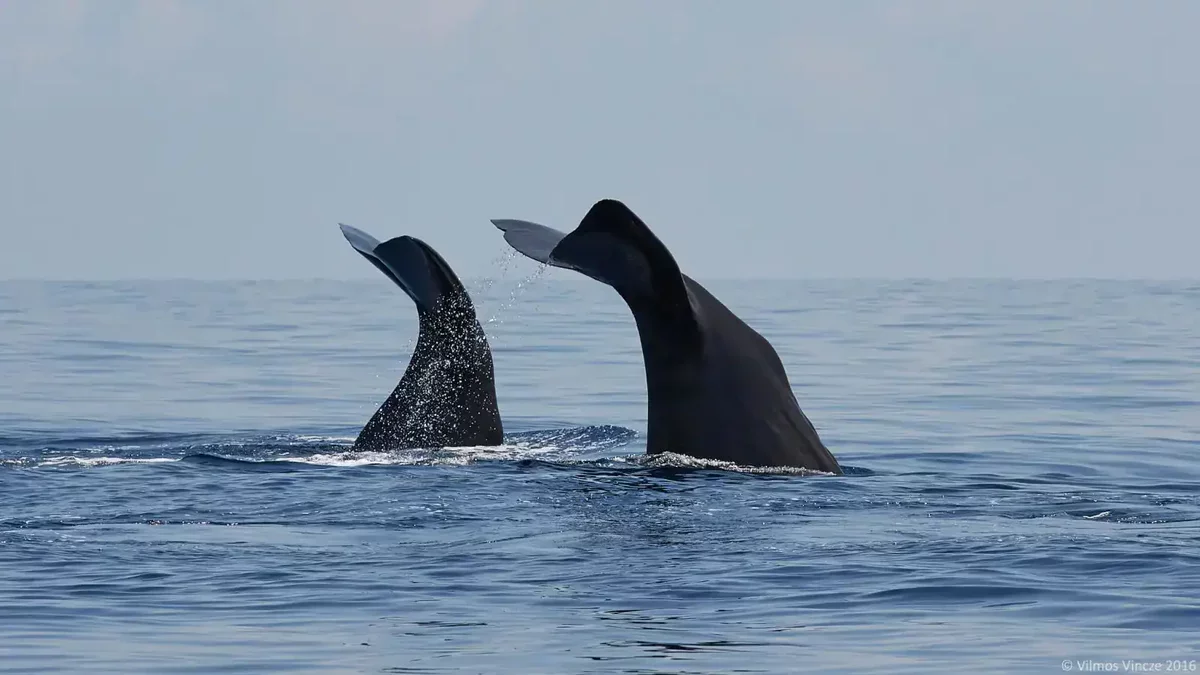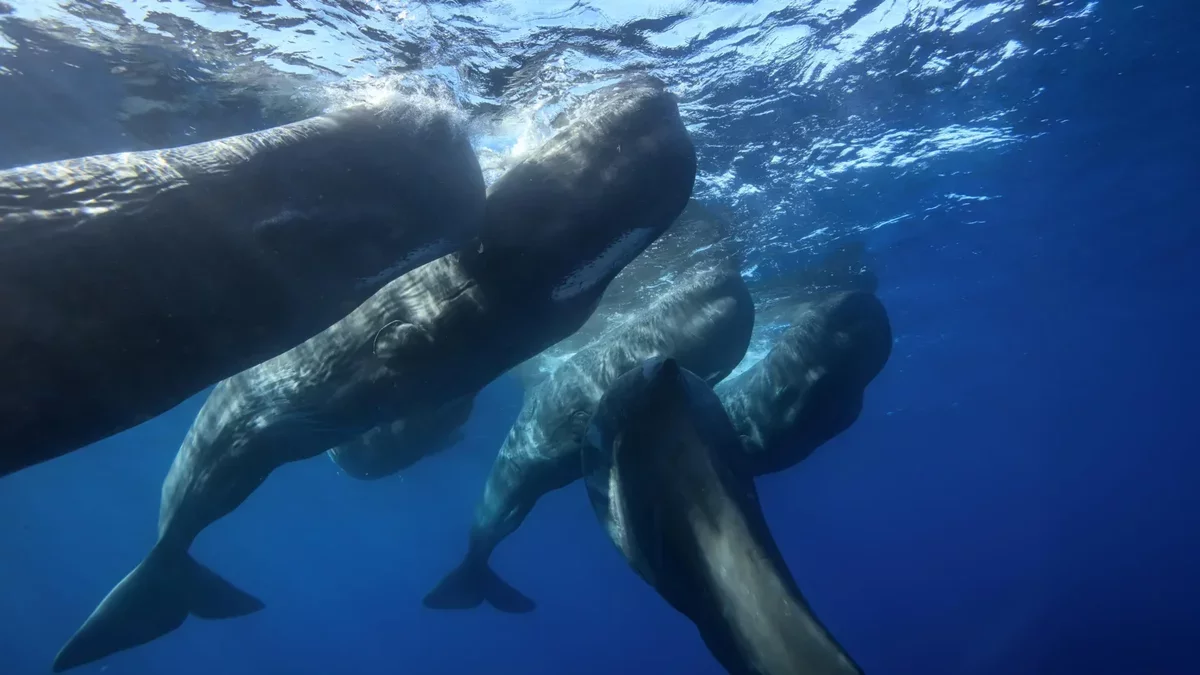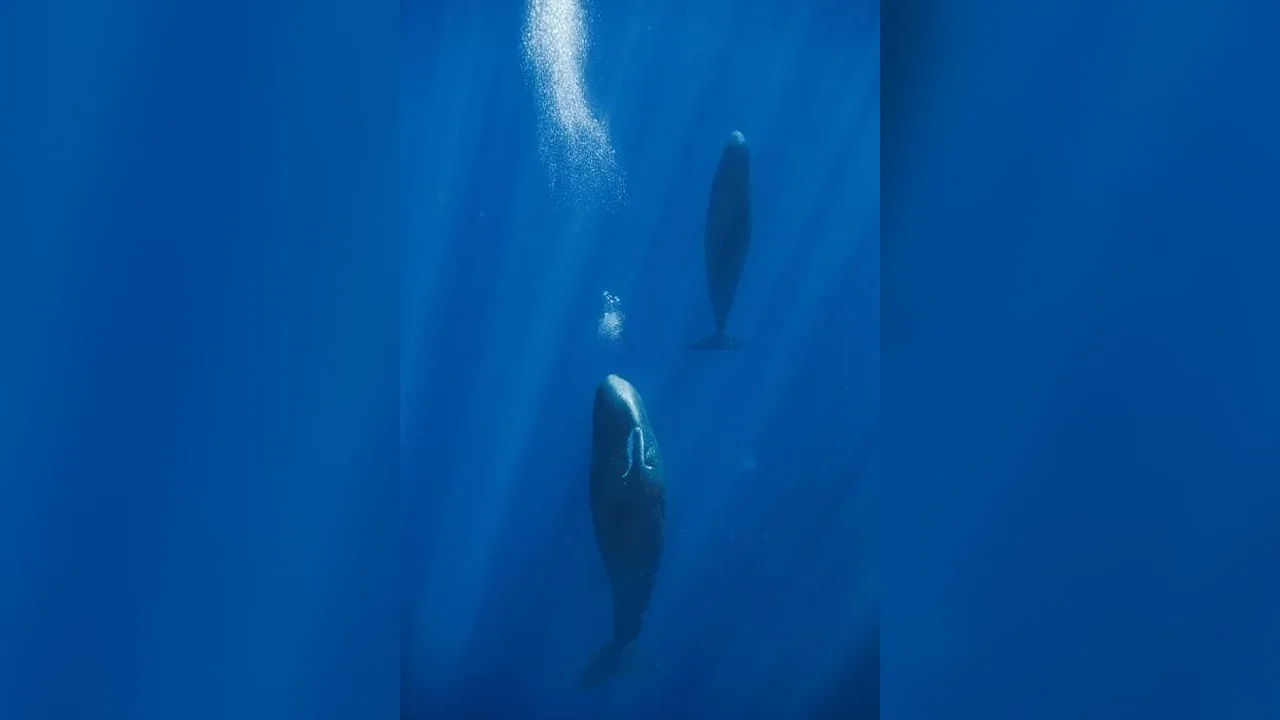
Sperm whales have long fascinated scientists with an unusual resting posture: they can remain nearly upright and almost still in the water, then return to the surface after a short pause. A new study now suggests that bubbles may help them hold that position.
A subtle control system in the sea
Researchers analyzed tag data from 42 sperm whales recorded off northern Norway, near the Lofoten Islands. The suction-cup tags tracked depth, body movement, and underwater sounds, allowing the team to observe how the animals behaved during rest.
The results showed three main patterns. Some whales descended head-first and then rotated upward as their bodies became more buoyant. Others drifted tail-first. A third group rested while slowly rising after dives deeper than 200 meters. Across all three patterns, bubble releases appeared at the moments when the whales needed to slow or stop their ascent.
The explanation lies in physics. As pressure changes with depth, gas inside the body compresses or expands. Near the surface, even small changes can increase buoyancy quickly. By exhaling, whales reduce the amount of internal gas and lower that upward force.
The team also built a computer model that included tissue density, drag, and gas volume. It supported the idea that controlled exhalations can help sperm whales stay close to neutral buoyancy while resting. The model also suggested that whales begin these resting dives with less gas than during deep feeding dives, which may make the transition easier.
Professor Patrick Miller of the Sea Mammal Research Unit at the University of St Andrews noted that the animals appear to fine-tune buoyancy even while they are thought to be asleep. That raises a deeper question: how much of this behavior is automatic, and how much is actively managed by the brain?
Scientists still do not know whether sperm whales use a form of unihemispheric sleep, as some dolphins and toothed whales do. But this study adds a remarkable layer to the mystery of whale rest, showing that even sleep-like states may involve precise physical control. The findings were published in the Journal of Experimental Biology.
As marine research tools improve, discoveries like this may reshape how we understand animal intelligence, sleep, and adaptation in the oceans of the future.