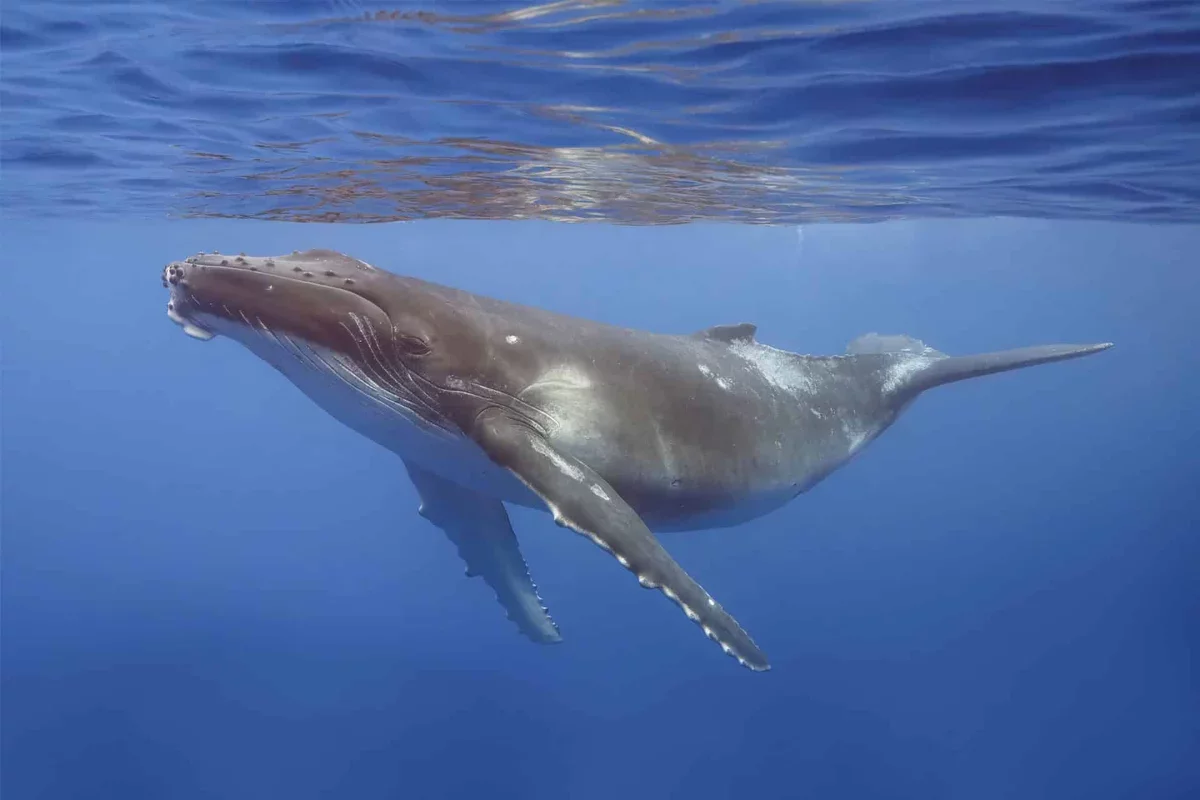
The resurgence of humpback whales, following decades of extensive hunting, has led to fascinating observations by researchers. A recent study indicates that older males are increasingly becoming the primary contributors to the next generation, while younger males are finding themselves at a disadvantage.
This trend, which has intensified over time, suggests that the legacy of whaling has not only diminished whale populations but also altered the dynamics of age and experience within mating practices. These changes continue to influence reproductive success today.
"The far-reaching consequences of whaling are becoming clearer. Its effects extend beyond mere population numbers, impacting behaviors, competition, and reproduction," stated Franca Eichenberger, the study's lead author and a whale researcher at the University of St Andrews in Scotland.
A Genetic Investigation
Despite extensive research, direct observations of humpback whale mating in their natural habitat have been elusive, creating gaps in our understanding of their reproductive behaviors.
To address this, scientists from the University of St Andrews, alongside collaborators, conducted long-term field studies in New Caledonia, monitoring the whales from 2000 to 2018.
"We analyzed age-dependent population dynamics and reproductive success in 485 male humpback whales from a recovering breeding ground," the researchers explained.
Using remote biopsy techniques, harmless skin samples were collected from numerous males. This innovative approach allowed for genetic comparisons with known mother-calf pairs, confirming 56 paternity cases. Additionally, by employing an epigenetic clock to assess age-related changes in DNA, researchers could accurately gauge the age of each whale, circumventing the challenges posed by the lack of physical age markers.
By correlating genetic data with age, the study unveiled surprising insights into reproductive patterns.
"Our method enables us to evaluate the age structure of the population comprehensively," noted Angela Sremba, a researcher at the Marine Mammal Institute at Oregon State University.
A Shifting Landscape
As the whale population rebounded, a notable shift in reproductive dynamics emerged. Initially, in the early 2000s, the population was still recovering, with younger males prevalent due to the depletion of older generations.
However, as numbers grew over the subsequent decade, older males began to dominate mating opportunities. Males aged 16 and above increasingly fathered calves, showcasing enhanced success in reproduction.
These older males exhibited behaviors linked to reproduction, such as producing long, resonant songs, closely accompanying females, and actively competing with rivals, while younger males struggled to secure similar opportunities.
"With the population's recovery, older males have become more prominent in singing, escorting females, and successfully reproducing," added Ellen Garland, a co-author and sea mammal expert.
As older males refine their songs and strategies, females benefit from a larger pool of choices, potentially favoring mates with superior traits.
The Significance of These Findings
The dominance of older males in reproduction may limit genetic diversity, as fewer individuals contribute to the gene pool. In contrast, the earlier phase of recovery, where younger males had more equal mating opportunities, likely aided in the population's resurgence.
Future research is crucial to understanding the traits that give older males their reproductive edge and how these dynamics may evolve as whale populations stabilize. Continuous monitoring and advanced genetic tools will be vital in uncovering the complexities of whale behavior shaped by human influence.
"All whale populations have been altered by whaling; our findings highlight that they continue to evolve as they recover. This underscores the importance of ongoing long-term monitoring," Eichenberger emphasized.
The study is published in the journal Current Biology.