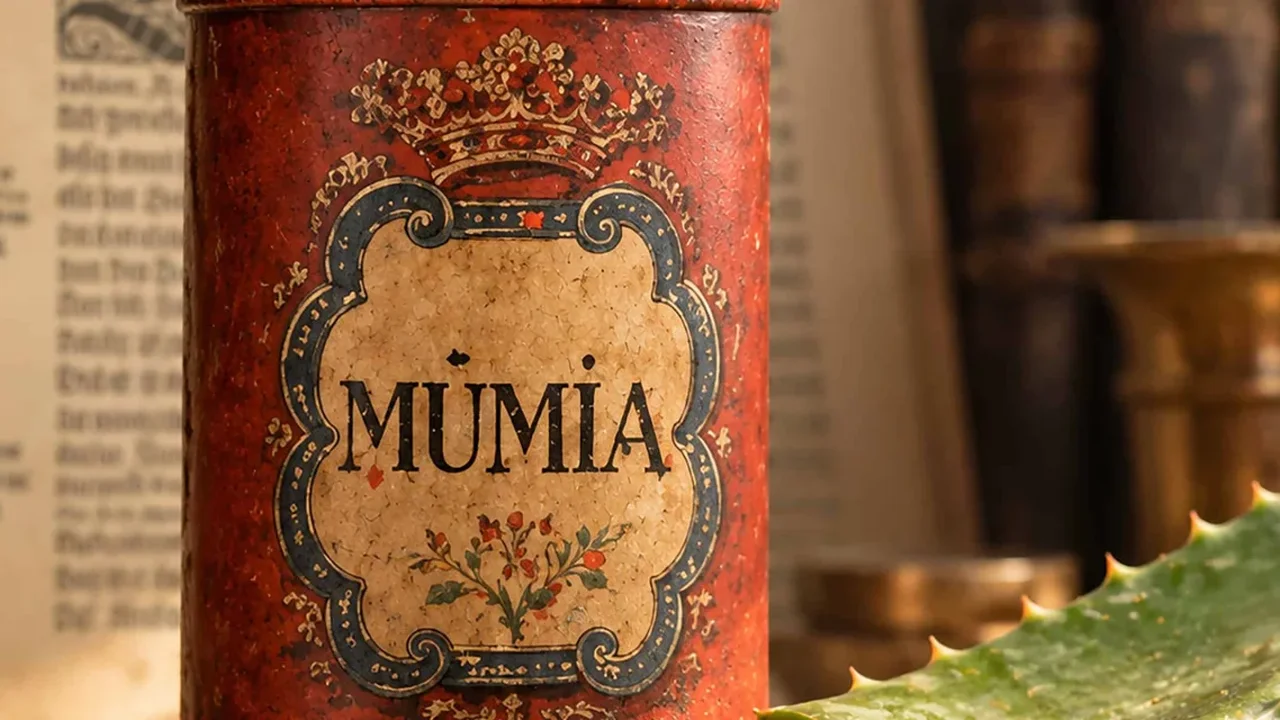
For centuries, some European apothecaries sold powdered Egyptian mummies as medicine. A new study has examined the chemistry of these historic preparations--and found compounds associated with aloe in some samples.
Researchers at the University of Marburg reviewed 41 historical texts and analyzed 24 objects from museum and university collections, including pharmacy mixtures and embalming materials. The samples varied, but many contained traces of aged conifer resins. Two objects--a roughly 2,700-year-old mummified skull and an 18th-century pharmacy preparation--also contained compounds linked to aloe, including aloeresin A.
The finding offers molecular evidence connecting aloe plants with ancient Egyptian embalming materials. It does not show that aloe was commonly used, or that it was responsible for any medicinal effects attributed to mummy preparations.
A laboratory test, not a treatment
The team also tested an extract from a separate historical mummy preparation. In laboratory experiments, it modestly reduced damage to MDCK cells, which are commonly used in influenza research. The result does not establish that the extract prevents viral reproduction, works in people, or is safe to use as a treatment.
European physicians once prescribed mummy powder for ailments including wounds and coughs, though its ingredients could differ considerably. The new analysis suggests these mixtures held a complex chemistry that is only beginning to be understood.
Published in Proceedings of the National Academy of Sciences, the research shows how modern chemical analysis can revisit historical materials and clarify their ingredients. Such work may help scientists better understand the compounds used in past medical traditions.