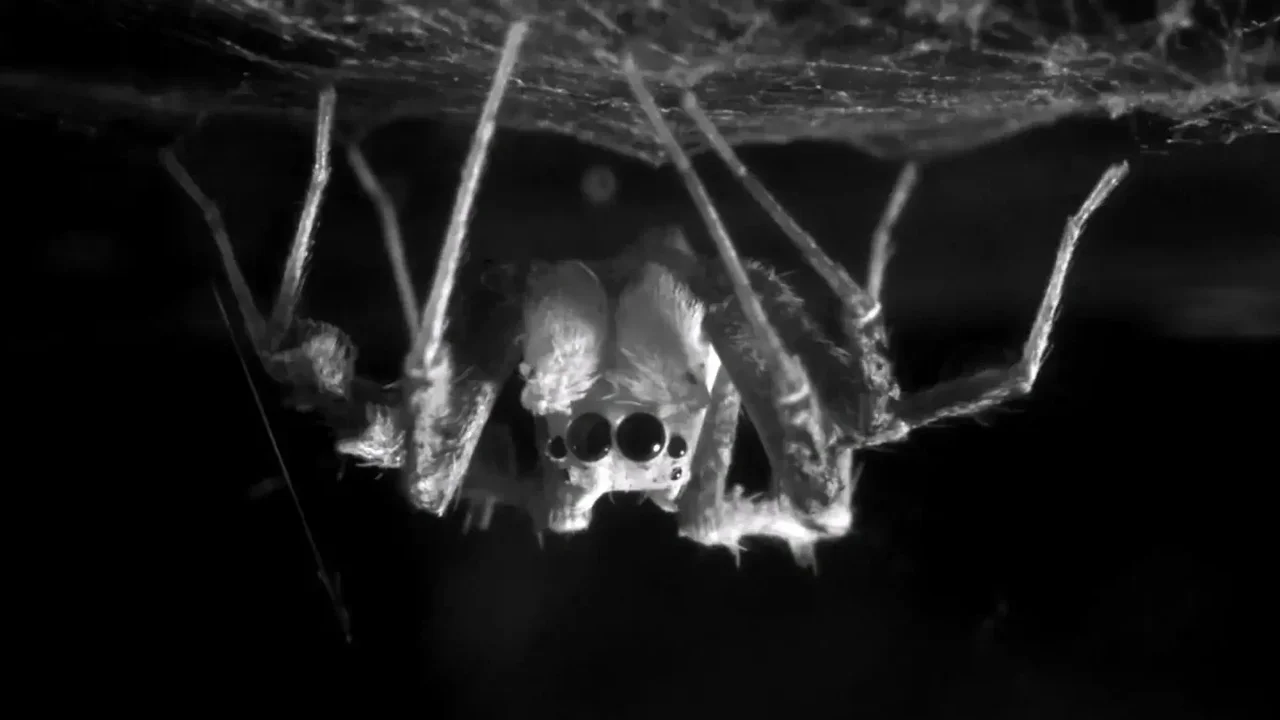
At night, the jumping spider Portia fimbriata becomes still, curls its legs and moves structures inside its eyes. A new study finds these movements occur during sleep and that the spiders compensate when their rest is disrupted.
Researchers observed 10 spiders and recorded 109 episodes of REM-like activity. The animals rested for around 10.7 hours a night, with about 11 episodes of twitching and retinal movement, each lasting roughly 83 seconds.
Sleep rebound after disruption
When the spiders were disturbed for 12 hours, they later rested for about an extra hour. Their total REM-like activity rose by nearly 80%, mainly because they entered the state more often. They also took longer to respond to a sound during these episodes than when awake, supporting the conclusion that the spiders were asleep rather than simply motionless.
The findings offer evidence that sleep has features shared across animals with very different nervous systems. However, the researchers did not measure brain activity, so the movements cannot establish whether spiders dream as humans do.
Published in the Proceedings of the National Academy of Sciences, the study adds to research into sleep across the animal kingdom. Comparing sleep in distant species may help reveal how this essential biological state evolved--and what it does for living organisms.