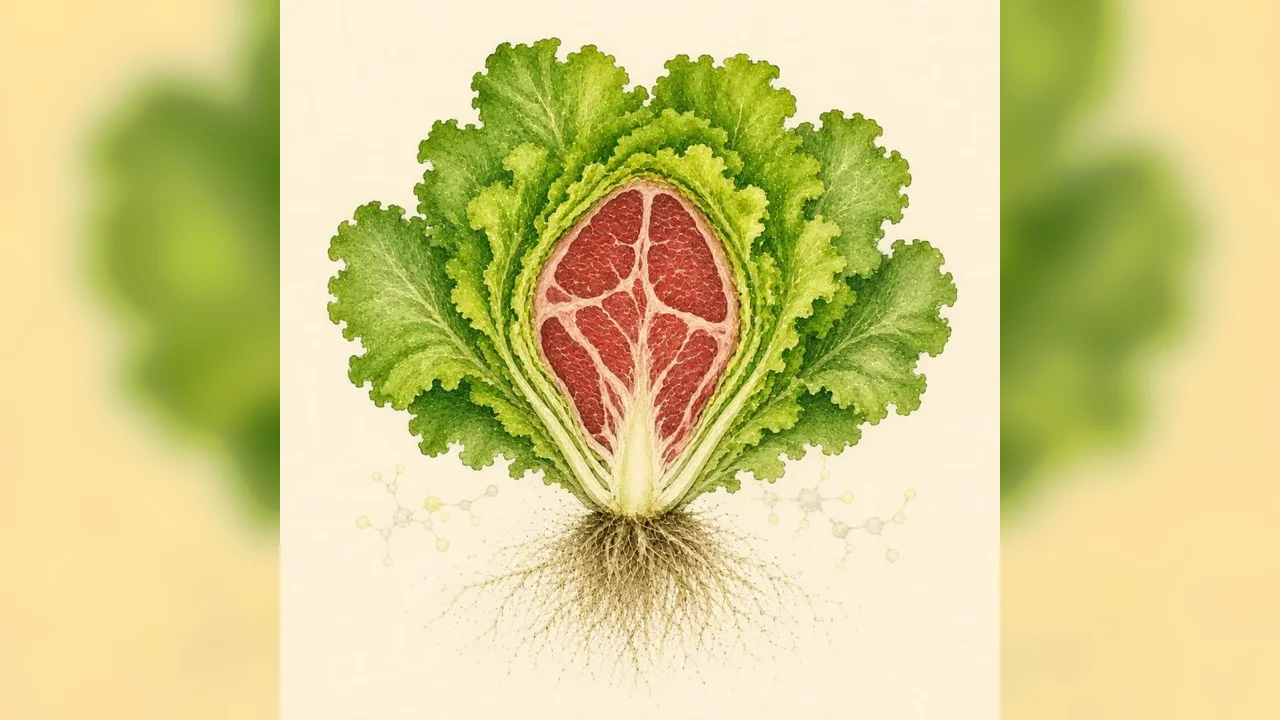
Researchers have shown that lettuce and tobacco can be engineered to produce myoglobin, the muscle protein that helps give meat its color, flavor and iron content. The work was led by teams from Imperial College London, the Bezos Centre for Sustainable Protein, Kyomei and collaborating institutions.
How the plants were redesigned
The scientists placed genetic instructions inside the plants' chloroplasts, the photosynthesis centers of plant cells. Because chloroplasts carry multiple copies of their own DNA, they can act as efficient protein-making platforms. This approach, known as plant molecular farming, has already been explored for medicines and other useful compounds.
In the study, tobacco produced the highest amount of myoglobin, while lettuce also generated measurable levels. Both plants outperformed engineered algae, and chloroplast-based expression in tobacco delivered far more protein than placing the gene in the nucleus.
The results are still early-stage. A kilogram of fresh engineered lettuce contained about 48 milligrams of myoglobin, and tobacco produced roughly twice that amount. On a dry-weight basis, beef muscle still contains much more myoglobin, so the plants are not yet close to matching conventional meat.
Even so, the finding is important because the plants kept growing normally, flowered and produced seeds while passing the trait to the next generation. That makes the system stable enough to imagine future use in scalable protein production.
The next step is improving the protein's assembly. Much of the plant-made myoglobin lacked heme, the iron-containing molecule that gives the protein its full functionality. Researchers say that with further refinement, edible crops could one day contribute to biofortified foods, pending regulatory approval.
Published in Frontiers, the study points to a future where plants may serve as flexible, low-input biofactories for nutrition and sustainable food innovation.