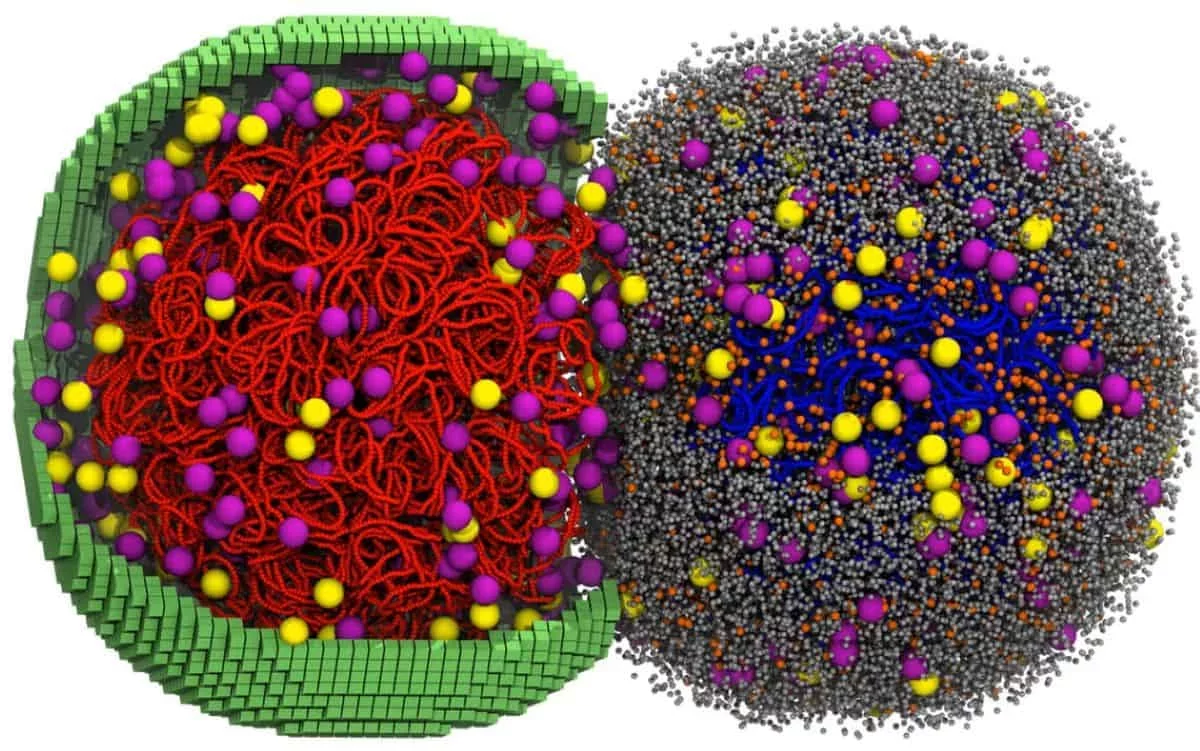
In a groundbreaking achievement, researchers have successfully simulated the entire life cycle of a living cell in four dimensions--encompassing three spatial dimensions and time. By utilizing a sophisticated digital model of a minimal synthetic bacterium, they observed a virtual cell as it grew, replicated its DNA, and underwent division, all displayed on a computer interface.
Revolutionizing Cell Simulations
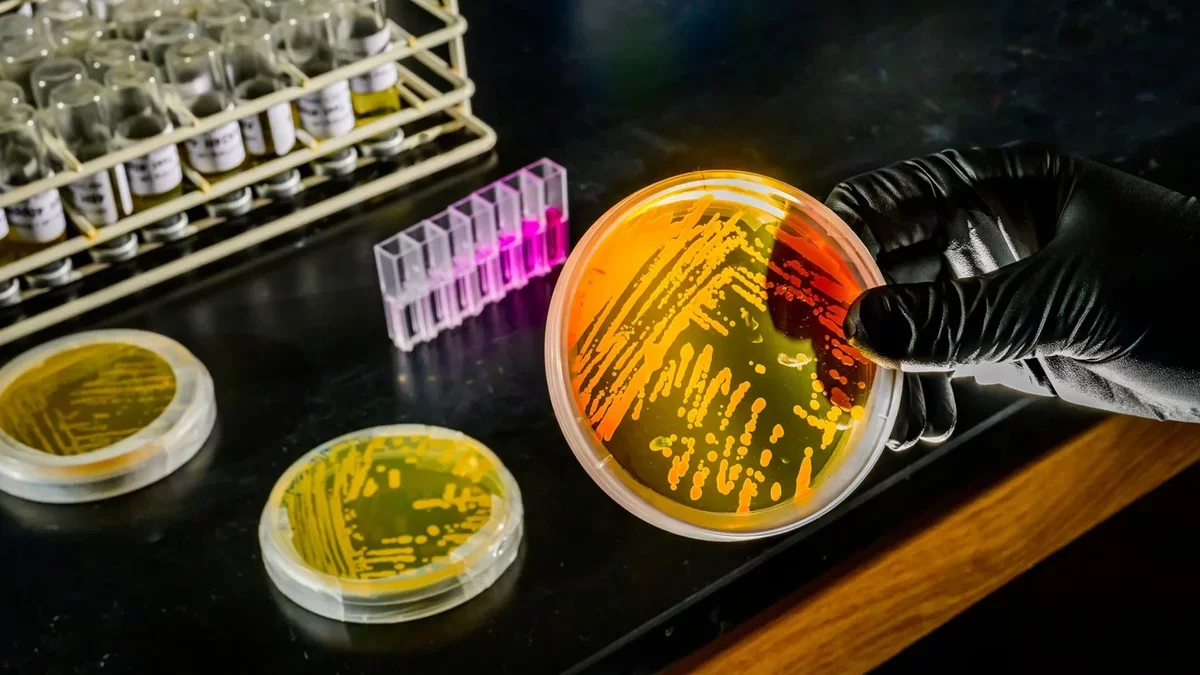
Conventional computer models have typically simplified the cell's interior, treating it as a uniform chemical reactor. However, actual cells are intricate and dynamic environments where molecules navigate crowded spaces, colliding randomly to initiate vital reactions. To accurately reflect this complexity, a team led by Zan Luthey-Schulten from the University of Illinois Urbana-Champaign employed JCVI-syn3A, a synthetic bacterium with a streamlined genome consisting of only 492 genes, derived from the parasite Mycoplasma mycoides.
Dr. Luthey-Schulten described the project as "a three-dimensional, fully dynamic kinetic model of a minimal life form that simulates cellular activity and development."
Dynamic Cell Behavior
The simulation tracked the cell over a span of 105 minutes, mirroring the time required for the real bacterium to complete its division cycle. Viewers witnessed the virtual cell expand, elongate, and ultimately divide, effectively doubling its membrane surface area. The model suggested that DNA replication alone occupies around 51 minutes of this cycle.
To achieve this, the researchers integrated three biological layers into a cohesive system. Firstly, they modeled the cell's physical structure, treating DNA not merely as an abstract sequence but as a tangible entity with shape and movement. As replication progressed, the chromosome dynamically bent, coiled, and eventually separated.
Secondly, they simulated the chemical interactions within the cell. The model tracked thousands of molecules, observing their chaotic movements and the precise moments they collided to trigger chemical reactions. Finally, the simulation monitored the cell's metabolic economy, ensuring that it had sufficient nutrients and energy to sustain itself until division.
Despite the immense computational demands--where simulating a single cell cycle could take up to six days using high-performance graphics processing units--the effort proved invaluable. The simulation not only mirrored the behavior of a living cell but also illuminated its intricate connections. For instance, it demonstrated how a cell's food supply directly influences its genetic activity.
By grounding the model in the fundamental principles of chemistry rather than relying solely on data patterns, the researchers aim to spark new scientific inquiries that could redefine our understanding of life itself.
This innovative approach could pave the way for future breakthroughs in biology, enabling scientists to unravel the complexities of cellular mechanisms and potentially redefine the boundaries of life.