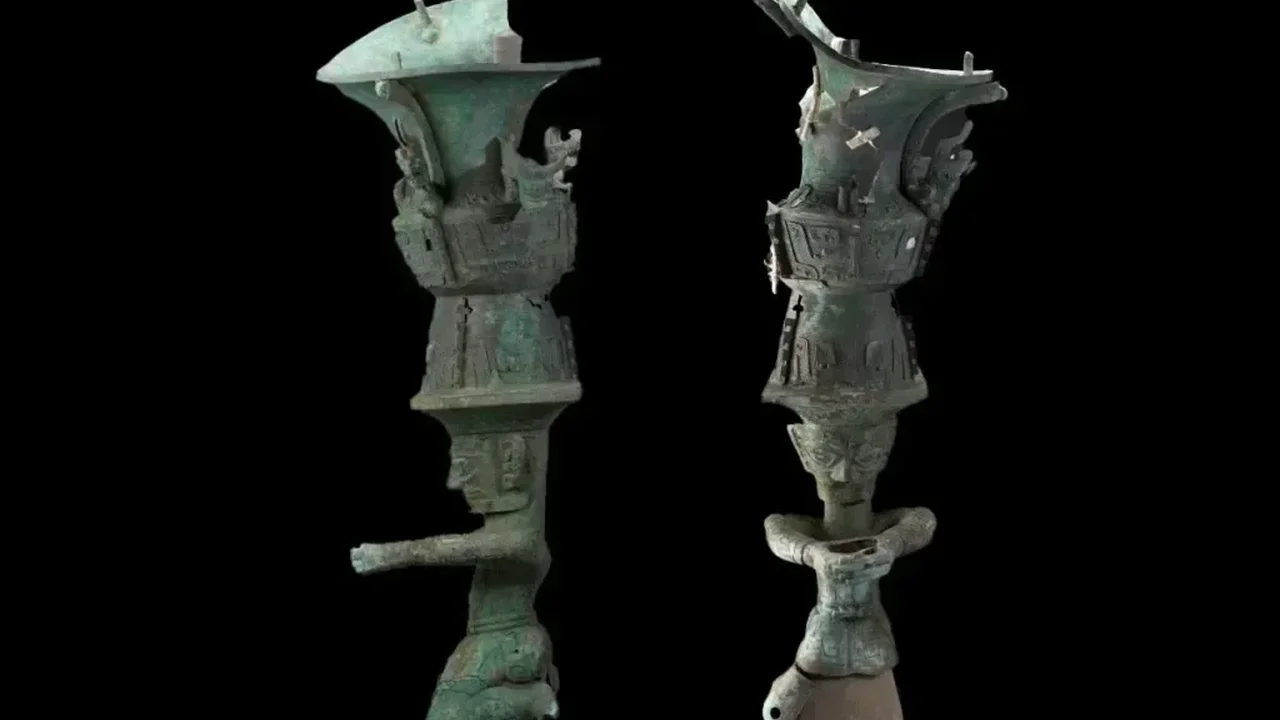
New research on a celebrated bronze figure from Sanxingdui is reshaping how scholars view early exchange across ancient China. According to findings from the Sichuan Provincial Institute of Cultural Relics and Archaeology, the object was likely assembled from multiple parts made in different places and at different times.
The artifact features a kneeling human form with an ornate headpiece known as a zong. Although the two elements were buried together, laboratory analysis points to clear differences in corrosion, metal composition, and the geological origin of the ores used in each section.
What the analysis suggests
Researchers say the figure itself may also be a composite object, with a copper base that differs from the rest of the piece. These details indicate a sophisticated production process and suggest that materials, techniques, and finished bronze works may have circulated widely across regions.
The study adds to growing evidence that Sanxingdui was connected to broader cultural and commercial routes, including links with the Central Plains. Rather than existing in isolation, the site appears to have been part of a dynamic network of craftsmanship and exchange.
As new scientific methods continue to illuminate ancient collections, discoveries like this may help build a clearer picture of how ideas and materials moved across early civilizations, opening fresh perspectives on the shared history of human innovation.