A fossil from West Texas has revealed one of the most unusual arthropods ever studied: a 324-million-year-old insect relative with 24 legs. Long mistaken for a juvenile crustacean, the specimen was reexamined by paleoentomologist Erik Tihelka at the University of Cambridge, who noticed details that pointed to a far stranger identity.
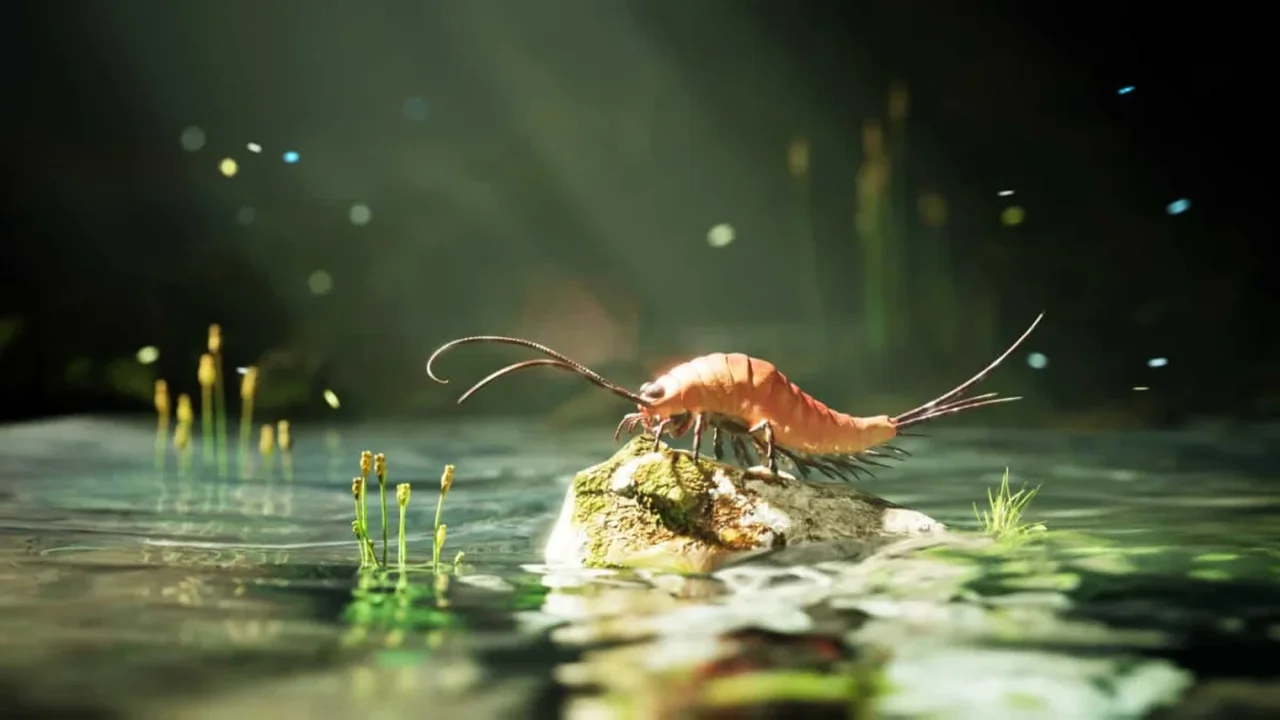
Under cross-polarized light, the fossil resolved into a body plan unlike any living insect. The animal, named Chosha praecursor, had the familiar six legs on its thorax, plus 18 more along its abdomen. Researchers also identified long antennae, a tail filament, an ovipositor and paddle-like rear appendages, suggesting a creature adapted to both land and shallow water.
A rare window into early insect evolution
Published in Nature, the study places Chosha near the base of the insect lineage, just outside modern insects. The fossil helps fill a major gap in the record of early hexapods, the group that eventually gave rise to today's six-legged insects. Its anatomy also supports the idea that insect evolution passed through a more flexible stage before the modern body plan became fixed.
The specimen was collected in 1985 near Rough Creek Ranch in Brewster County, close to Big Bend National Park. Measuring about 3.2 centimeters long, it was preserved in a way that made it easy to overlook for decades. Yet its unusual structure now adds important detail to the story of how insects adapted from aquatic ancestors to life on land.
Scientists compared Chosha with 22 other arthropod groups and 58 anatomical traits. Their analysis also reshaped the placement of several other fossils, including Leverhulmia mariae from Scotland, now considered the oldest insect in the study. Together, these fossils help connect early Devonian forms with the more diverse insects that appeared later in the Carboniferous.
The paddle-shaped abdominal legs may have helped with swimming, breathing or moving through soft sediment, while the thoracic legs were suited for walking. This combination suggests a gradual shoreline transition rather than a sudden shift from water to land. As more fossils are studied, the picture of early insect evolution may become even clearer, opening new paths for understanding how one of Earth's most successful animal groups emerged.
In the future, discoveries like this could refine the timeline of life's move onto land and deepen our view of how complex body plans evolve over time.