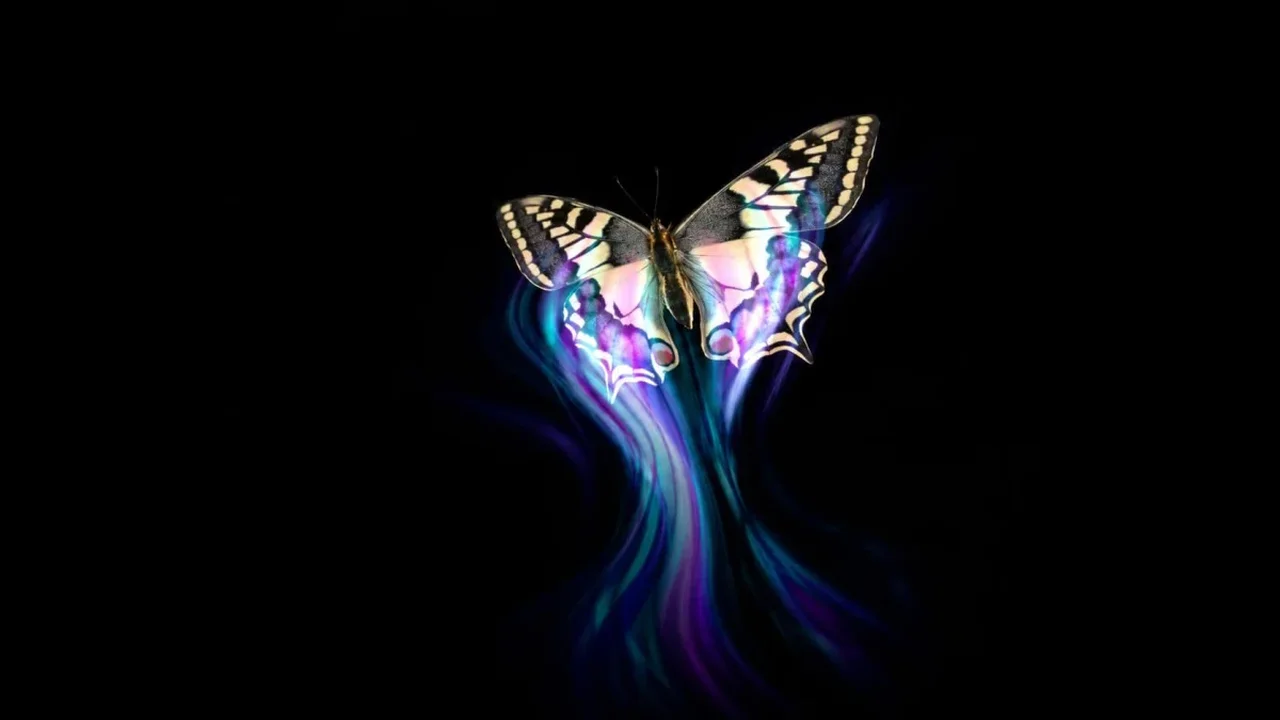
Butterflies may use their striking wing patterns for more than visual flair. A new study from the University of Exeter suggests that stripes, bands and spots can create motion illusions that make it harder for birds to judge an insect's speed and direction in flight.
The effect resembles the classic barber-pole illusion, in which diagonal stripes appear to move differently from the object carrying them. As butterflies flap, twist and fold their flexible wings, their markings can seem to travel in a different direction from the body itself. This may briefly disrupt a bird's ability to predict where the butterfly will be next.
Patterns designed for movement
Researchers combined high-speed recordings of butterflies with models of bird vision, computer simulations and touchscreen trials involving human participants. The analysis covered 397 European butterfly species and found that high-contrast forewings, vertical stripes, prominent bands and hindwing tails were particularly associated with misleading motion signals.
In the touchscreen experiments, participants tended to aim behind virtual butterflies whose patterns produced the strongest motion distortion. The result indicates that these markings may shift perceived position enough to offer a valuable split-second advantage during flight.
The team also used an evolutionary computer model to test thousands of artificial wing designs. After multiple simulated generations, the most effective designs developed features similar to those seen in real butterflies, reinforcing the idea that motion dazzle may have shaped wing-pattern evolution.
A new view of butterfly colour
Many butterfly patterns have traditionally been linked to camouflage, warning signals or mate recognition. This research adds movement-based visual deception to that picture, showing how colour and wing mechanics can work together as a dynamic survival strategy.
Published in Nature, the findings could broaden research into animal vision, adaptive design and biomimetic technologies. Understanding how natural patterns influence motion perception may inspire future advances in visual signalling and movement-aware materials.