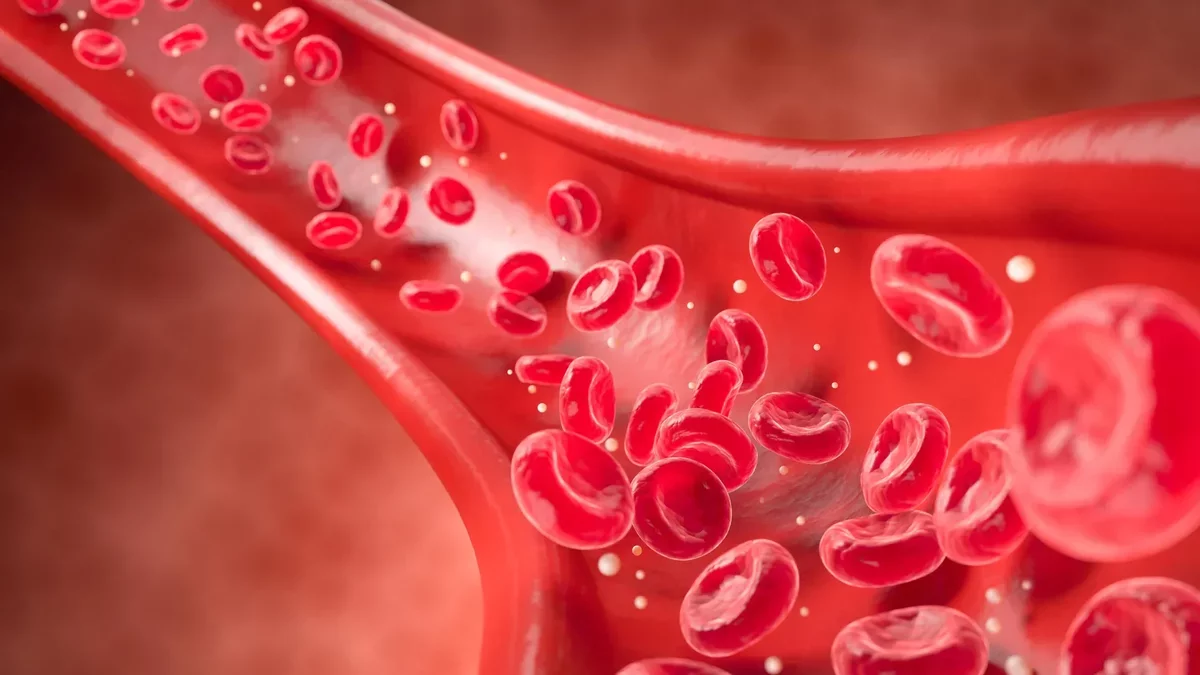
Early indicators of cardiovascular disease often originate in the smallest blood vessels within the body. These initial changes manifest as subtle issues in the dilation and constriction of blood vessels, a condition referred to as microvascular endothelial dysfunction (MiVED). Up until now, there has been no accurate, non-invasive method to observe or quantify these changes in individuals.
Dr. Hailong He, the lead author of the study and a researcher at the Institute of Biological and Medical Imaging at Helmholtz Munich and TUM, states, "With fast-RSOM, we can now non-invasively evaluate endothelial dysfunction at the resolution of single capillaries and skin layers." Co-first author Dr. Angelos Karlas, a vascular surgeon and senior research scientist at TUM University Hospital, emphasizes, "Our innovative approach provides an unparalleled perspective on how cardiovascular disease develops at the microvascular level."
Identifying Risks Before Symptoms Emerge
Fast-RSOM captures high-resolution, dynamic biomarkers associated with MiVED, unveiling minor yet significant impairments in blood vessel function. These alterations typically surface long before any noticeable symptoms or larger indicators of cardiovascular disease arise. They are frequently linked to established risk factors, including smoking, hypertension, or obesity.
Instead of merely estimating risk based on these factors, fast-RSOM directly measures the physical consequences they have already inflicted on the microvascular system. This enables healthcare providers to assess the functionality of the smallest blood vessels long before serious complications occur.
By recognizing these early indicators, fast-RSOM opens the door for earlier diagnosis, preventive measures, and more accurate monitoring of cardiovascular health. This technology could aid in identifying individuals at greater risk with enhanced precision and tracking the impact of lifestyle modifications or medical treatments on blood vessel function over time.
Advancing Toward Clinical Implementation
The research team aims to evaluate fast-RSOM in broader and more diverse patient groups and to work towards incorporating its biomarkers into routine clinical practice. Given its portable, rapid, and non-invasive nature, this device could eventually be utilized in outpatient environments as part of standard cardiovascular risk assessments.
Prof. Vasilis Ntziachristos, Director of the Bioengineering Center at Helmholtz Munich and Professor of Biological Imaging at TUM, remarks, "By facilitating earlier interventions and more accurate monitoring, fast-RSOM could revolutionize the prevention and management of cardiovascular diseases, enhancing patient outcomes and reducing long-term healthcare costs."
Understanding RSOM
RSOM (Raster Scan Optoacoustic Mesoscopy) is a non-invasive imaging technique that employs brief light pulses to generate ultrasound signals, yielding detailed 3D images of subcutaneous structures. It can detect minute changes in blood vessels, oxygen levels, and tissue composition that traditional imaging methods often overlook. With its strong contrast and depth capabilities, RSOM supports the early detection of conditions like cardiovascular disease and diabetes. Its compact design may also facilitate broader access to advanced diagnostic tools beyond specialized research settings. The technology was developed by a team led by Vasilis Ntziachristos.
About the Research Team
Dr. Hailong He is affiliated with the Institute of Biological and Medical Imaging at Helmholtz Munich and TUM.
Dr. Angelos Karlas is a Board-Certified Vascular Surgeon in Germany and a Senior Research Scientist at the Clinic and Polyclinic for Vascular and Endovascular Surgery at TUM University Hospital, where he also leads clinical research at the Chair for Computer-Aided Medical Procedures and Augmented Reality.
Prof. Vasilis Ntziachristos serves as the Director of the Bioengineering Center and the Institute of Biological and Medical Imaging at Helmholtz Munich. He also holds the Chair of Biological Imaging at TUM and is a founding member of TranslaTUM, TUM's Central Institute for Translational Cancer Research, affiliated with the Munich partner site of the German Centre for Cardiovascular Research (DZHK).