OpenAI has released hundreds of proposed solutions to advanced mathematics problems, placing renewed attention on how artificial intelligence can contribute to one of science's most rigorous fields. The release also highlights a central question for researchers: how can AI-generated proofs become fully understandable, verifiable and useful to the wider mathematical community?
The Advisory Group on Mathematics and Artificial Intelligence, hosted by the Institute for Advanced Study at Princeton University, has outlined principles for evaluating AI-driven mathematical research. These include timely publication, clear documentation of model processes and stronger connections between informal explanations and formal proof systems.
OpenAI shared 719 manuscripts in its latest release. Some included information about how models arrived at their conclusions, while a smaller selection provided detailed reasoning traces. Formal verification was also applied to many of the results, using Lean, a programming language designed to check mathematical proofs as executable code.
From AI output to shared mathematical understanding
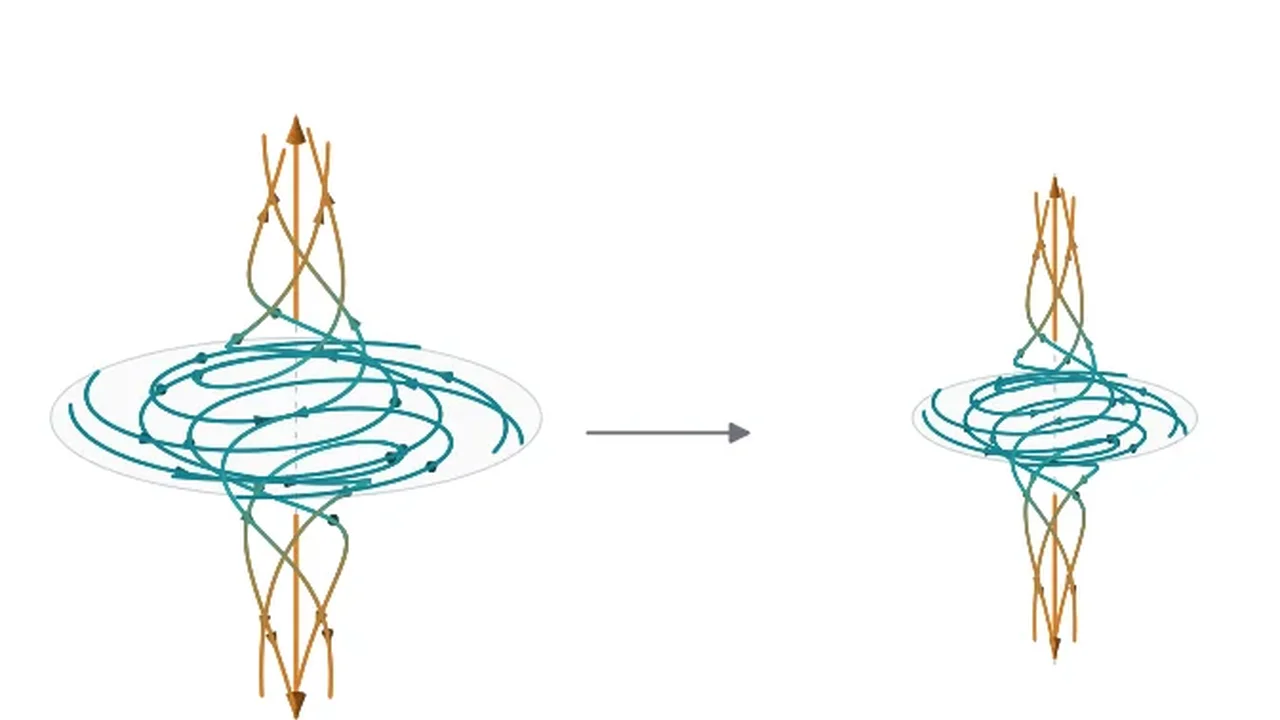
Researchers are particularly interested in the relationship between a proof written in natural language and its formalized code version. A recent analysis involving mathematicians from the University of Cambridge and King's College London identified differences between these two forms in an OpenAI solution related to the Navier-Stokes equations, a major framework for describing fluid behavior.
Such differences do not automatically invalidate a mathematical result. Instead, they underline the importance of expert review, transparent metadata and close collaboration between AI developers and mathematicians. Formal systems can confirm whether code follows precise rules, while human researchers remain essential for explaining why a result matters, connecting it to existing knowledge and building on it in future work.
Mathematics has long advanced through peer discussion, seminars, published proofs and repeated examination. Applying these practices to AI-generated discoveries could help transform rapid computational output into durable, shared scientific insight.
The next stage of AI mathematics may be defined not only by solving difficult problems, but by creating reliable bridges between machine-generated reasoning, formal verification and human understanding.