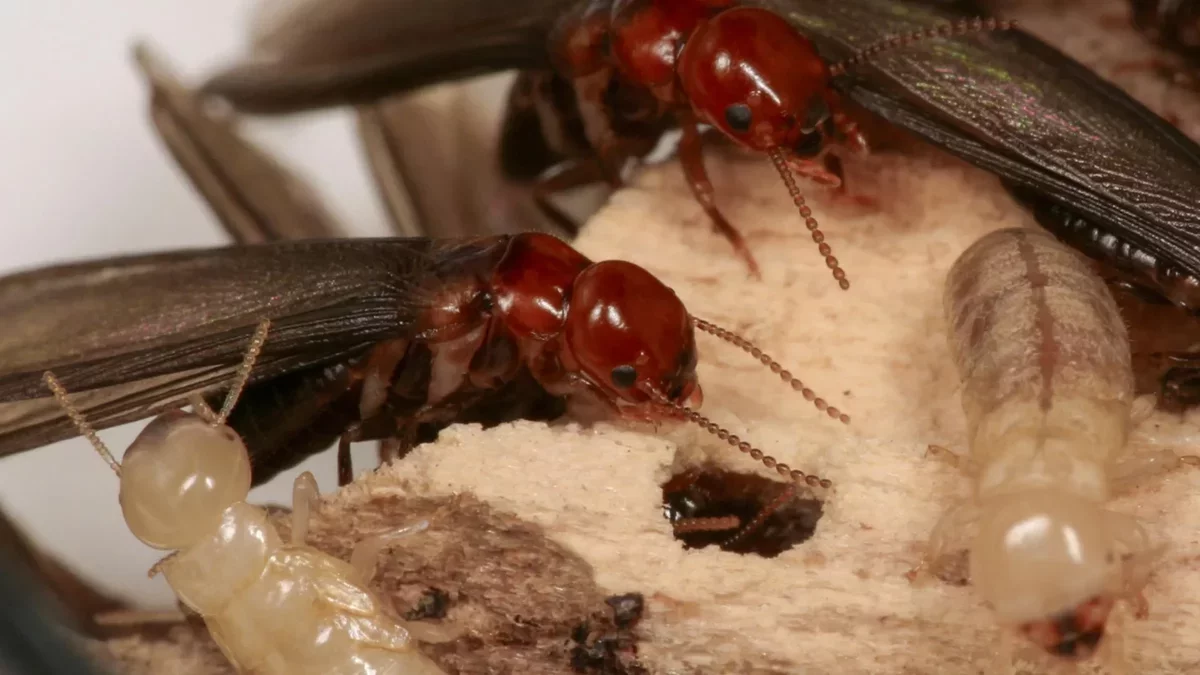
Researchers at UC Riverside have unveiled an innovative and cost-effective method for eradicating western drywood termites by enticing them towards insecticide rather than attempting to locate every hidden spot. In a study published in the Journal of Economic Entomology, the team utilized pinene, a fragrant compound emitted by forest trees, to lure these pests towards treated wood. This strategy significantly increased the effectiveness of the treatment, raising mortality rates from approximately 70% with insecticide alone to over 95% when combined with pinene.
UCR entomologist Dong-Hwan Choe, who spearheaded the research, remarked, "We observed a remarkable difference in mortality rates when comparing insecticide alone to the combination with pinene. The addition of pinene resulted in mortality rates exceeding 95%."
The Ecological Role of Western Drywood Termites
Indigenous to North America, western drywood termites play a crucial ecological role by aiding in the decomposition of dead wood, supported by microorganisms in their digestive systems. "They serve as recyclers," Choe noted, emphasizing their prevalence in nature.
However, their ecological contributions turn problematic when they invade human habitats, as they cannot differentiate between natural wood and structural lumber. This poses a significant concern in regions like California, Florida, and parts of Canada and Mexico. "It's only a matter of time before termites target a home, particularly in warmer climates," Choe added.
Challenges with Traditional Fumigation
Fumigation has long been a standard treatment for drywood termites, involving sealing a home under a tent and filling it with gas to exterminate the insects. California predominantly employs this method, according to UC Riverside.
Despite its thoroughness, fumigation has limitations. The industry is increasingly seeking alternatives due to the toxicity of sulfuryl fluoride, the chemical used, which poses risks to human health and contributes to greenhouse gas emissions. Additionally, fumigation can be costly and does not prevent future infestations.
"Even though it is comprehensive, homes can become infested again shortly after fumigation," Choe explained. "Some homeowners resort to fumigation every few years due to the lack of long-term protection."
Enhancing Insecticide Efficacy with Pinene
Localized injection is another method, where pest control professionals drill into infested wood and inject insecticide directly. This targeted treatment can use fewer chemicals and is often more cost-effective than fumigation, potentially offering better protection against future infestations.
The primary challenge lies in locating the termites within the wood, as they navigate complex tunnel systems. Standard contact insecticides only work when the termites come into direct contact with the treated area. Pinene, however, changes this dynamic by attracting termites from a distance, which minimizes the need to identify every hidden location before treatment.
"Pinene effectively draws termites from afar, even at low concentrations," Choe stated. "We believe it acts as a food signal rather than a pheromone, enticing them with its appealing scent."
The insecticide used in this groundbreaking study was fipronil, also effective against ants. While it can pose risks to aquatic insects and pollinators if mismanaged, its application directly into wood significantly reduces environmental impact.
Choe's research focuses on understanding urban insect pests' chemical communication, aiming to develop smarter pest control strategies that utilize fewer chemicals without sacrificing effectiveness. "Our findings highlight the importance of understanding insect behavior, which can lead to more efficient pest management solutions," he concluded.