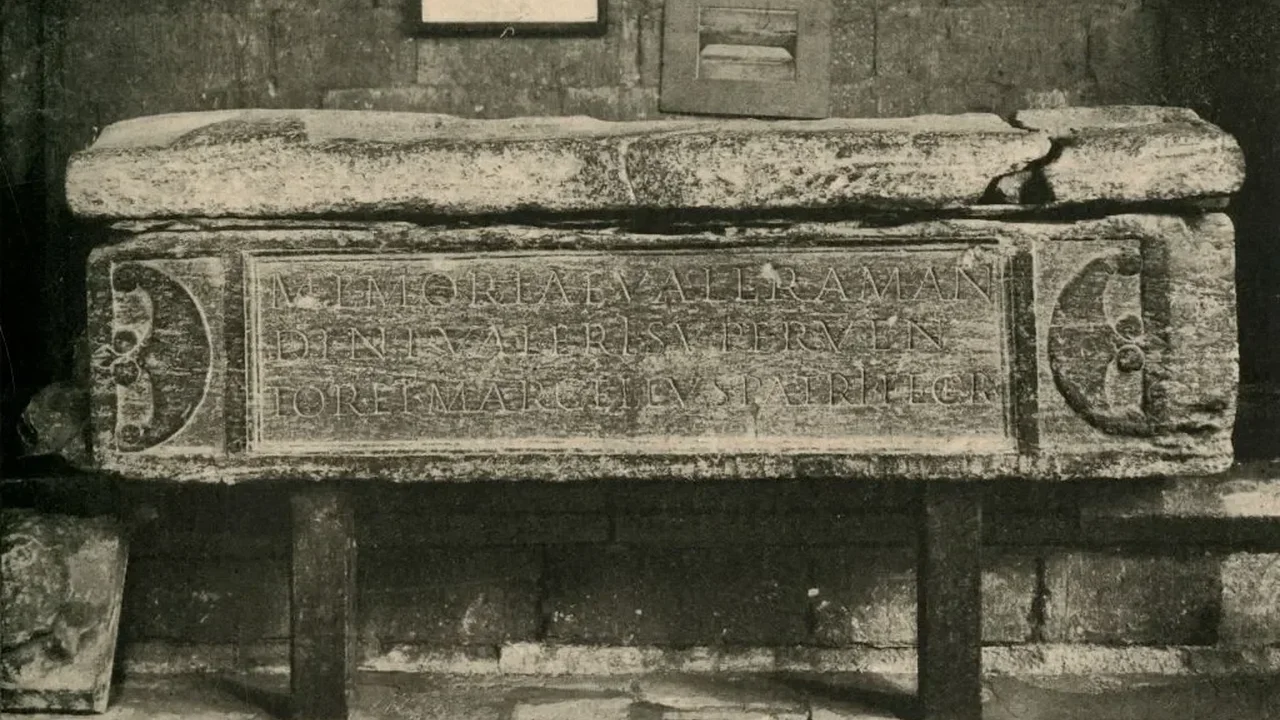
A stone coffin at Westminster Abbey bears the name of Valerius Amandinus, a man from Roman Britain. Yet radiocarbon analysis shows that the person buried inside lived centuries later, during the late Anglo-Saxon period.
The limestone sarcophagus was discovered in 1869. Its Roman inscription commemorates Amandinus, while a cross carved into the lid dates to around the 10th or 11th century, suggesting the monument was reused for a later burial.
Evidence from the coffin and its contents
A forgotten sketch revealed that workers had uncovered the coffin earlier, in 1820, and broken open its lid. The bones were likely disturbed then and later returned in a disordered arrangement. Although a 19th-century account claimed the skeleton had gone missing, conservators found it still inside during a 2016 examination.
Osteological analysis estimated the individual was between 35 and 49 years old. Radiocarbon dating by the Scottish Universities Environmental Research Centre placed his death between AD 987 and 1052, ruling out the Roman-era Amandinus.
Two possible abbots
Archaeologist Warwick Rodwell's research, published in the Journal of the British Archaeological Association, identifies two plausible candidates: Ælfwig, abbot from around 993 until about 1020, and his successor Wulfnoth, who died in 1049. Both fit the date range. Rodwell considers Ælfwig somewhat more likely because he was already a monk at Westminster before becoming abbot, though the identification remains uncertain.
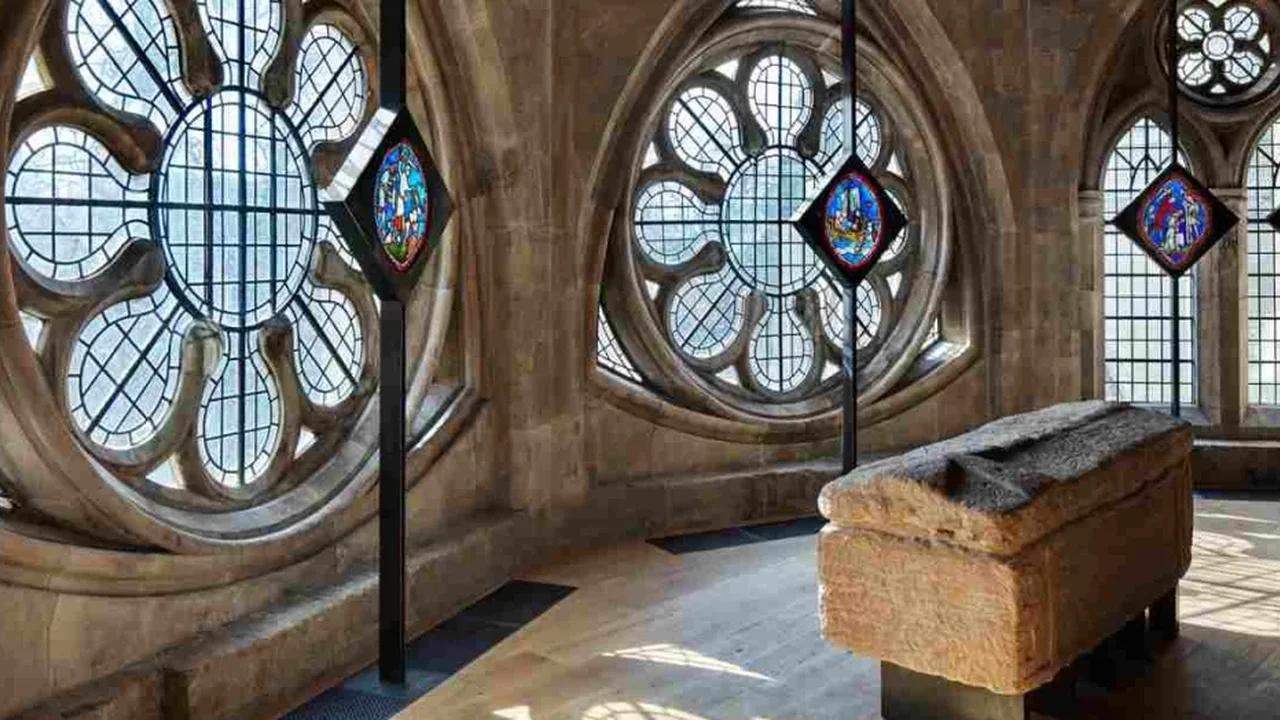
The sarcophagus is now displayed in Westminster Abbey's Queen's Diamond Jubilee Galleries. Its inscription and medieval cross preserve evidence of two distinct eras in one monument. Continued archaeological and scientific study can help reveal how historic objects were reused and understood across generations.