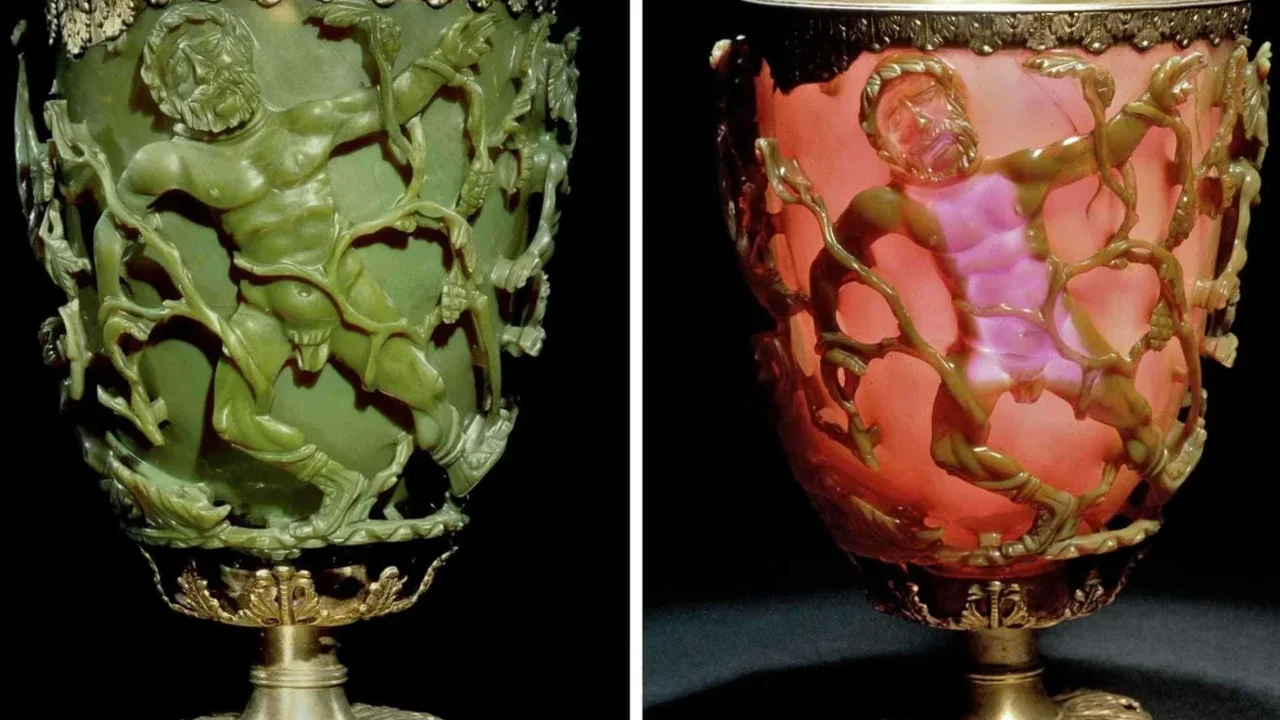
A glass vessel made in the fourth century CE is helping connect ancient craftsmanship with modern materials science. The Roman Lycurgus Cup appears green in reflected light but glows ruby red when illuminated from behind. Researchers at the University of Sheffield have now recreated glass with a similar effect.
The color shift comes from tiny particles of gold and silver embedded in the glass. Research published in the journal Archaeometry identified particles around 50 to 100 nanometers wide. Their interaction with light changes the wavelengths that pass through or scatter off the cup, producing its contrasting colors--a phenomenon known as dichroism.
Recreating an ancient glassmaking effect
Matching the cup's appearance required more than adding precious metals to molten glass. The size and distribution of the particles depend on the glass mixture and the conditions in the furnace. The Sheffield team tested different ingredients, furnace setups and oxygen levels, including the addition of sugar, while heating the glass above 1,000°C.
The resulting material reproduces the distinctive green appearance under reflected light and red glow when lit from behind. The researchers used their approach in a contemporary glass artwork inspired by the ancient vessel.
It remains uncertain whether Roman glassmakers deliberately added gold and silver to create the effect or achieved it unintentionally through their materials and process. Either way, the cup demonstrates a sophisticated control of light at a scale its makers could not have measured.
From ancient craft to future materials
Materials that manipulate light at the nanoscale could inform research into optical technologies, including applications in solar energy, quantum systems and medical diagnostics. The recreated glass offers a striking example of how studying historical materials can open new directions for future design.