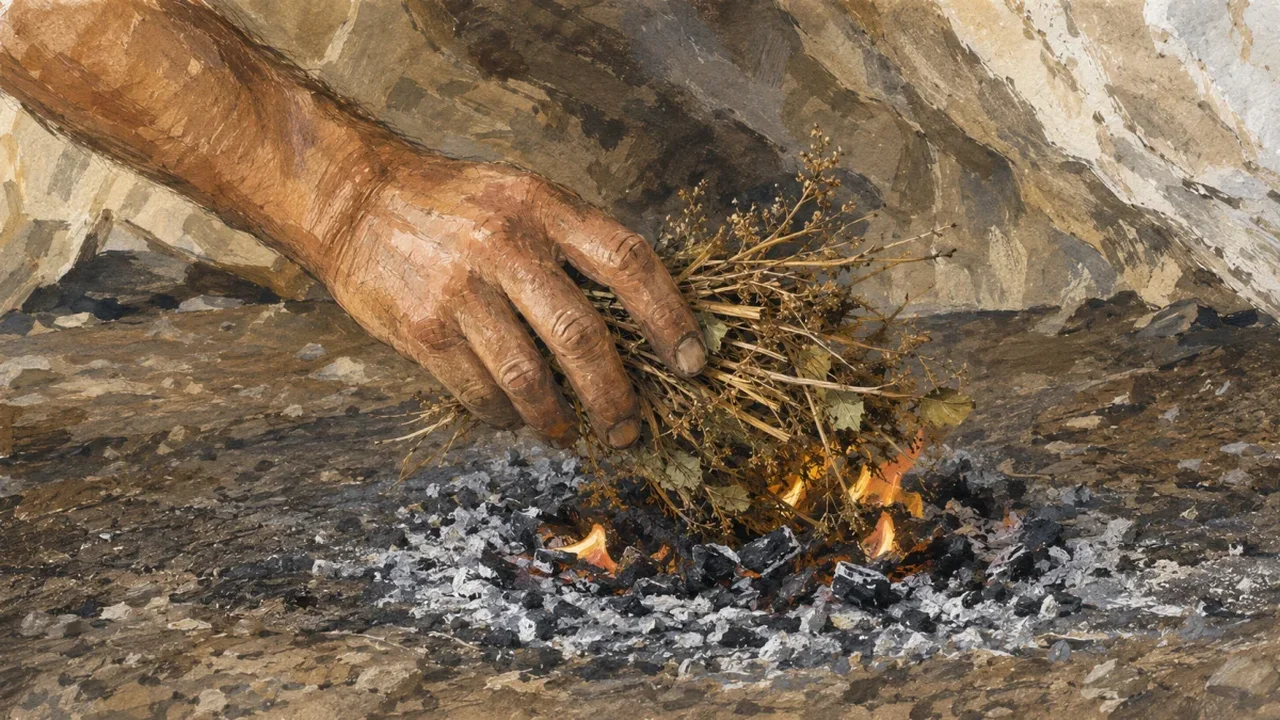
A new archaeological study has shown how quantum diamond microscopy can uncover the hidden chemistry of ancient fire use. By examining a Neanderthal hearth at El Salt in eastern Spain, researchers mapped magnetic traces left behind by heat and cooling, turning an old campsite into a readable scientific record.
A Hearth Read Through Magnetism
The site, used repeatedly between about 80,000 and 45,200 years ago, contains overlapping fire layers that make it difficult to separate one event from another. To solve that puzzle, the team applied a quantum diamond microscope, a tool that detects tiny magnetic signals at micrometre scale using defects inside diamond sensors.
That approach allowed the researchers to distinguish materials that had been altered by fire from those that likely entered the hearth later. The clearest result came from red, clay-rich fragments embedded in the ash. Their magnetic pattern matched the surrounding burned material, suggesting they were present while the hearth was still active rather than being added much later.
The study also identified contrasting signatures from limestone, fossilised dung, and iron-rich nodules, showing how precisely the method can separate different components inside a complex archaeological layer.
What the Fire Suggests
The findings point to a practical fire-making routine. The Neanderthals appear to have lit the hearth on an organic-rich surface and fed it with nearby plant material, likely grass-based fuel, while it was still burning. That kind of behavior reflects planning, attention, and a strong understanding of how different materials sustain flame.
Published in the Journal of Archaeological Science, the research marks the first known use of quantum diamond microscopy in archaeology. It also adds to growing evidence from El Salt that Neanderthals reused hearths over long periods and managed fire with more control than once assumed.
As quantum tools continue to enter archaeology, they may help reveal even finer details of early human life and reshape how future generations understand ancient technology.