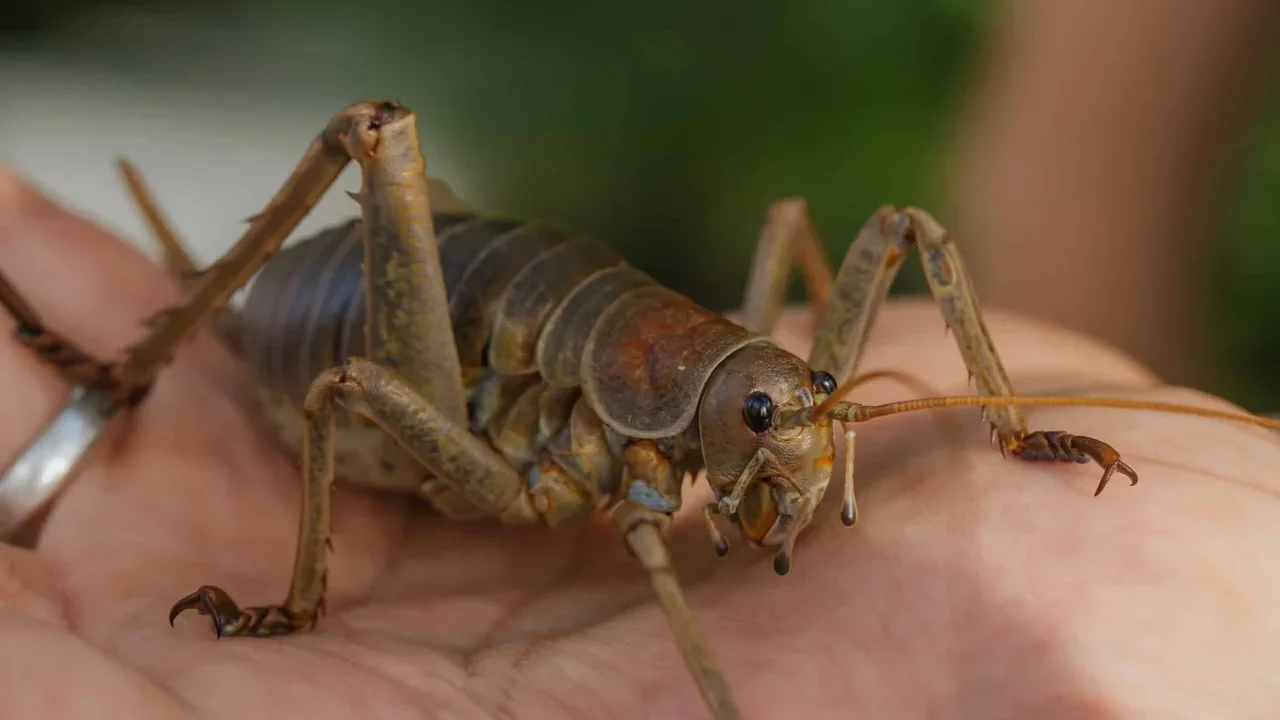
New Zealand's wētāpunga, the world's heaviest known cricket-and-grasshopper relative, is showing a major recovery milestone: released populations are now reproducing in the wild without ongoing restocking.
Once reduced to a single island stronghold, the large, flightless insect has benefited from a conservation effort combining captive breeding, carefully chosen release sites and long-term monitoring. From 2010 to 2025, conservation teams carried out 45 transfers, releasing 11,214 wētāpunga across eight islands and two fenced mainland sanctuaries.
From breeding programme to wild populations
The breeding programme began in 2008 with a small group collected from Little Barrier Island. Butterfly Creek established a breeding colony, and Auckland Zoo joined the work in 2012. The effort brought together conservation scientists, zoo staff, local restoration groups and Ngāti Manuhiri, whose community considers the insect a treasured species.
Raising wētāpunga requires patience: their eggs typically take around nine and a half months to hatch, and young insects pass through 10 growth stages before adulthood. Researchers refined their care methods, including grouping juveniles of similar size and providing a varied, protein-rich diet.
On Motuora and Tiritiri Matangi, monitoring has found insects consistent in age with fourth- and fifth-generation descendants of the original releases. This indicates that the populations are reproducing and persisting independently of regular releases.
New Zealand's Department of Conservation has upgraded the wētāpunga's status from Nationally Endangered to Threatened - Nationally Increasing. The species remains in need of active management, including predator control and continued observation. The findings were published in the New Zealand Journal of Zoology.
The recovery shows how sustained breeding, habitat preparation and monitoring can help rebuild wild populations--and may offer a useful model for future insect conservation programmes.