Describing the experience of psychedelics to someone who has never tried them can be challenging. Each journey is unique and often intense, yet many users report a common theme: altered visual perceptions. Objects may appear to warp, colors blend, and intricate geometric patterns emerge, reminiscent of a Tim Burton film.
The question arises: what neurological processes create these vivid hallucinations? To explore this, a research team led by scientists from Ruhr University Bochum, in collaboration with colleagues from Hong Kong and Singapore, sought to observe the brain's activity during a hallucination in real-time.
Inducing Hallucinations in Mice for Scientific Insight
Using a cutting-edge optical method, the researchers recorded neural activity across the entire cortex of awake, freely moving mice. Developed by Professor Thomas Knöpfel of Hong Kong Baptist University, this technique enables specific neurons to fluoresce in response to electrical activity, allowing precise observation of brain function without invasive electrodes.
The team administered psychedelic-like compounds, specifically 2,5-Dimethoxy-4-iodoamphetamine (DOI) and TCB2, both of which activate the serotonin 5-HT2A receptor--a key player in the effects of classic psychedelics such as LSD and psilocybin.
The Rhythm of Hallucinations
What does a hallucination reveal on a monitor? The primary finding was a slow, pulsing rhythm of approximately 5 cycles per second in the primary visual cortex, the area responsible for processing visual stimuli. Initially, this 5-Hz rhythm was present during normal waking states, but its frequency increased significantly once the psychedelic substances took effect.
Interestingly, this activity was not confined to the visual cortex; the researchers discovered that the 5-Hz rhythm also synchronized with activity in the retrosplenial cortex, a region involved in memory processing.
Connecting Memory with Perception
The study identified a brief delay of about 18 milliseconds between the visual cortex and retrosplenial cortex activity, indicating a direct link between what is seen and what is remembered. When psychedelics are introduced, the brain's ability to process immediate visual information diminishes, prompting it to "fill in" gaps with stored memories, leading to hallucinations.
This phenomenon suggests that the brain transitions to a state akin to "partial dreaming," where internal memories are projected as if they were real-time experiences.
Insights into Human Psychedelic Experiences
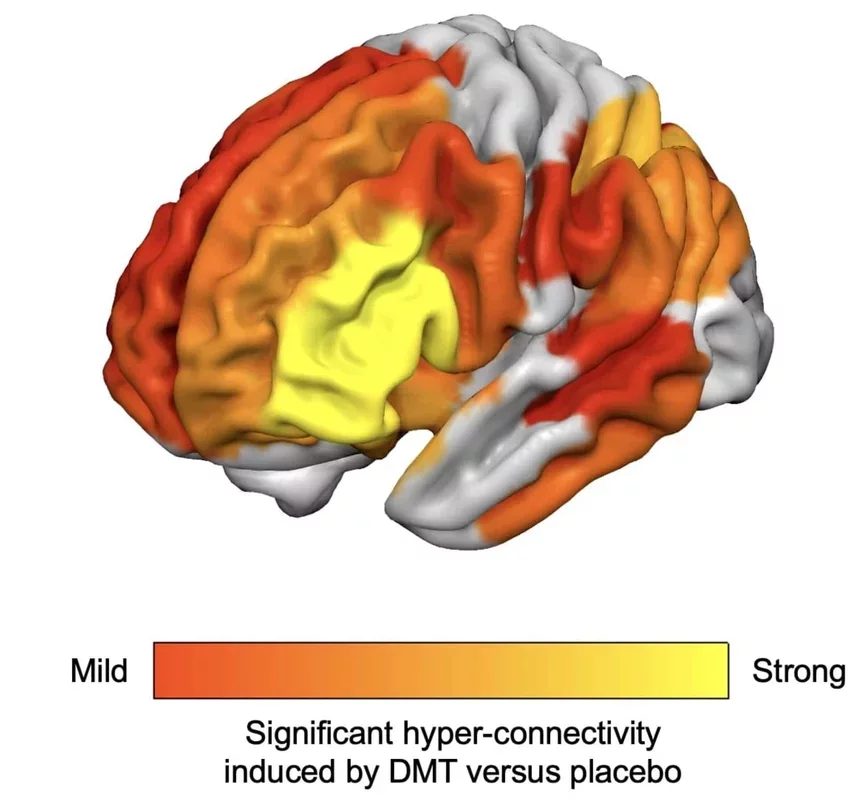
While direct communication with mice is impossible, these findings provide valuable insights into human psychedelic experiences. Previous studies have shown that under psychedelics like LSD, the brain's functional networks become more interconnected, resembling the free-thinking state of infants.
These discoveries not only enhance our understanding of the brain's workings but also pave the way for potential therapeutic applications. Psychedelic substances are increasingly being explored for their ability to treat mental health conditions by helping individuals rewrite negative thought patterns.
By leveraging this unique brain activity, researchers hope to develop personalized therapies that harness the mind's capacity for healing and transformation.