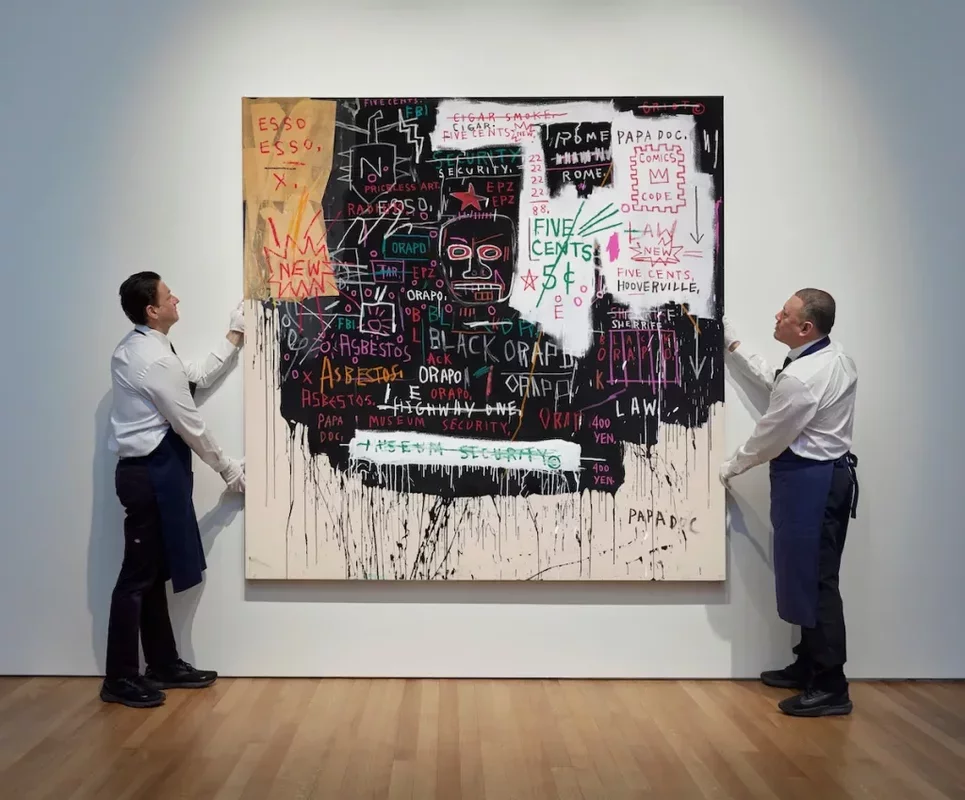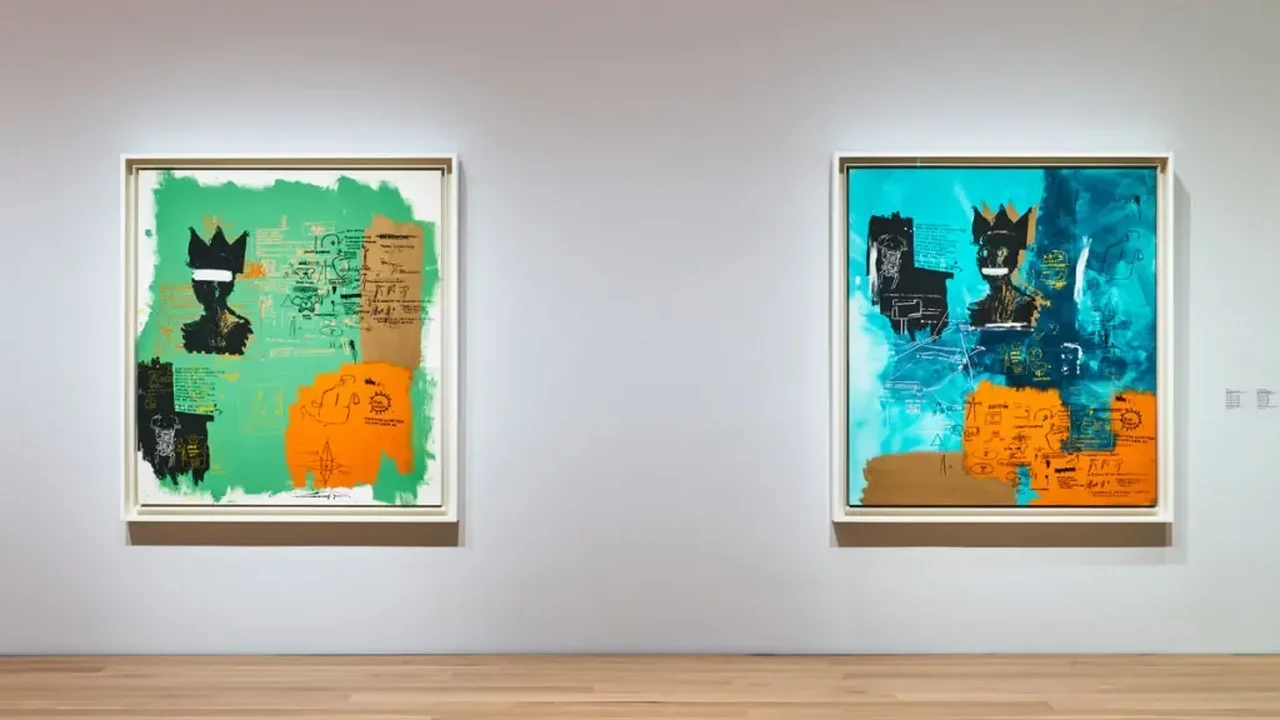
A new exhibition at the Princeton University Art Museum invites visitors to reconsider Jean-Michel Basquiat's painting process through the lens of reproduction, revision and printmaking. Titled "Basquiat, the Blue Ribbon Paintings, and the Art of Reproduction," the presentation reunites 11 large-scale works created in 1984.
The "Blue Ribbon" paintings are known for their energetic mix of anatomical forms, words, emblems and crowned figures. Yet the exhibition emphasizes that these repeated motifs were not simple copies. Basquiat shifted screens, adjusted colors, painted over impressions and reworked forms by hand, turning repetition into a constantly evolving visual language.
From Xerox experiments to layered canvases
The exhibition traces this approach back to Basquiat's late-1970s Xerox collaborations with Jennifer Stein. Using drawings, photographs and paper fragments, the pair produced copied sheets that were cut into postcards. This early process introduced a method that would become central to Basquiat's practice: creating an image, reproducing it, rearranging it and giving it a new context.
Later works expanded this process across ambitious surfaces. In Tuscany from 1982, copied elements were cut apart and mounted onto smaller canvases before being assembled on a larger support. In Notary from 1983, silkscreened imagery, text and anatomical references build a dense field of visual associations.
Curator Alexandra Foradas describes Basquiat as an artist who "thought like a printmaker" while using reproduction technologies throughout his painting practice. The exhibition presents screens, source materials and related studies to show how his compositions emerged through deliberate editing rather than spontaneous gesture alone.
A practice shaped by research and revision
Basquiat drew inspiration from a wide range of art histories, including Leonardo da Vinci's anatomical studies, as well as the practices of Robert Rauschenberg and master printer Robert Blackburn. His work also reflects an interest in Color Field painting, visible in passages where translucent layers and broad areas of color support the printed imagery.
By showing how Basquiat developed multiple paintings at once, the exhibition frames the "Blue Ribbon" series as parallel variations rather than a sequence of finished versions. Each canvas becomes a record of choices, adjustments and renewed possibilities.
This perspective may help future audiences recognize Basquiat not only as an iconic painter, but as a forward-looking artist whose methods anticipated today's remix-driven creative culture.