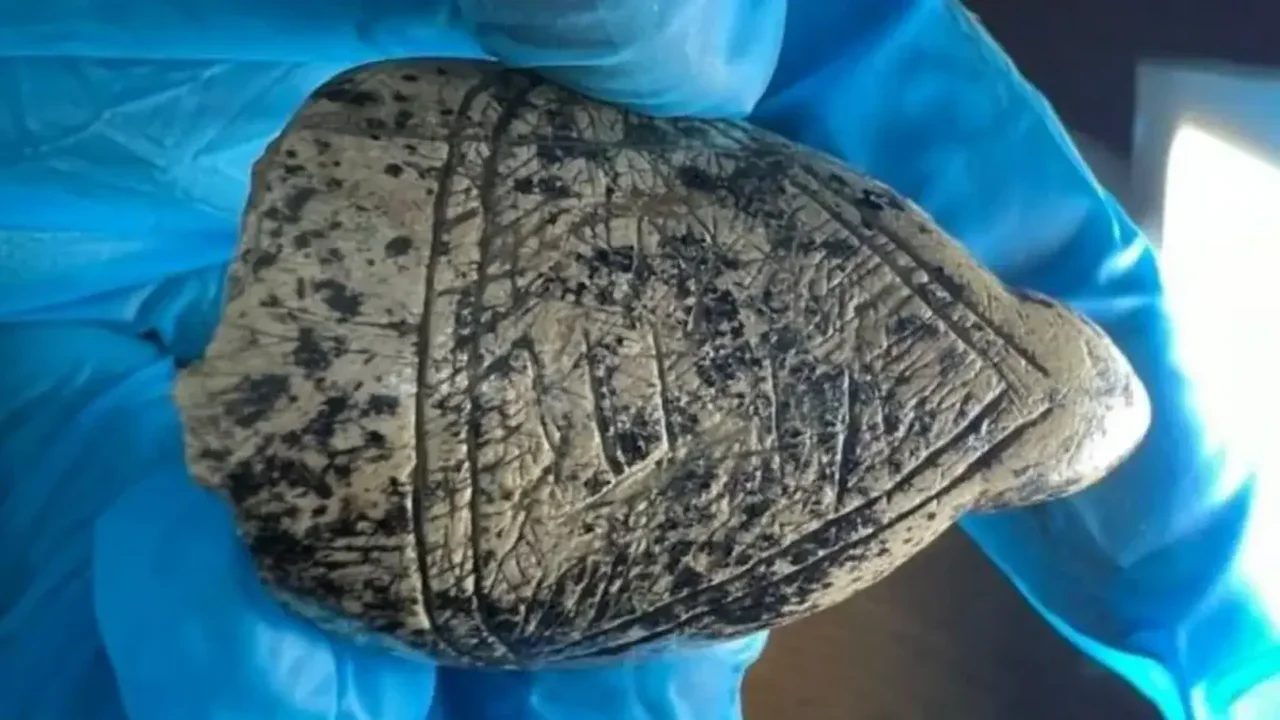
Artists living in eastern Europe around 18,000 years ago created small human-form figurines by working with the natural structure of mammoth tusks, rather than treating ivory as a blank surface.
A new study of 18 carvings from Mizyn in northern Ukraine shows that their zigzags, curves and looping engravings closely echo the internal growth patterns of mammoth ivory. Using microscopic analysis and high-resolution 3D models, researchers found that many decorative lines follow or recreate the material's natural markings.
A Material-Led Artistic Language
The figurines feature elongated bodies, narrow torsos and emphasized hips, alongside dense geometric ornamentation. Researchers identified links between these engravings and the ivory's distinctive Schreger and Owen lines, patterns formed as tusks grow.
Fine preliminary marks suggest that makers planned their compositions before using flint tools to cut deeper grooves. The approach points to a detailed understanding of mammoth ivory and a creative process in which the material itself helped guide each design.
The research team, including specialists from the University of York, compared the Mizyn objects with hundreds of dated Paleolithic figurines across Europe. Their analysis suggests that the region developed a distinct visual tradition before similarly simplified female forms became widespread farther west.
Rethinking Ice Age Creativity
Some of the figurines were discovered in deliberate association with mammoth remains, indicating they may have held particular cultural significance. Their exact purpose remains open to interpretation, but the study offers a clearer view of the technical choices behind their production.
Digital documentation also enabled detailed, non-invasive study of the fragile artifacts. These methods allow researchers to examine engraved surfaces and internal structures while preserving the original objects for future generations.
The findings show that Ice Age art was not only symbolic but also deeply responsive to material, craft and place. As digital archaeology advances, it may reveal further regional stories of innovation within humanity's earliest artistic traditions.