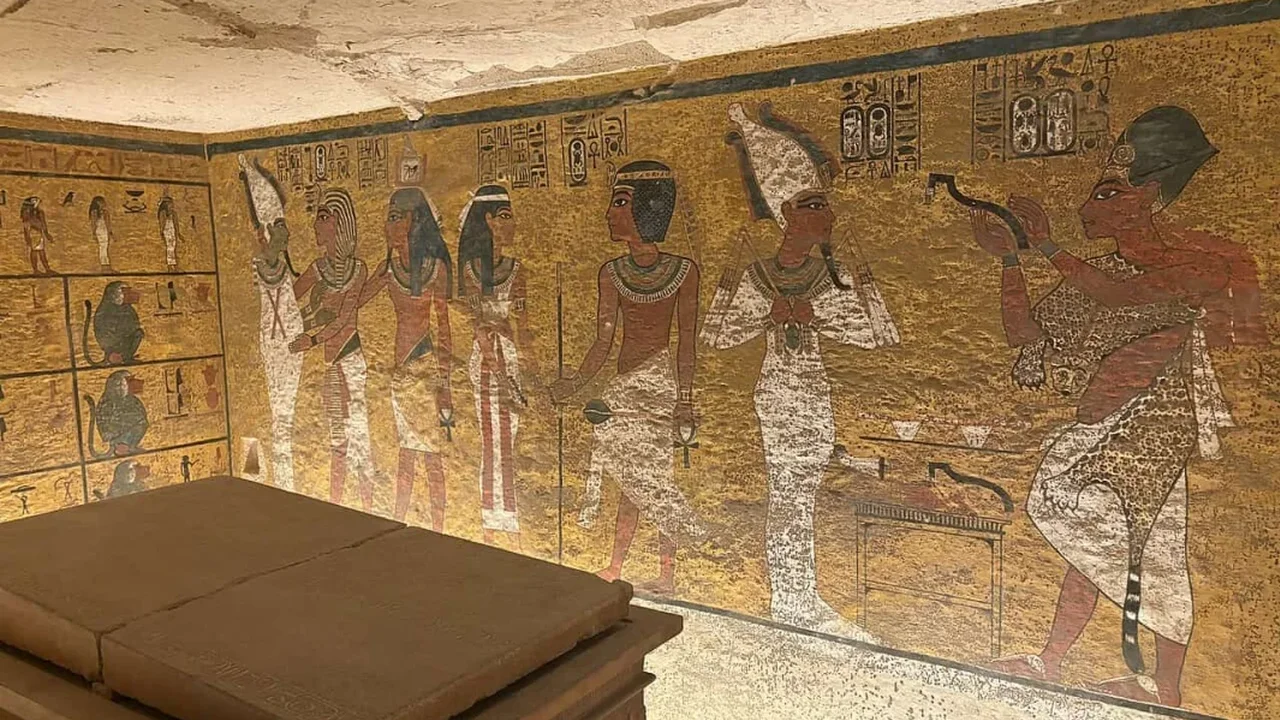
New geophysical research has revived one of Egyptology's most enduring questions: could unexplored chambers extend beyond Tutankhamun's tomb in the Valley of the Kings?
Known as KV62, the tomb is celebrated for its remarkable treasures but has long intrigued researchers because of its relatively compact scale and unusual layout. Its architecture has led some specialists to suggest that the structure may originally have been designed for another member of Egypt's royal family.
Signals Beneath the Limestone
A recent assessment combined ground-penetrating radar, electrical measurements and microgravity mapping to examine the area north of the burial chamber. The data indicates several lower-density zones that may correspond to rubble-filled passages or enclosed spaces stretching roughly 25 to 30 metres beyond the known tomb.
More than 1,200 gravity readings were used to identify anomalies with geometric patterns that may be consistent with human-made construction. Researchers note, however, that natural cavities and rock fractures remain possible explanations, making further verification essential.
The findings also return attention to a proposal that KV62 could be the accessible section of a larger royal burial complex. Egyptologist Nicholas Reeves has argued that the tomb's orientation, painted walls and apparent blocked features could point to an earlier design later adapted for the young pharaoh.
A Carefully Planned Next Step
Rather than disturbing the historic walls, the research team has proposed highly targeted drilling from the surface. Small openings could allow remote equipment to inspect any detected voids while preserving the tomb's fragile interior.
Any exploration would require approval from Egypt's Supreme Council of Antiquities. Even if new chambers are confirmed, their original purpose and contents would remain open questions. They could represent storage areas, architectural extensions or another part of a royal funerary plan.
The possibility of a connection to Nefertiti remains unproven, yet the renewed investigation highlights how non-invasive technology is expanding archaeology's ability to explore heritage sites with greater precision. Such methods may shape a future where major historical discoveries are made while safeguarding the sites that hold them.