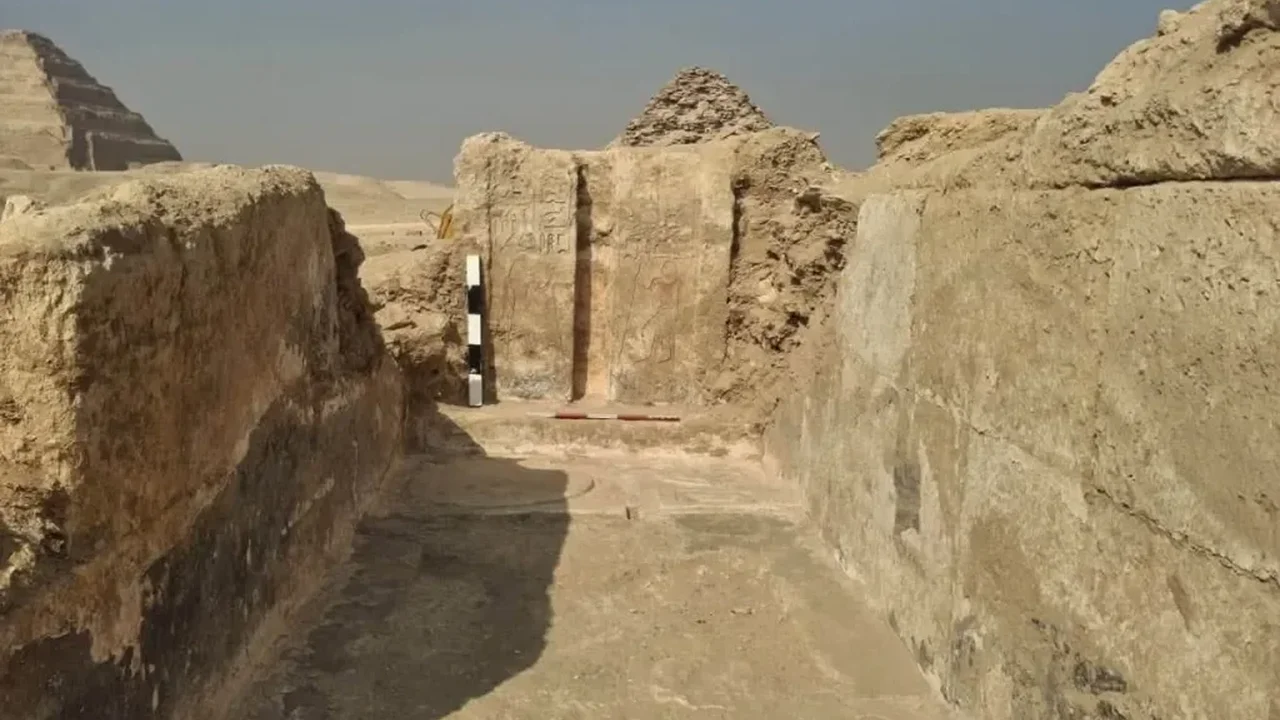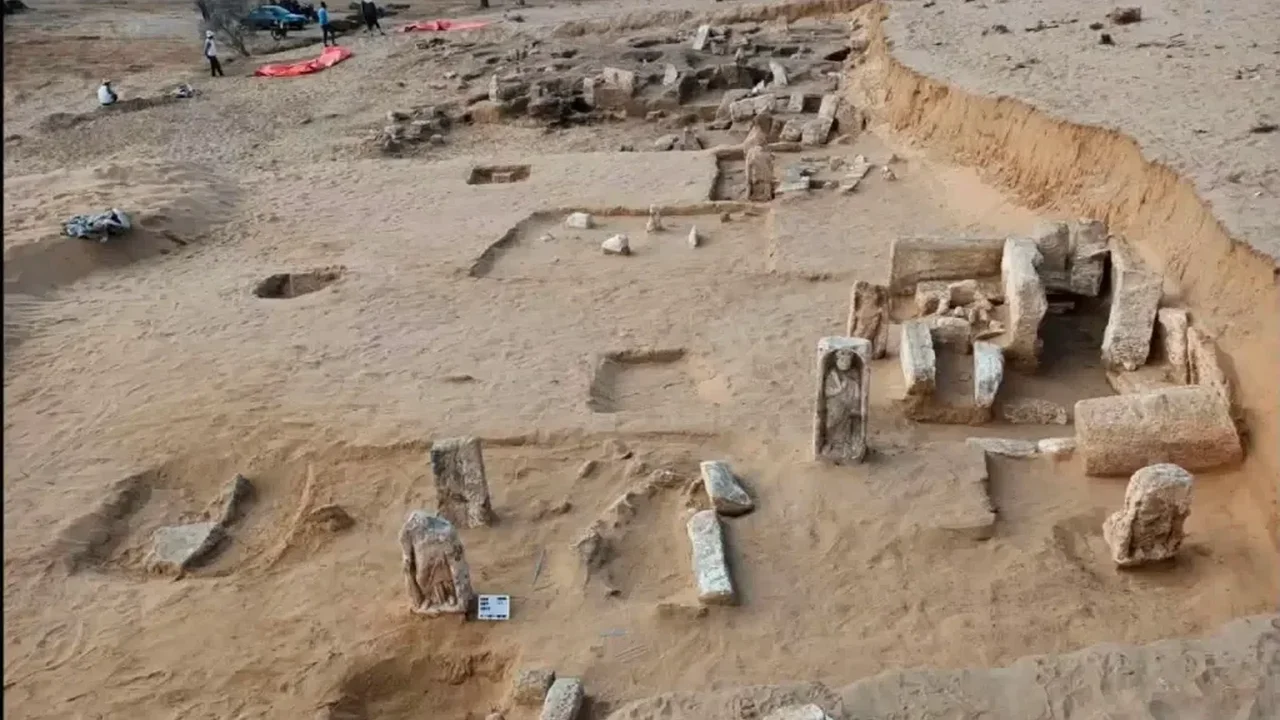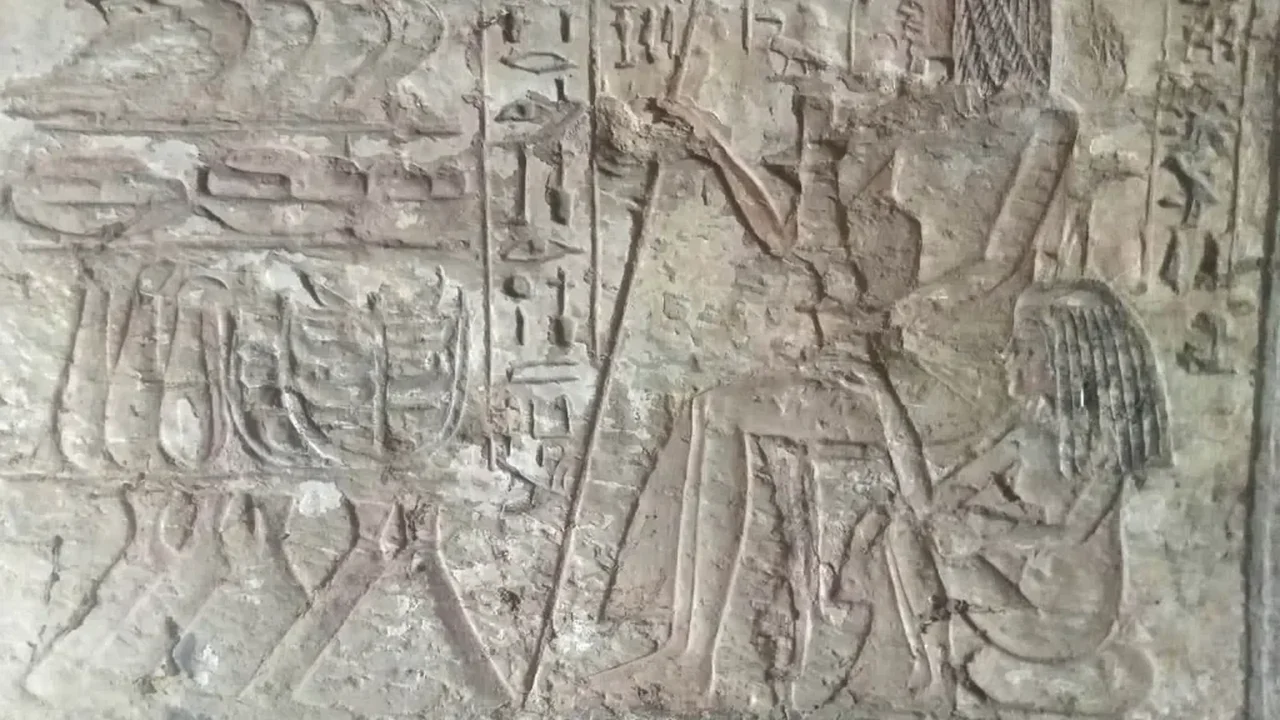
Egypt's Saqqara necropolis has yielded three newly identified rock-cut tombs from the New Kingdom era, adding fresh detail to one of the ancient world's most studied burial landscapes. The discovery was made at the Bubasteion area, about 40 kilometers southwest of Cairo, within the historic cemetery of Memphis.
According to Egypt's Supreme Council of Antiquities, the tombs preserve hieroglyphic inscriptions that help identify the people buried there and clarify their roles in society. One tomb belonged to Mentuhotep, a high-ranking official whose titles suggest influence in administration, military affairs, and governance. A relief in the tomb shows him seated with his mother, Eihotep.
The second burial chamber was assigned to Paremwia, also known as Samut, described as a major merchant tied to the Estate of Ptah. Inscriptions also name his wife, mother, and four sons, offering a rare glimpse into the family network of an elite New Kingdom figure.
The third tomb, though more damaged, belonged to an official named Nahsi. Its inscriptions mention his wife, Neferptah, and include a notable reference to the return of a military commander from Syria, pointing to Egypt's wider regional connections during the period.
Archaeologists say the finds deepen understanding of New Kingdom society, when ancient Egypt stood at a peak of prosperity, organization, and cultural influence. The newly uncovered tombs may continue to reveal how power, family, and diplomacy were recorded in stone. In the years ahead, discoveries like these could further reshape how the ancient world is understood.