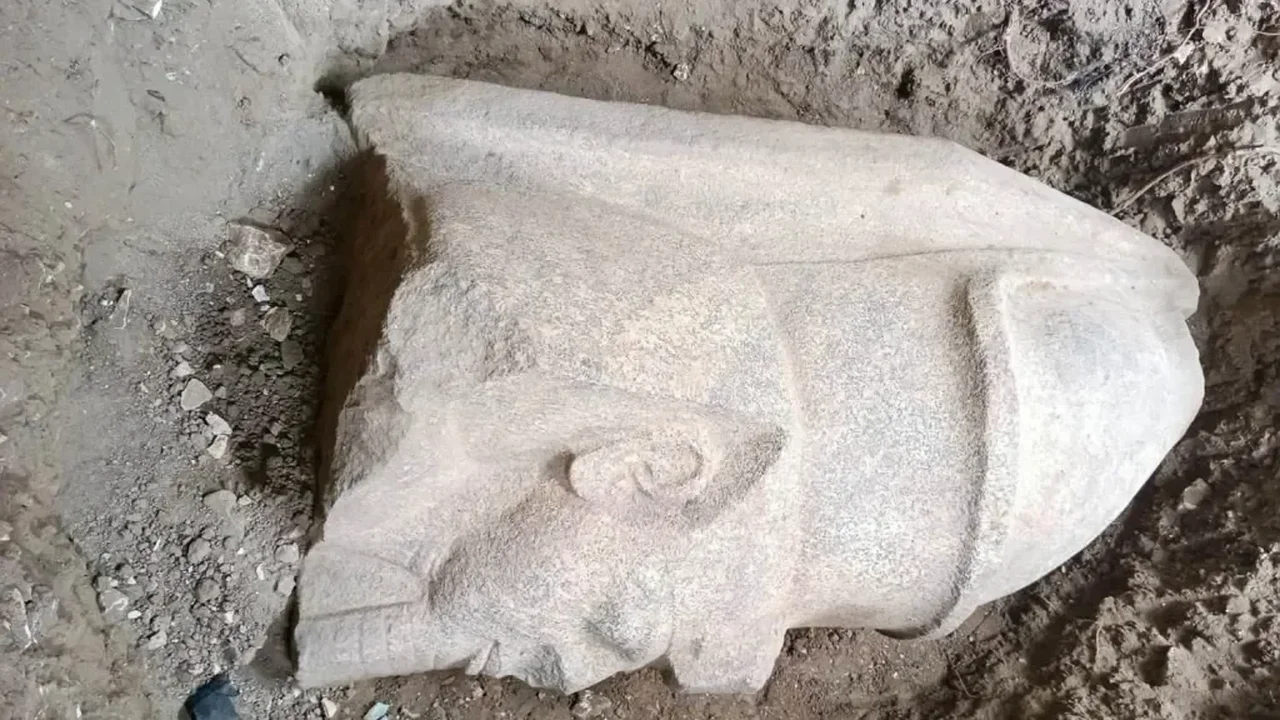
An archaeological team working in Behbeit El-Hagar has uncovered parts of two monumental statues believed to depict Ramses II. The discoveries were made by Egypt's Supreme Council of Antiquities after a local landowner reported an inscribed stone block.
The first statue is represented by a stone head more than five feet tall, showing a ruler wearing the double crown associated with the unification of Upper and Lower Egypt. A nearby section of its back pillar bears one of Ramses II's royal titles, supporting the identification.
A second statue fragment includes a head and a surviving figure nearly eight feet high, not counting the head. Its resemblance to the first sculpture suggests it may also portray Ramses II, though researchers have not confirmed this. A nearby pink granite block, about four feet long, carries hieroglyphic inscriptions that include two of the king's titles.
Ramses II, the third ruler of Egypt's 19th Dynasty, reigned for 66 years and is known for an extensive building program that left monuments across the country. Excavations at the site are continuing. Further study of the finds may deepen understanding of how royal imagery and monumental sculpture shaped ancient Egypt's cultural landscape.