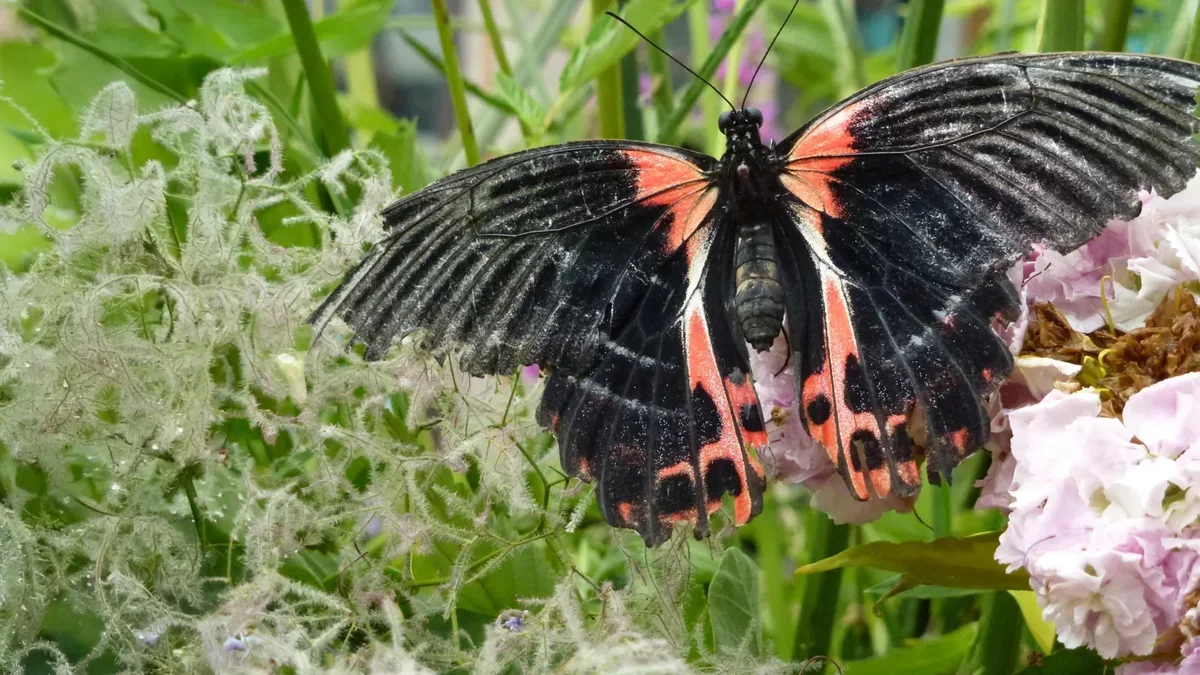
An international research team, spearheaded by the University of York and the Wellcome Sanger Institute, has delved into the fascinating world of butterflies and moths inhabiting the South American rainforests. Despite their distant genetic ties, these species exhibit remarkably similar wing color patterns that act as warning signals to potential predators, a phenomenon recognized as mimicry.
Genetic Foundations of Color Patterns
The objective of the study was to pinpoint the genes responsible for these shared color patterns across seven distantly related species. The researchers found that both butterflies and moths consistently utilized the same two genes, known as ivory and optix, to produce strikingly similar warning colors.
Rather than changing the genes themselves, evolution influenced regulatory elements, often referred to as genetic "switches," which determine the activation of these genes. In butterflies, these switches were modified in comparable ways across species. Interestingly, in moths, a unique inversion mechanism was employed, where a segment of DNA flipped backward, paralleling a strategy observed in one butterfly species.
Insights into Predictable Evolution
Professor Kanchon Dasmahapatra from the University of York's Department of Biology stated, "Convergent evolution, where unrelated species evolve similar traits independently, is prevalent throughout the tree of life. However, we seldom have the chance to explore the genetic foundations of this occurrence." He emphasized that through the study of seven butterfly lineages and a day-flying moth, their findings indicate that evolution can indeed be quite predictable. It appears that butterflies and moths have been employing the same genetic strategies to achieve similar color patterns since the era of the dinosaurs.
The research, published in the journal PLoS Biology, suggests that evolution may not always be a random event, but rather one that can follow recurring genetic pathways.
The Role of Warning Colors
Professor Joana Meier from the Wellcome Sanger Institute remarked, "These distantly related butterflies and the moth are all toxic and unpalatable to birds. Their resemblance is advantageous; if birds recognize a specific color pattern as a warning, it benefits other species to adopt similar appearances." She noted that these warning colors are particularly effective due to the highly conserved genetic basis that has persisted for over 120 million years.
Implications for Future Evolution
Recognizing that evolution often retraces established genetic paths could empower scientists to better predict how species might adapt to environmental changes or climate fluctuations. If nature tends to repurpose successful biological solutions, forecasting future adaptations may become more feasible than previously assumed.