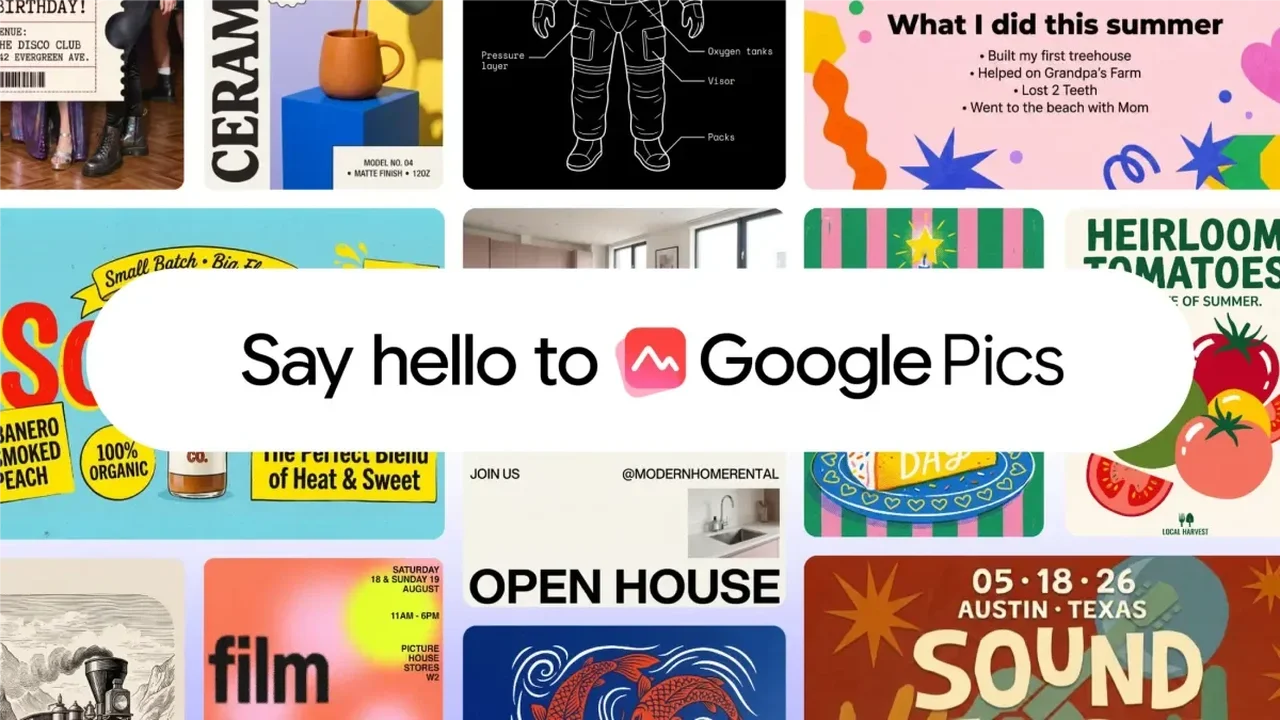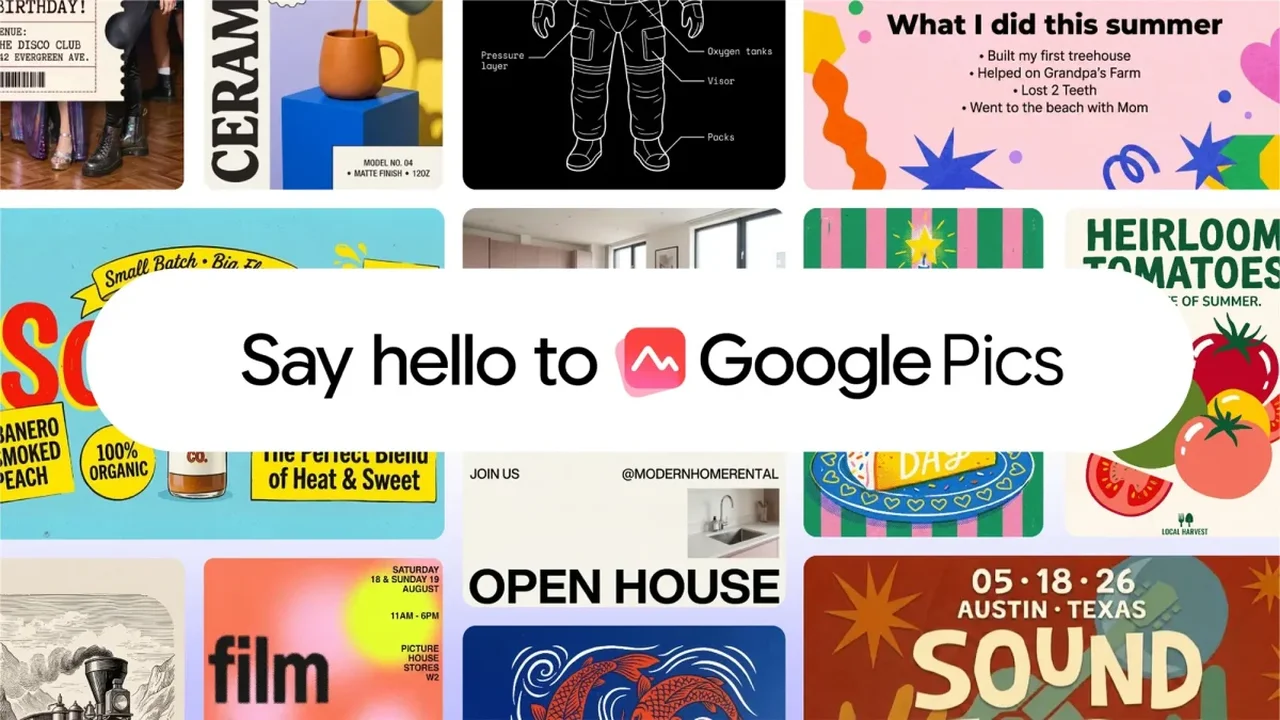
Google has introduced Google Pics, an AI-driven visual creation tool designed for users of Google AI Pro and Google AI Ultra. Positioned within Google Workspace, the platform combines fast graphic design features with conversational image editing.
Built around Google's Nano Banana image generation model, Google Pics allows users to create visuals from text prompts or refine existing images. It can be used independently and is also designed to appear within Workspace tools when visual content is needed.
From prompts to ready-made visuals
Users can describe a desired result in everyday language, from an event invitation or promotional poster to a photorealistic scene. The tool can generate several alternatives for each request, while options for style references, imported files and aspect ratios help shape the final output.
Its approach is aimed at making visual production more accessible for people who do not regularly use advanced design software. Simple requests can quickly become usable layouts, with editable text and AI-generated decorative elements.
Targeted image changes through language
Google Pics can identify individual parts of an image, enabling users to select an object, area or person and request a specific adjustment. A selected element can be recolored, replaced or removed through a short text instruction.
The platform also supports broader transformations, such as turning an image into a watercolor illustration or changing a daytime scene into an evening setting. Multiple adjustments can be prepared together before being applied, making experimentation more fluid.
However, Google Pics is not intended to replace every professional workflow. It currently offers a streamlined set of controls and does not include advanced layer management, manual retouching tools or pixel-level editing precision. Established platforms such as Photoshop and Canva remain better suited to complex production work.
Still, the integration of generative AI into Workspace could make everyday design tasks faster for students, teams, small businesses and creators. As these tools mature, visual communication may increasingly become as intuitive as writing a document.