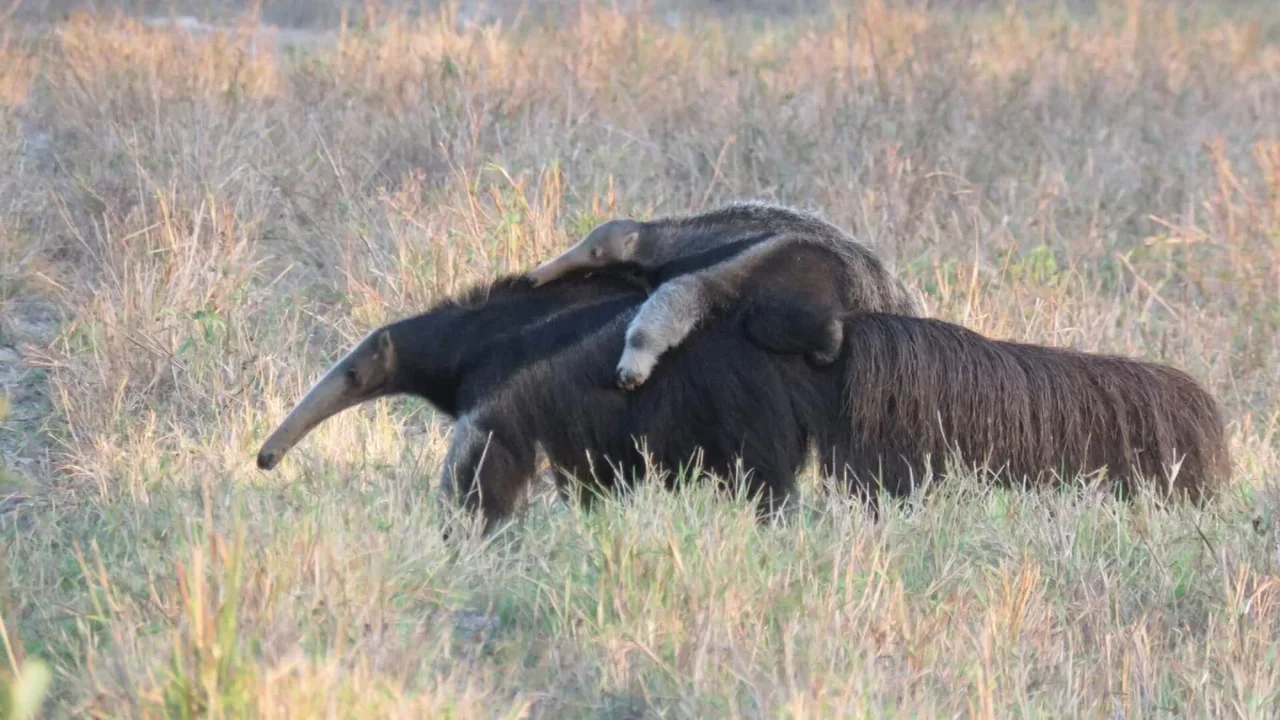
A study of wild animals in Brazil found microplastics in the blood of tapirs and giant anteaters, including individuals living far from human development. The findings show how widely these tiny particles can reach across different landscapes.
Researchers analyzed blood samples from 47 animals--26 lowland tapirs and 21 giant anteaters--monitored in the Amazon, Cerrado and Pantanal between 2021 and 2022. Microplastics were detected in 43 of them.
The team identified 2,815 particles across the samples, with an average concentration of 73.8 particles per milliliter. One animal had more than 1,200 particles per milliliter. In the Pantanal, all 14 sampled animals tested positive, including some living over 65 kilometers from development.
Landscape and exposure
By combining GPS tracking with maps of human activity, the researchers found that animals whose ranges included more developed areas generally had higher microplastic concentrations. Proximity to infrastructure and waste-management facilities also corresponded with greater exposure.
Microplastics can travel through the air and move across landscapes via rainfall, rivers and seasonal floods. The study, published in Nature, did not assess whether the particles harmed the animals, and its methods could not detect nanoplastics. Its observational design also cannot establish exactly where each animal encountered the particles.
Further research into how these particles move through ecosystems may help guide wildlife monitoring and pollution-reduction strategies. Better understanding of their spread could strengthen efforts to protect habitats, including those far from towns and infrastructure.