A 115-million-year-old dinosaur bone from Brazil is offering a rare glimpse into the chemistry of ancient life. Researchers identified microscopic, cell-like structures and chemical traces associated with heme, a component of hemoglobin that helps blood carry oxygen.
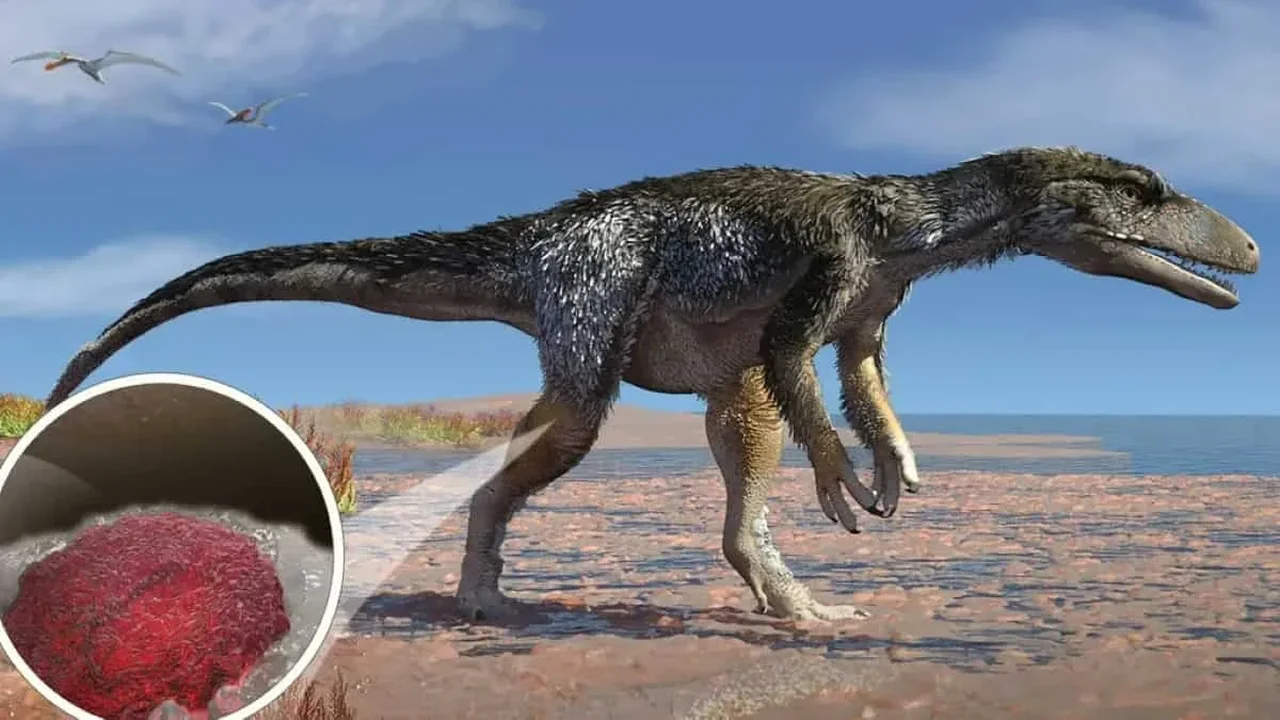
The fossil belonged to Aratasaurus museunacionali, a small meat-eating dinosaur that lived during the Early Cretaceous. A team led by geochemist Kliti Grice of Curtin University examined fragments from its hind limbs using microscopy and chemical analysis.
The oval structures were found in tiny channels that once carried blood vessels. The team detected heme-related compounds in the bone, including within some of the cell-like structures. The surrounding sediment showed a different chemical signature, making contamination from the rock less likely.
What may have helped preserve the traces
The researchers propose that the dinosaur was buried in an environment with limited oxygen, possibly on a microbial mat. They also suggest that the mineral hausmannite may have helped protect the microscopic structures. This preservation scenario remains a hypothesis.
Scientists caution that the structures have not been definitively identified as red blood cells, and possible microbial contributions cannot be ruled out. The study found no dinosaur DNA, intact blood, or functioning hemoglobin. Heme-related molecules cannot provide the genetic information needed to recreate an extinct animal.
Published in the journal Proceedings of the National Academy of Sciences, the research adds to evidence that some fossils may preserve chemical details beyond their visible anatomy. Further work could clarify how these traces survived and whether similar evidence exists in other museum specimens.
By expanding what scientists can detect in fossils, this research may help future studies investigate dinosaur biology and the conditions that preserve traces of ancient life.