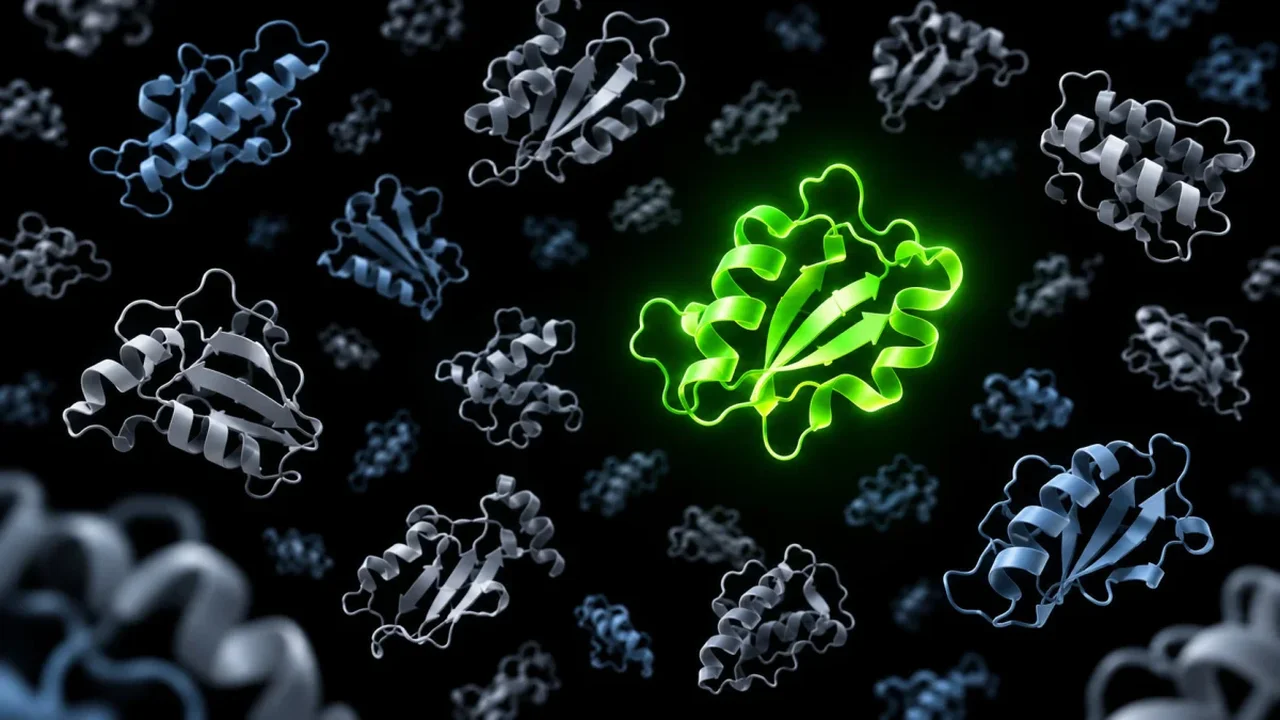
A new AI system called Pinal lets researchers describe a protein's desired function in everyday language, then proposes molecular designs. Its two-part process converts the request into a structural plan and identifies amino acid sequences that could form it.
Trained on about 1.7 billion protein-description pairs, the 16-billion-parameter model was tested on several tasks, including designing fluorescent proteins, breaking down PET plastic and supporting chemical reactions that turn carbon dioxide into glycine.
Promising results, with a wide testing gap
Laboratory trials showed both the potential and the limitations of the approach. Of 29 candidates selected from 50,000 designs for a fluorescent-protein test, one glowed. In a separate trial, one of 94 tested candidates generated from 200,000 designs showed activity against PET.
The strongest result came from a designed molecular carrier named pinalH02. In a laboratory system, it helped produce 70% more glycine than the corresponding natural H-protein from E. coli. Five of the 20 tested designs for this task were functional.
These findings, published in Nature, suggest that natural-language requests could make protein design more accessible. However, the low success rates in some experiments show that extensive screening and laboratory validation remain essential. As the models improve, translating a desired function into a working molecule could become a more direct route to new biotechnology.