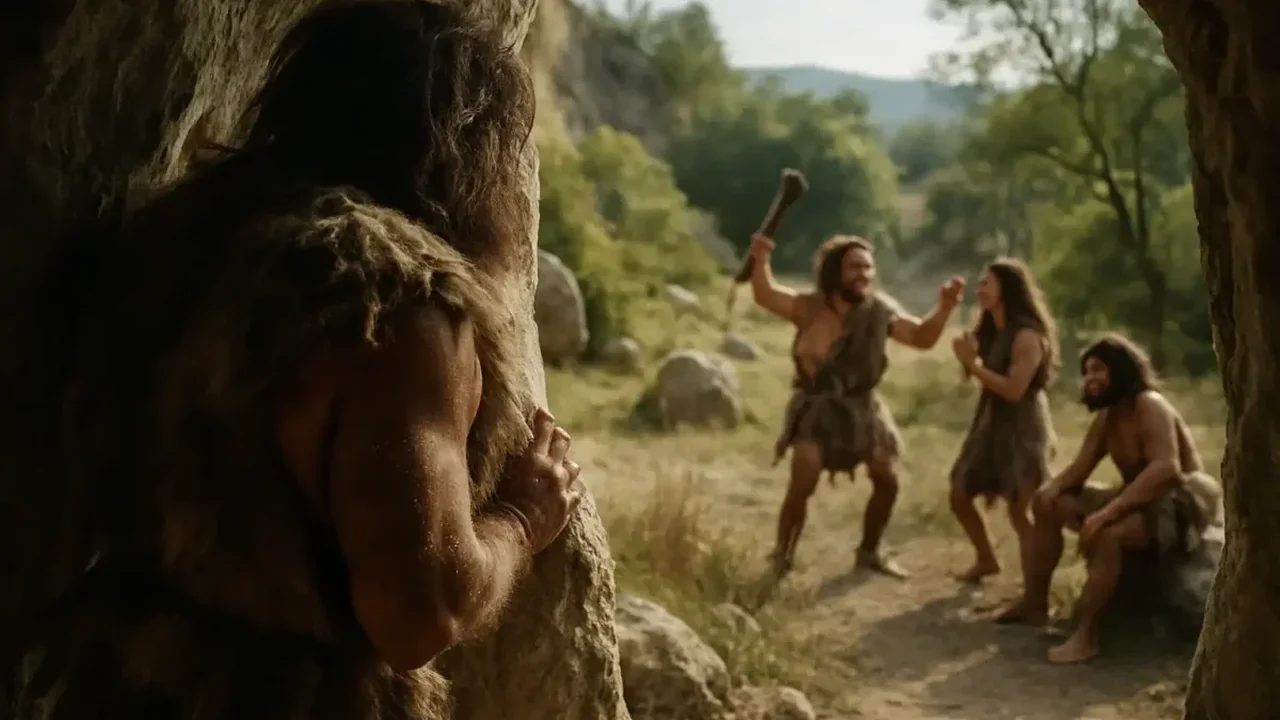
A Neanderthal known as Thorin, discovered at Grotte Mandrin in southern France, belonged to a lineage that remained genetically separate from other known Neanderthal groups for around 50,000 years. New genetic evidence suggests this ancestry may have reached much farther across western Europe than researchers once thought.
Thorin lived between roughly 42,000 and 50,000 years ago. His genome diverged from other late Neanderthal groups about 105,000 years ago. Researchers also found long stretches of identical DNA in his genome, a pattern associated with a small population and close genetic relationships.
A maternal link in Belgium
A 2026 study published in Nature analyzed DNA from 27 Neanderthal remains found in Belgium and France. A tooth from Couvin, Belgium, estimated to be 45,000 to 50,000 years old, carried mitochondrial DNA from the same deeply divergent maternal lineage as Thorin.
The finding raises the possibility that this ancestry was once distributed across a broad area of western Europe. Earlier DNA comparisons had also pointed to possible links with Neanderthals from Gibraltar. However, mitochondrial DNA traces only the maternal line, so it cannot establish that these individuals belonged to one continuously connected or isolated community.
A more varied Neanderthal story
Thorin's genetic profile offers evidence of isolation, but it should not be taken as representative of all Neanderthals. The wider study found that some late Neanderthal groups retained greater genetic diversity and connections with other communities. Isolation may have affected particular populations, but researchers have not established it as a cause of Neanderthals' disappearance.
As more ancient genomes are analyzed, researchers may be able to map how Neanderthal communities connected and changed over time, bringing greater detail to the complexity of human evolution.