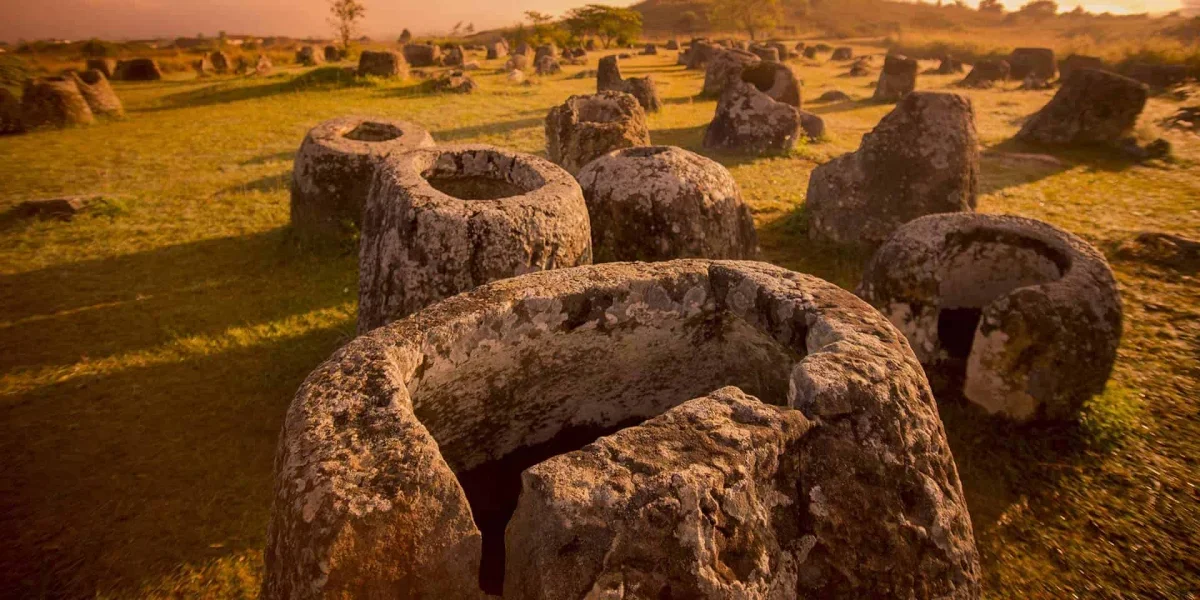
In northern Laos, thousands of ancient stone jars have quietly preserved a rare scientific window into long-term ecology. Originally carved and placed for funerary use, these vessels have spent roughly 2,000 years collecting rainwater, leaf litter and living organisms across the landscape.
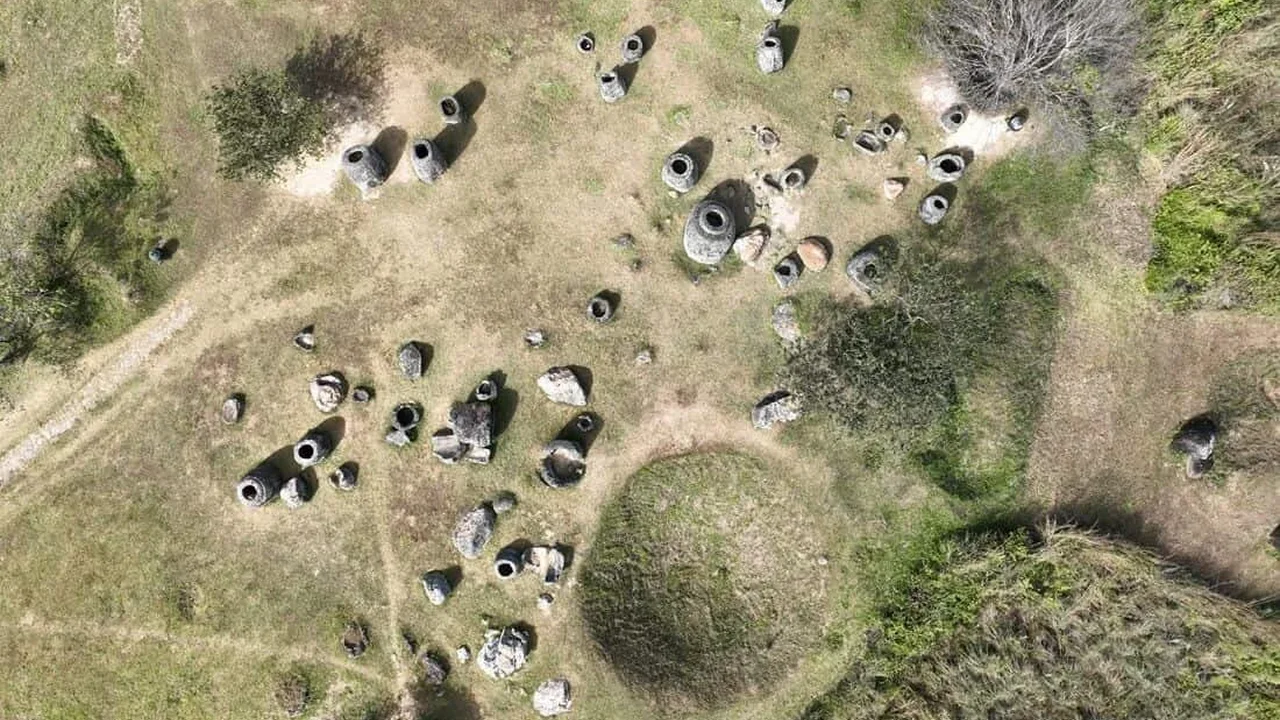
A new study led by researchers from the University of Copenhagen and the National University of Laos, published in Ecography, examined 39 water-filled jars at five sites near Phonsavan. The team sampled them in both the dry and wet seasons to understand how shade, rainfall and surrounding vegetation shape the tiny ecosystems inside.
The results showed a clear pattern: jars under denser tree cover tended to contain less oxygen and more phosphorus, while open jars received more rain and less organic debris. In shaded settings, falling leaves and slower decomposition appear to influence the water chemistry, creating different conditions for aquatic life.
Researchers found that the jars host a mix of organisms, including aquatic plants, insects, frogs, algae and cyanobacteria. The team is now using environmental DNA to map the full biological community inside the vessels and to better understand how these habitats shift over time.
What makes the Plain of Jars especially valuable is its scale and duration. Unlike typical ecological studies that last only a few years, these stone containers have been exposed to the same environmental forces for centuries, offering a natural record of how ecosystems respond to shade, drought and recolonization.
Beyond their archaeological significance, the jars are emerging as a living laboratory for ecology, showing how ancient landscapes can still inform modern science. In the future, this kind of long-term natural archive could reshape how researchers study resilience, biodiversity and environmental change.