Approximately 5,200 years ago, inhabitants of what is now Iraq and Syria began etching symbols into clay, giving rise to the cuneiform writing system. This innovation played a crucial role in the establishment of sophisticated urban centers and organized governance, enabling communities to document trade, individuals, and decisions.
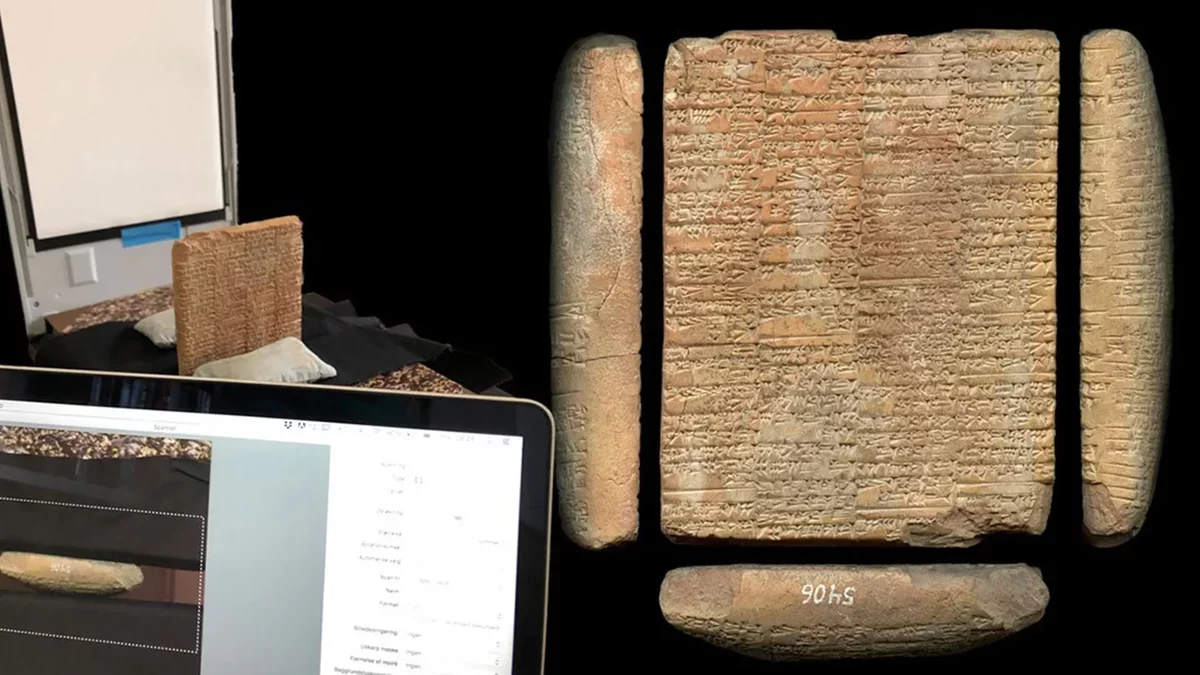
In recent years, the National Museum has curated an extensive collection of these ancient tablets. However, a thorough analysis had not been conducted until now. A collaborative effort between the museum and researchers from the University of Copenhagen has culminated in the 'Hidden Treasures: The National Museum's Cuneiform Collection' project, which aims to analyze, identify, and digitize this remarkable assemblage.
Unique Texts from Ancient Hama
During the examination of these tablets, the research team uncovered a diverse array of materials, including letters, financial records, medical guidelines, and magical inscriptions.
A particularly notable set originates from the ancient city of Hama, which was first investigated by a Danish expedition in the 1930s. Following its destruction by Assyrian forces in 720 BC, many of Hama's treasures were transported to Assur, the Assyrian capital in present-day Iraq. A selection of tablets remained in the ruins and eventually became part of the National Museum's collection.
"The texts from Hama are nearly 3,000 years old and encompass medical practices and magical spells, likely left in what we believe was a grand temple library," explains Assyriologist Troels Pank Arbøll, a key contributor to the Hidden Treasures project.
These Hama texts are particularly valuable due to the scarcity of similar artifacts from that era and locale. One tablet, in particular, contained an anti-witchcraft ritual deemed vital for maintaining royal authority in Assyria, as it was believed to avert misfortunes such as political upheaval.
This all-night ritual involved burning wax and clay figures while an exorcist recited specific spells, highlighting the cultural significance of such practices even at the fringes of Assyrian power.
Chronicles of Kings and Legends
Among the significant findings is a regnal list documenting both mythological and historical rulers, tracing lineage back to a period preceding the biblical Noah and the Flood.
The version housed in the National Museum appears to have served an educational purpose, featuring rulers from the late 3rd millennium BC, including the legendary King Gilgamesh from the Epic of Gilgamesh.
"This regnal list is one of the few artifacts suggesting the possible existence of Gilgamesh, a remarkable discovery for us here in Denmark," notes Arbøll.
Insights into Daily Life
Another group of tablets, unearthed from Tell Shemshara in 1957 in northern Iraq, includes correspondence between a local leader and an Assyrian king dating back to around 1800 BC, along with various administrative documents.
These tablets underscore the importance of writing in managing early societies, with many containing practical details like inventories and financial records. Arbøll remarks, "The cuneiform tablets reveal a sophisticated bureaucracy, necessary for tracking the complexities of emerging societies. It's even fascinating that one tablet features an ancient receipt for beer."
Preserving Ancient Wisdom
The 'Hidden Treasures' project is spearheaded by Nicole Brisch from the University of Hamburg and Anne Haslund Hansen of the National Museum, with backing from the Carlsberg Foundation, the Augustinus Foundation, and the Edubba Foundation.