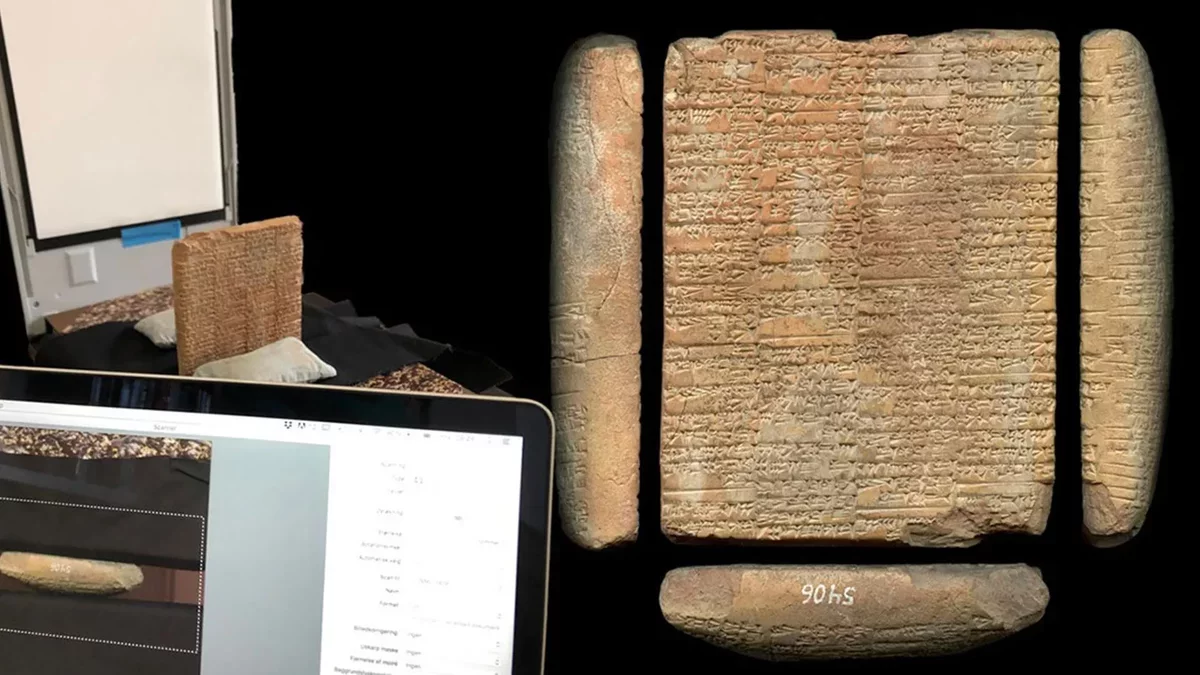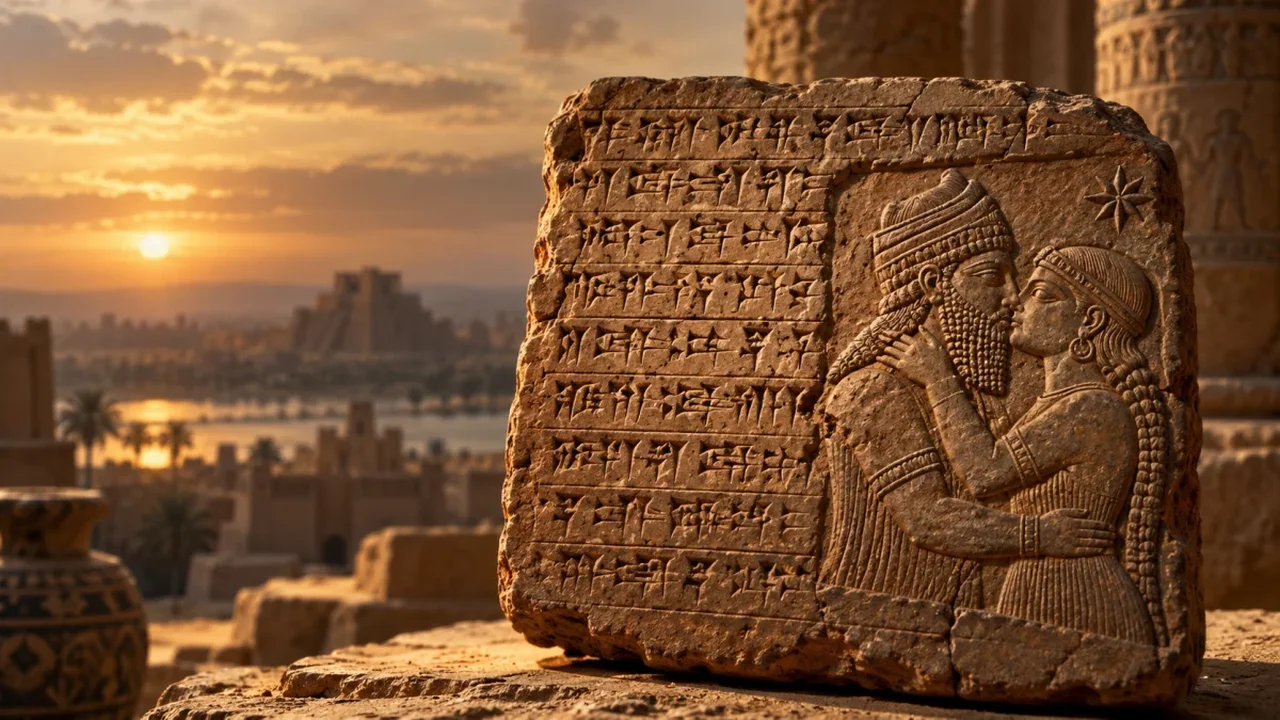
Clay tablets from ancient Mesopotamia preserve some of the earliest written references to kissing, showing that expressions of intimacy were already part of stories and relationships more than 4,500 years ago.
A Sumerian myth about the grain goddess Ezinan and the god An, recorded around 2600-2500 BCE, describes the pair kissing. Assyriologist Troels Pank Arbøll of the University of Copenhagen examined this and other historical evidence in a study published in Evolution and Human Behavior.
Intimacy in everyday life
Other texts suggest kissing was not limited to mythology. A passage from Akkadian literature, dating to nearly 4,000 years ago, describes a person's trembling lips and eagerness to kiss a lover. A legal document from around 1800 BCE records a woman named Shat-Marduk saying a man would no longer kiss her.
Together, these records show that a kiss could express desire and affection, while also carrying meaning within personal relationships. An approximately 11,000-year-old sculpture known as the Ain Sakhri Lovers may depict an intimate couple, though its stylized form makes the scene open to interpretation.
A record, not an origin
The oldest surviving written account does not tell us when kissing began. People may have shared the gesture long before writing emerged, and written records cannot establish where it first developed. Research on human relatives such as bonobos and chimpanzees also raises the possibility that some forms of mouth-to-mouth contact have deep evolutionary roots.
As researchers continue to interpret ancient texts and objects, they may reveal more about how human expressions of closeness changed--and endured--across time.