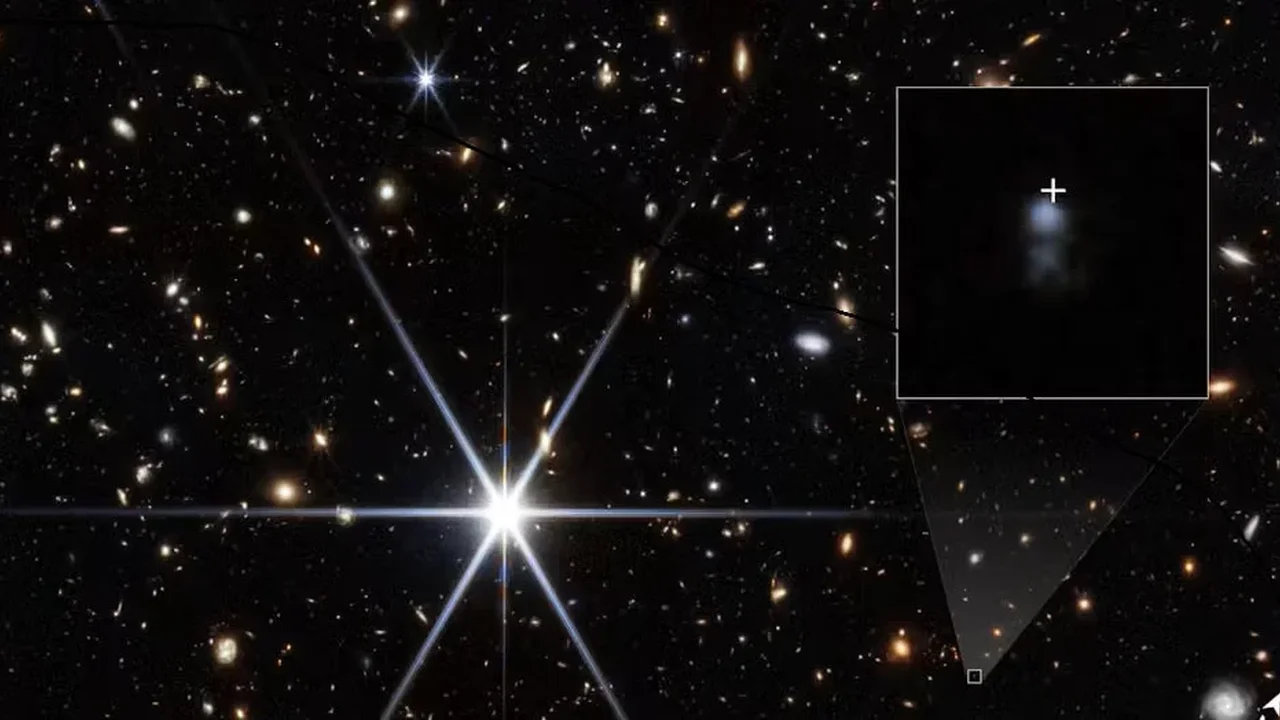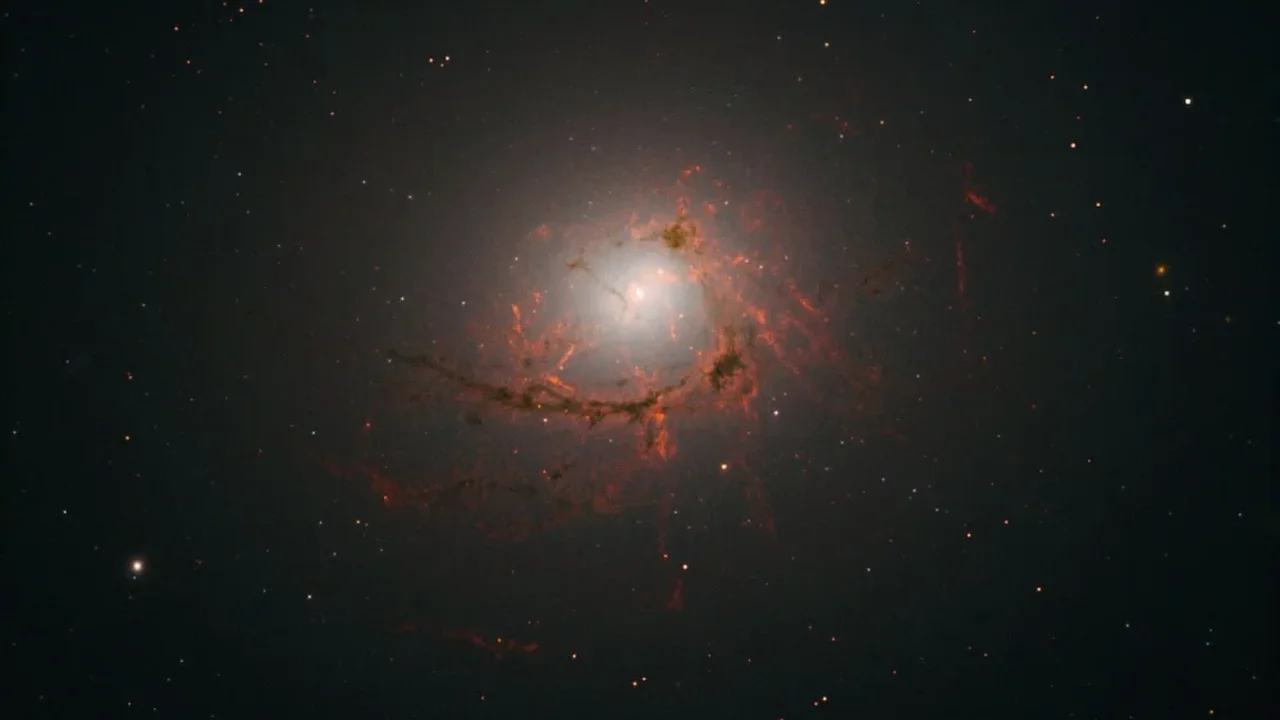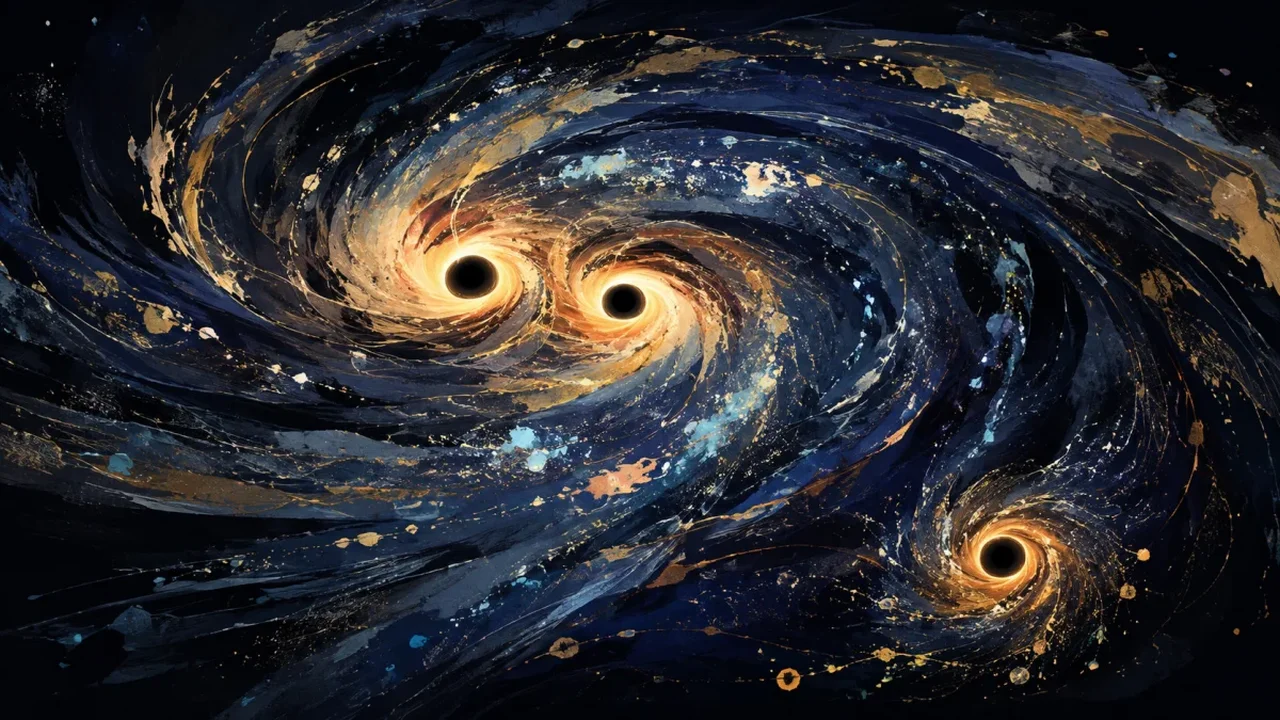
James Webb Space Telescope observations have revealed an extraordinary cosmic system: a distant galaxy that appears to host three actively feeding black holes. The galaxy, known as J0148-4214, is seen as it existed just 1.15 billion years after the Big Bang, offering a rare window into the universe's earliest growth phase.
According to the research team, two of the black holes sit deep in the galaxy's central region, while a third lies farther out. Their estimated masses range from about 600,000 to 80 million times the mass of the Sun. If confirmed, this would be the earliest known case of three accreting black holes in a single galaxy.
The discovery became possible through Webb's NIRSpec instrument, which can map spectra across different parts of a galaxy instead of blending everything into one signal. By tracking fast-moving hydrogen gas, astronomers found distinct motion patterns that point to separate black holes rather than a single source.
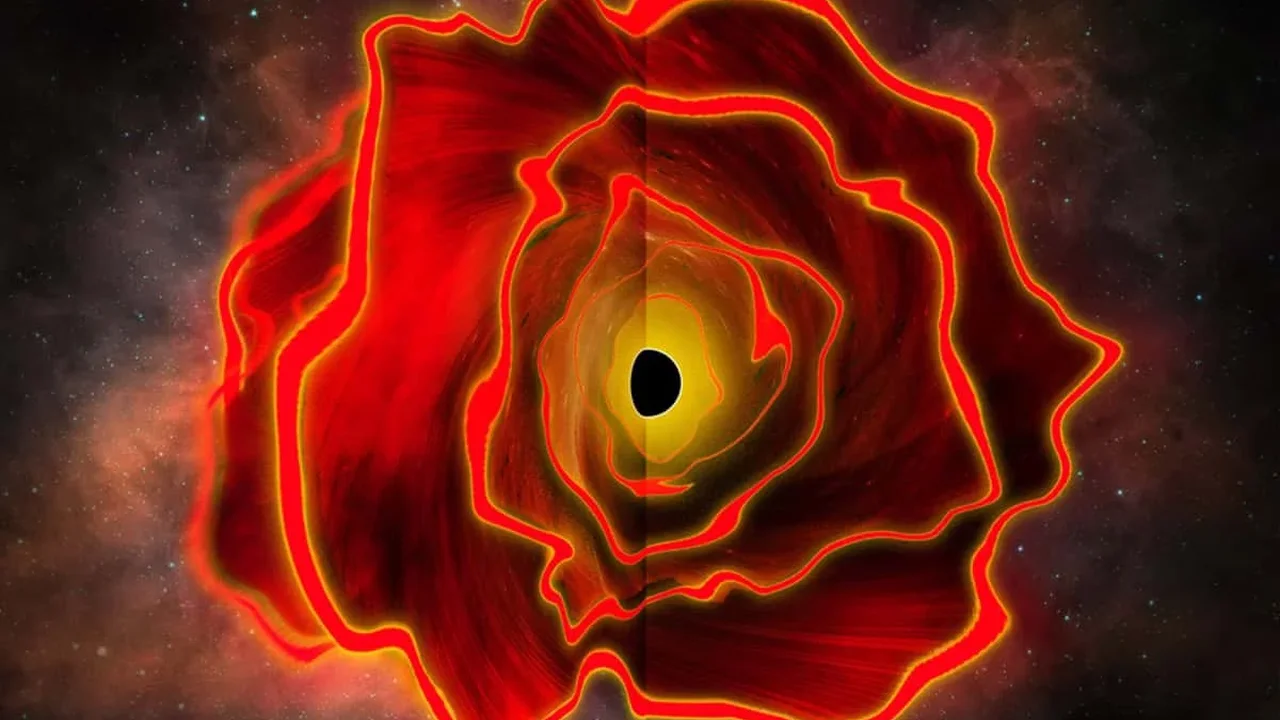
The central pair is especially intriguing. They are so close together that Webb cannot resolve them as individual points, yet their gas signatures appear offset by roughly 620 light-years. The third black hole, located about 5,500 light-years away, may be drifting inward after a merger or moving through the galaxy after an earlier gravitational interaction.
Researchers also considered alternative explanations such as outflows, supernovae, and stellar shocks, but the evidence fits the black-hole scenario best. The system may help explain how some black holes grew so quickly in the early universe, possibly through both rapid gas feeding and mergers.
With future observations and next-generation gravitational-wave missions such as LISA, systems like J0148-4214 could become key laboratories for understanding how galaxies and black holes evolved together. This discovery may reshape future models of cosmic assembly and black-hole growth.