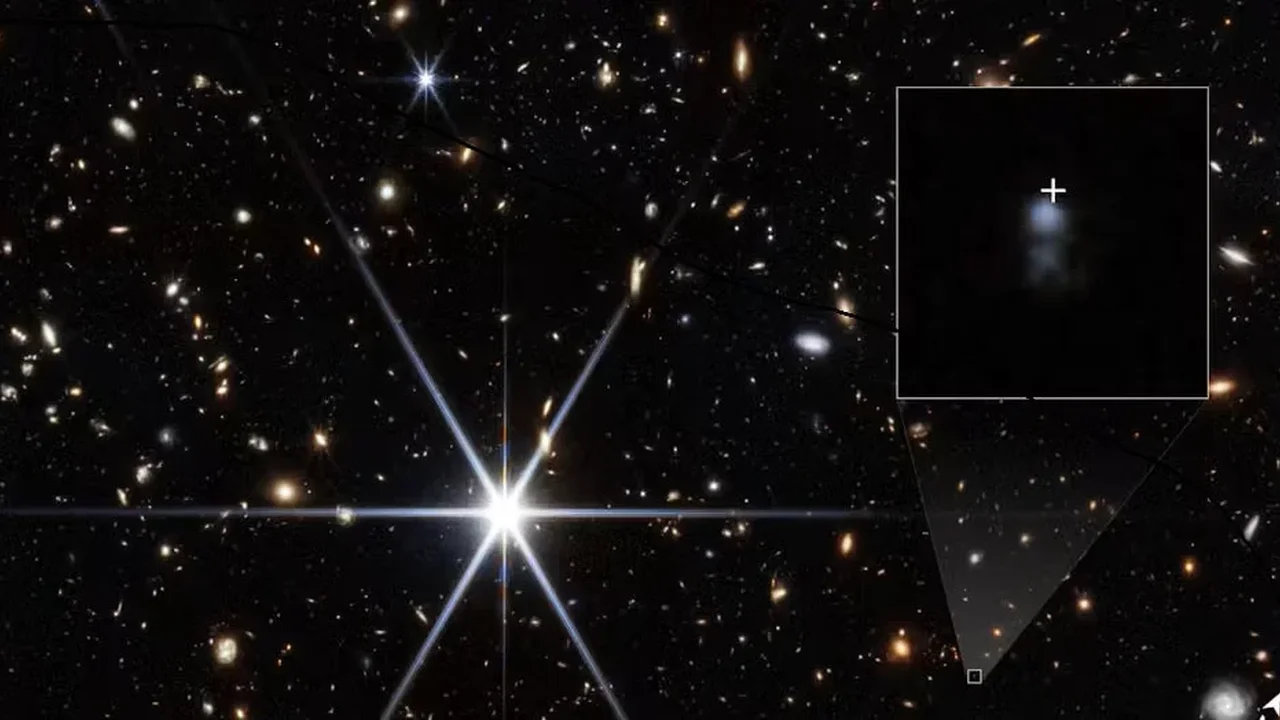
Using data from the James Webb Space Telescope, astronomers may have identified a strikingly unusual object from the early universe: a compact, intensely red source that could represent a new kind of cosmic body, informally dubbed a black hole star.
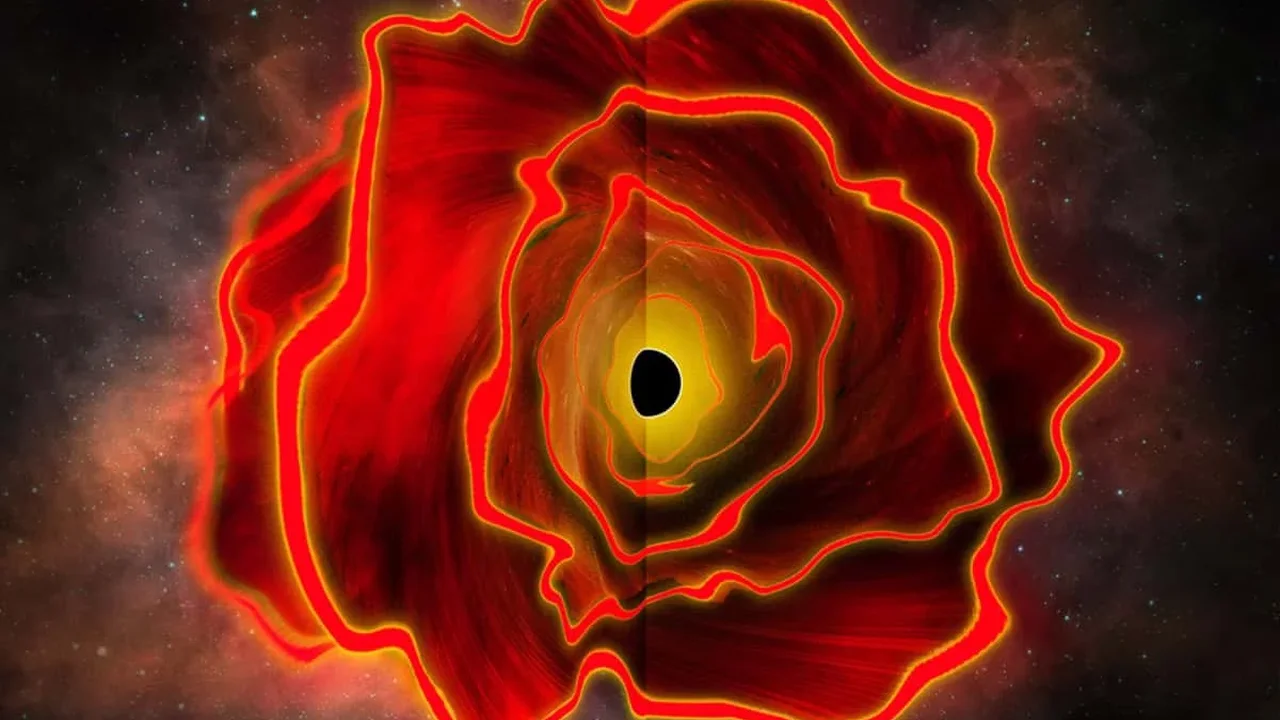
The object, known as MoM-BH-1, dates to just 660 million years after the Big Bang. In a study published in Nature, researchers describe it as a system where a young black hole may be buried inside a thick shell of hydrogen gas. Instead of shining like a normal star through nuclear fusion, the object appears to glow because energy from the black hole is reprocessed by the surrounding gas.
What makes MoM-BH-1 especially compelling is its spectrum. The team found an unusually deep drop in brightness at specific wavelengths, a feature called a Balmer break. Its measured strength was about 7.7, far beyond what ordinary dust-free star populations are expected to produce. The object also shows broad hydrogen emission and strong absorption lines, pointing to dense gas rather than dust as the reason for its red color.
That detail matters because many of JWST's mysterious little red dots may share a similar nature. These compact sources, seen across the early universe, have puzzled astronomers since their discovery. The new interpretation suggests that some of them could be black holes in a brief, hidden growth phase, wrapped in gas while they rapidly gather mass.
If confirmed, the idea could help explain how supermassive black holes formed so quickly in cosmic history. Dense gas envelopes may allow black holes to feed more efficiently than standard models predict, offering a fresh route to the giant black holes seen in mature galaxies today.
For now, the result remains a strong candidate rather than a final verdict. Even so, it opens a vivid window into the universe's earliest growth stages and hints that the first generations of black holes may have evolved in far more dramatic ways than expected. This could reshape how future astronomy maps the birth of galaxies and black holes.