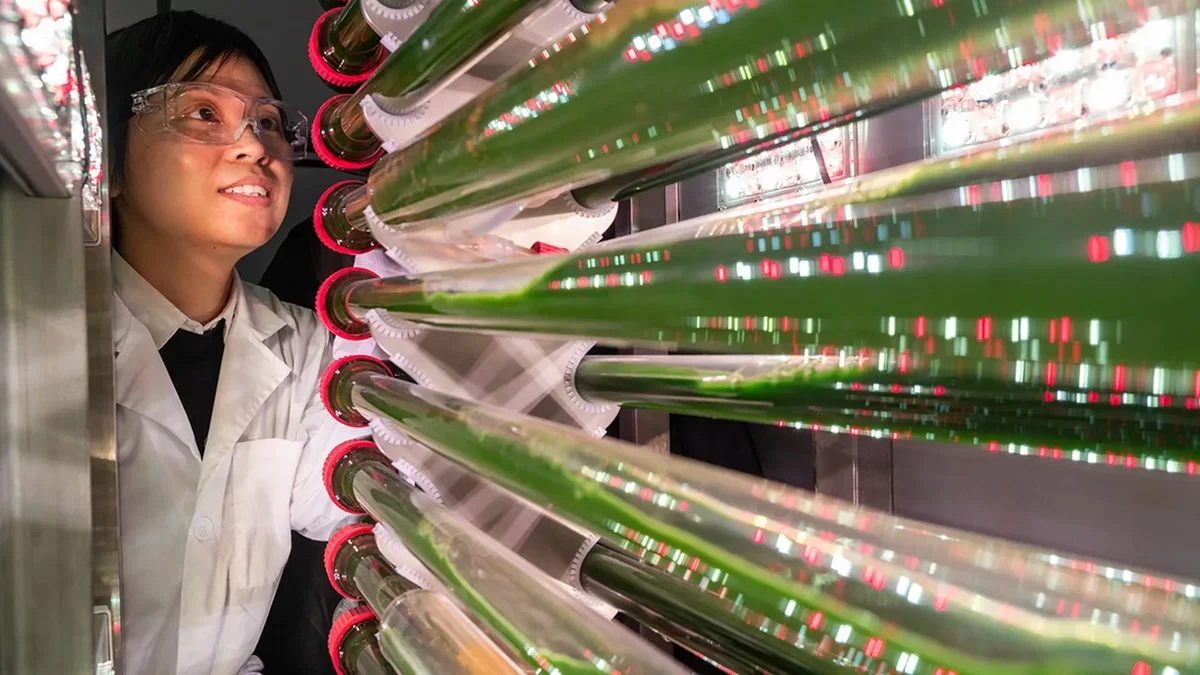
Susie Dai, a researcher from Mizzou, has developed a groundbreaking modified strain of algae aimed at eliminating harmful microplastics from contaminated water sources. Her vision extends beyond merely cleansing waterways; she also intends to recycle the captured plastic into safer bioplastic materials, including composite films.
Dai, a professor in the College of Engineering and the principal investigator at the Bond Life Sciences Center, highlighted the pervasive nature of microplastics, stating, "These pollutants are found almost everywhere, including ponds, lakes, rivers, wastewater, and even in the fish we consume." Current wastewater treatment facilities primarily filter out larger plastic particles, allowing microplastics to slip through and contaminate drinking water, posing risks to ecosystems.
Algae Engineered to Target Microplastics
In her recent research, Dai utilized genetic engineering to create algae that produce limonene, a natural oil with the characteristic scent of oranges. This modification alters the algae's surface properties, enabling them to repel water. Since microplastics share this water-repellent trait, they naturally adhere to the algae when introduced into water. This interaction leads to the formation of clumps that sink, resulting in a dense biomass layer that can be easily collected.
Additionally, these engineered algae thrive in wastewater, where they absorb excess nutrients while simultaneously aiding in water purification.
"Our approach addresses three critical issues simultaneously: removing microplastics, purifying wastewater, and ultimately transforming the extracted microplastics into beneficial bioplastic products," Dai explained. Although the research is still in its nascent stages, the long-term goal is to incorporate this innovative process into existing wastewater treatment facilities, enhancing water purification efforts while reducing pollution and generating useful products.
Future Plans for Technology Expansion
Dai's laboratory is already cultivating algae in large tank bioreactors. One notable system, a 100-liter bioreactor affectionately named "Shrek," is currently employed to process industrial flue gas, contributing to air pollution reduction efforts.
Looking forward, Dai aspires to develop larger iterations of the Shrek system that could be adapted for wastewater treatment and the removal of various pollutants.
The study titled "Remediation and upcycling of microplastics by algae" has been published in Nature Communications.