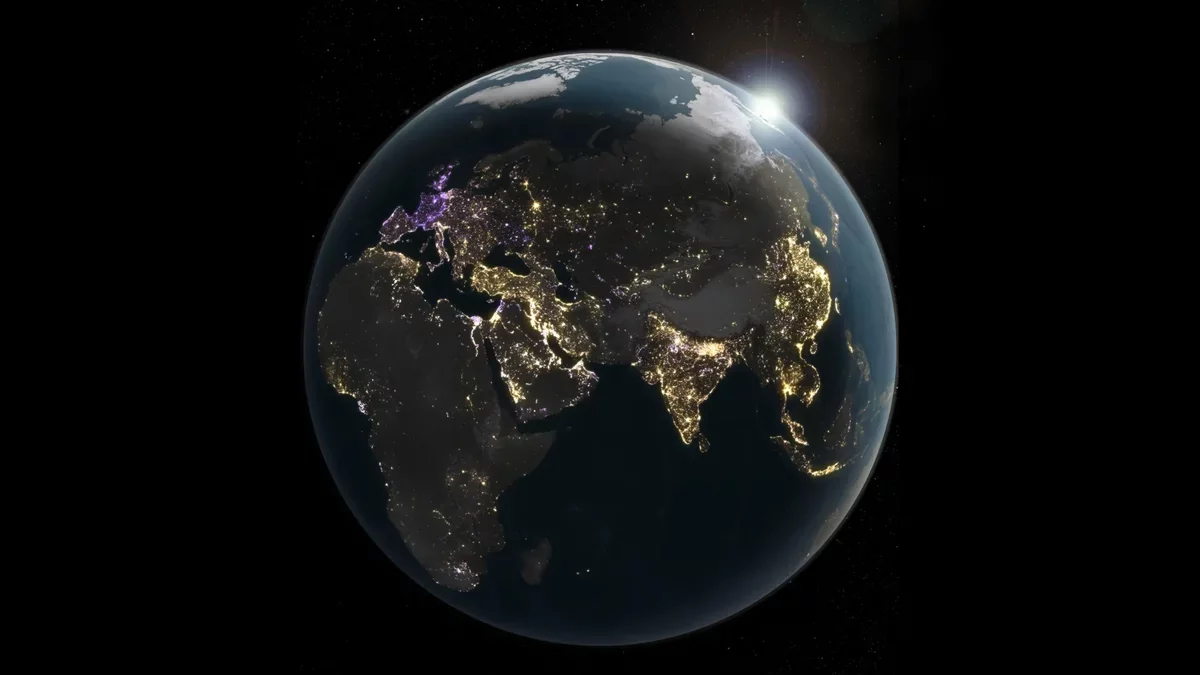
Recent research led by Christopher Kyba reveals intriguing dynamics in global nighttime lighting, highlighting a 16% increase worldwide. However, this rise isn't uniform; while some regions brighten, others dim significantly. Notably, emissions in areas with increased lighting surged by 34%, countered by an 18% decrease in other locales.
Rapid urbanization has transformed countries like China and India into significantly brighter landscapes. Conversely, several industrialized nations have experienced reductions in light emissions, largely attributed to the adoption of LED technology and initiatives aimed at minimizing light pollution.
Regional Variations Driven by Policy and Conflict
Changes in nighttime lighting aren't always gradual. For instance, Ukraine has seen a dramatic decline in nighttime illumination following the Russian invasion. France has also reported a 33% reduction in brightness as cities implement energy-saving measures, such as turning off streetlights after midnight.
In Germany, light emissions have remained relatively stable overall, despite local fluctuations. Brightening regions experienced an 8.9% increase, while dimming areas saw a 9.2% decrease.
Across Europe, satellite data indicates a 4% decrease in nighttime light emissions. However, this decline may not fully align with human perception, as satellites detect light differently than our eyes do.
Advancements in Data Analysis
The study's innovation lies in utilizing full-resolution nightly data, moving beyond previous analyses that relied on monthly or yearly averages. This new approach allows for the identification of rapid, localized changes.
"No global analysis had previously utilized full-resolution nighttime data," Kyba notes, emphasizing the significance of this methodology.
The research team also developed a novel algorithm that considers the satellite's viewing angle. For example, residential areas may appear brighter from an angle, while city centers shine more brightly when viewed directly overhead. This adjustment enhances the accuracy of light emission assessments.
Satellite Technology Behind the Research
The findings are based on data from the Visible Infrared Imaging Radiometer Suite (VIIRS) Day/Night Band, aboard NOAA and NASA satellites including Suomi NPP, NOAA-20, and NOAA-21. These satellites capture images between 1:00 a.m. and 4:00 a.m. local time, covering nearly the entire globe.
To ensure precision, researchers focused solely on artificial light sources, excluding natural occurrences like wildfires and auroras from their analysis.
Future Prospects with New Satellite Initiatives
Understanding the evolution of nighttime lighting is crucial, as artificial light significantly impacts electricity consumption and ecosystems. Kyba is spearheading efforts to develop a next-generation satellite aimed at monitoring night lights as part of the European Space Agency's "Earth Explorer 13" mission. This innovative system is expected to detect fainter light sources with greater resolution, enhancing our understanding of global lighting trends.
While the U.S. and China currently operate multiple nighttime observation satellites, Europe lacks a dedicated system for this purpose, highlighting the importance of this initiative.