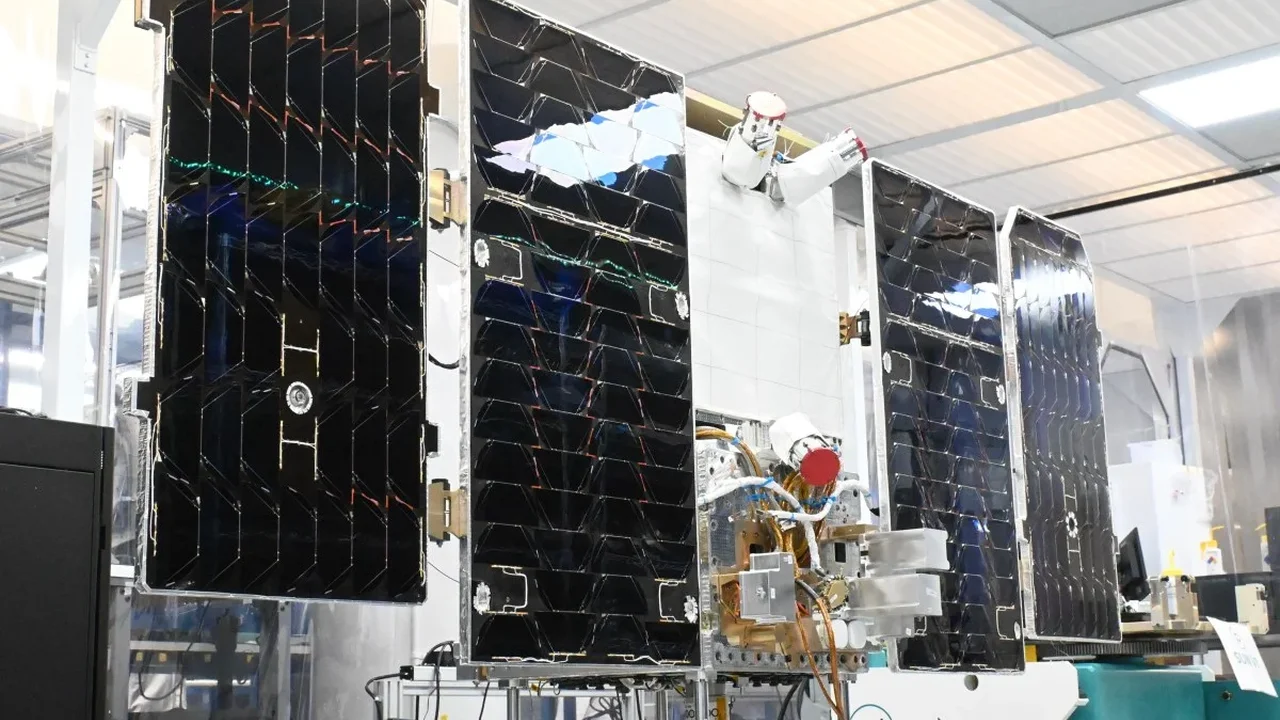
Google's Suncatcher prototype satellite is now operating in orbit, marking an early test of the company's vision for space-based data centers. Launched earlier this month aboard a Falcon 9, the spacecraft carries one Google Tensor Processing Unit (TPU) and can generate up to one kilowatt of power.
Following about three weeks of system checks, the satellite received its first prompt from Earth. Its onboard Gemma 4 model responded with a haiku about space and was also asked to report on conditions around the spacecraft.
Testing AI hardware in orbit
Power constraints currently limit the TPU to roughly 20 minutes of operation at a time, making communication with the ground a key part of the test. Engineers are also assessing how the processor handles thermal conditions and space radiation, which can affect stored data through memory errors known as "bit flips."
If the hardware performs as hoped, Google plans to launch two more satellites with advanced chips in 2027. The next spacecraft are intended to generate more power and demonstrate optical links between satellites, a step toward coordinating computing tasks in orbit.
The current mission is an early experiment, rather than a full-scale data center. Its findings will help show whether AI processing in space can work reliably under real orbital conditions. In the longer term, successful tests could help shape new approaches to computing infrastructure beyond Earth.