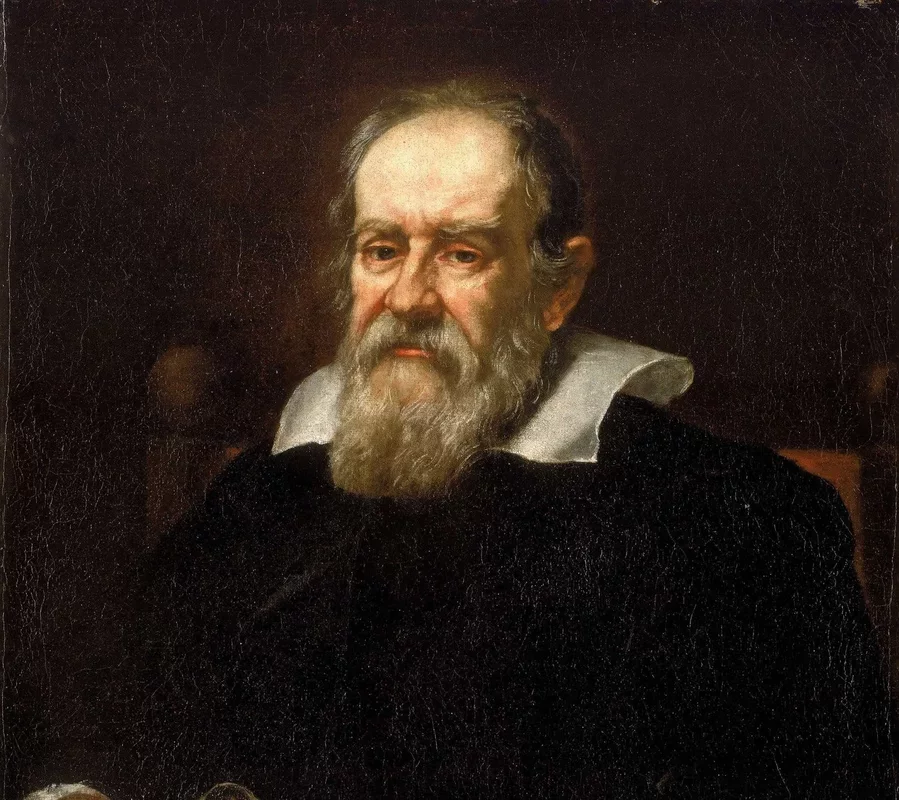
In a remarkable discovery at Italy's National Central Library of Florence, historian Ivan Malara stumbled upon a treasure trove of handwritten notes while examining a 1551 edition of Ptolemy's Almagest. These marginalia, found alongside a transcription of Psalm 145, were penned by a young Galileo Galilei, shedding light on his initial grappling with the geocentric model of the universe.
For centuries, Ptolemy's Earth-centered cosmos reigned supreme, yet Galileo's annotations reveal his gradual shift toward the heliocentric view championed by Nicolaus Copernicus. This newfound evidence highlights how Galileo, rather than simply rejecting established beliefs, meticulously engaged with them, using Ptolemy's mathematical framework to explore alternative astronomical concepts.
Malara noted, "Archival research often involves patience and perseverance, but sometimes, it leads to discoveries that can transform our understanding." His analysis of these notes will be published in the Journal for the History of Astronomy, potentially reshaping our insight into the evolution of modern science.
Galileo's Intellectual Evolution
Galileo is often portrayed as a revolutionary thinker who quickly dismantled the old astronomical order. However, the marginal notes indicate a deeper engagement with Ptolemy's teachings. James Evans, a historian of astronomy, remarked that these annotations present Galileo not merely as a visionary but as a diligent scholar wrestling with complex theories.
Malara argues that Galileo's mastery of Ptolemy's work was crucial to his later breakthroughs. The Almagest provided him with the mathematical syntax necessary to comprehend Copernicus's revolutionary ideas. By observing celestial phenomena, such as the phases of Venus, Galileo gathered compelling evidence that supported a sun-centered universe.
The notes also reveal Galileo's early explorations of concepts like "heavy" and "light," mirroring ideas from his unpublished works on motion. Michele Camerota, a historian, affirmed the authenticity of these annotations, stating, "The attribution of the marginal notes to Galileo is fully secure."
Humanizing a Scientific Icon
This discovery not only enhances our understanding of Galileo's scientific journey but also paints a more personal portrait of the man. The presence of Psalm 145 alongside his notes reflects his blend of faith and empirical inquiry, illustrating the internal conflicts he navigated as he transitioned from entrenched beliefs to groundbreaking discoveries.
Ultimately, Galileo's methodical approach to dismantling the geocentric model underscores the gradual nature of scientific progress. By leveraging the very tools of the old paradigm, he redefined our cosmic understanding, paving the way for future generations of scientists.