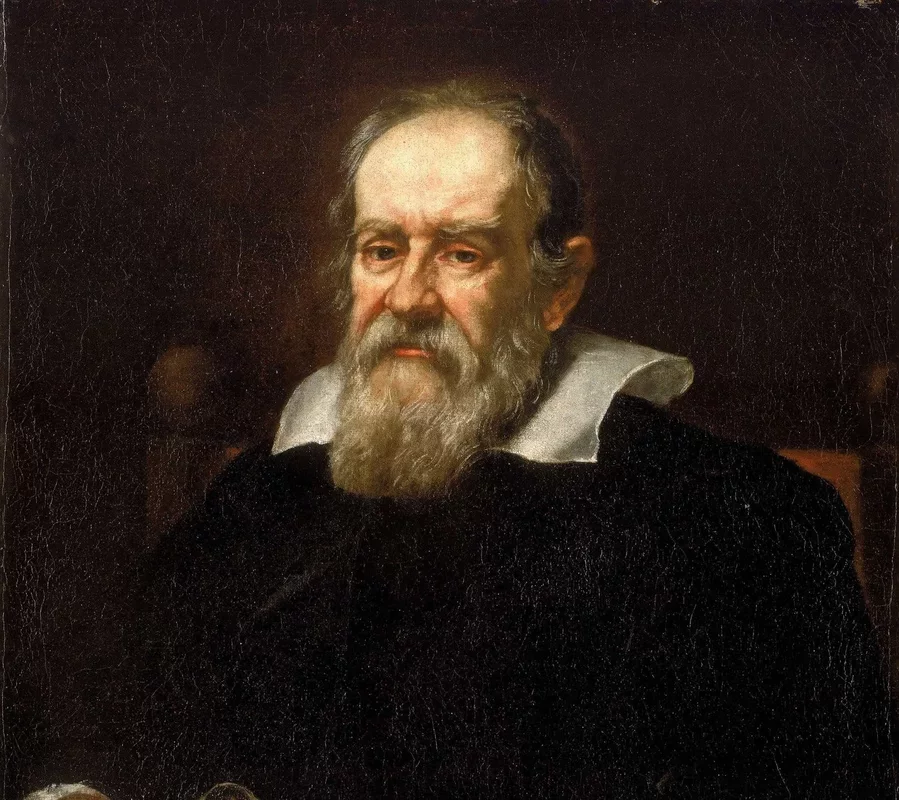
Four centuries ago, Galileo Galilei reached a striking conclusion that still feels fresh today: the giant humans of folklore could not function in the real world. In his 1638 work Dialogues Concerning Two New Sciences, he showed that size changes do not behave evenly across nature.
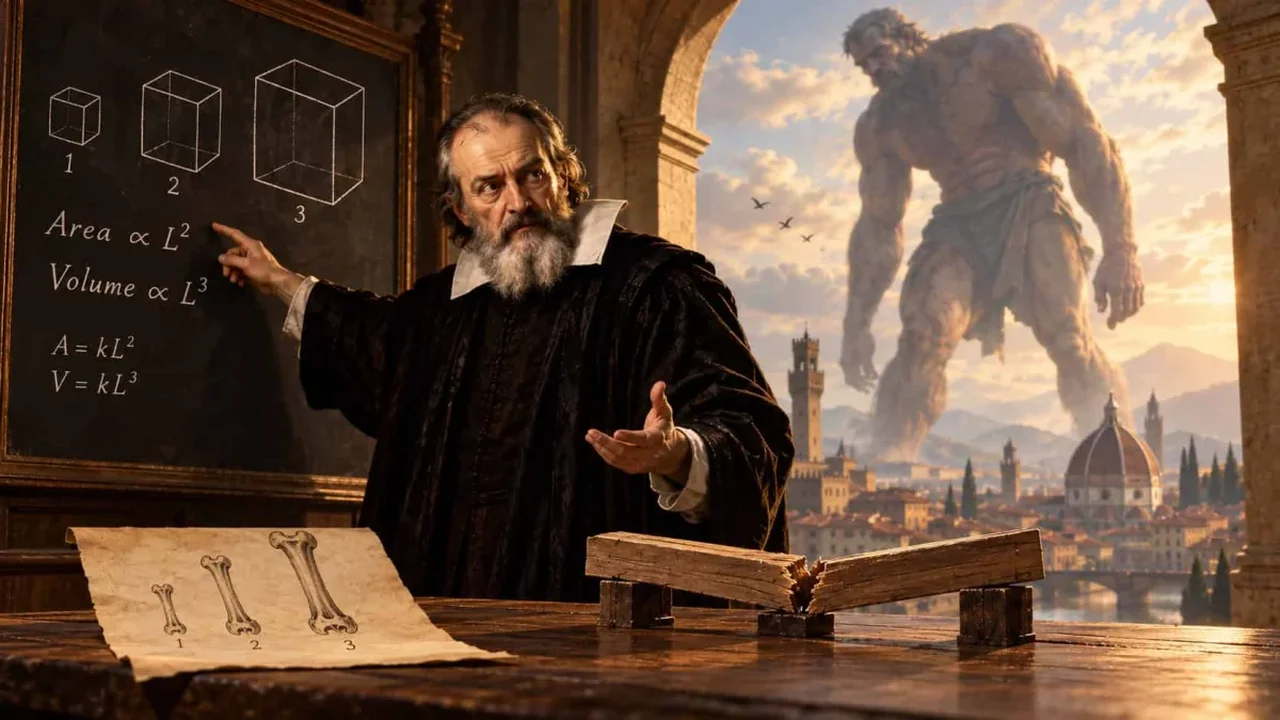
His reasoning begins with a simple idea. If a wooden beam is made larger in every direction, its strength rises with its cross-sectional area. That means a beam scaled up ten times becomes 100 times stronger. But its weight grows much faster, because volume increases with the cube of size. The same tenfold increase makes the object 1,000 times heavier.
This mismatch is the key. A larger structure gains strength, but not fast enough to match its own mass. Galileo used that principle to explain why a giant shaped like a normal human would eventually collapse under its own weight. Bones, muscles, ladders, armor, and even furniture would all face the same problem: mass would outpace support.
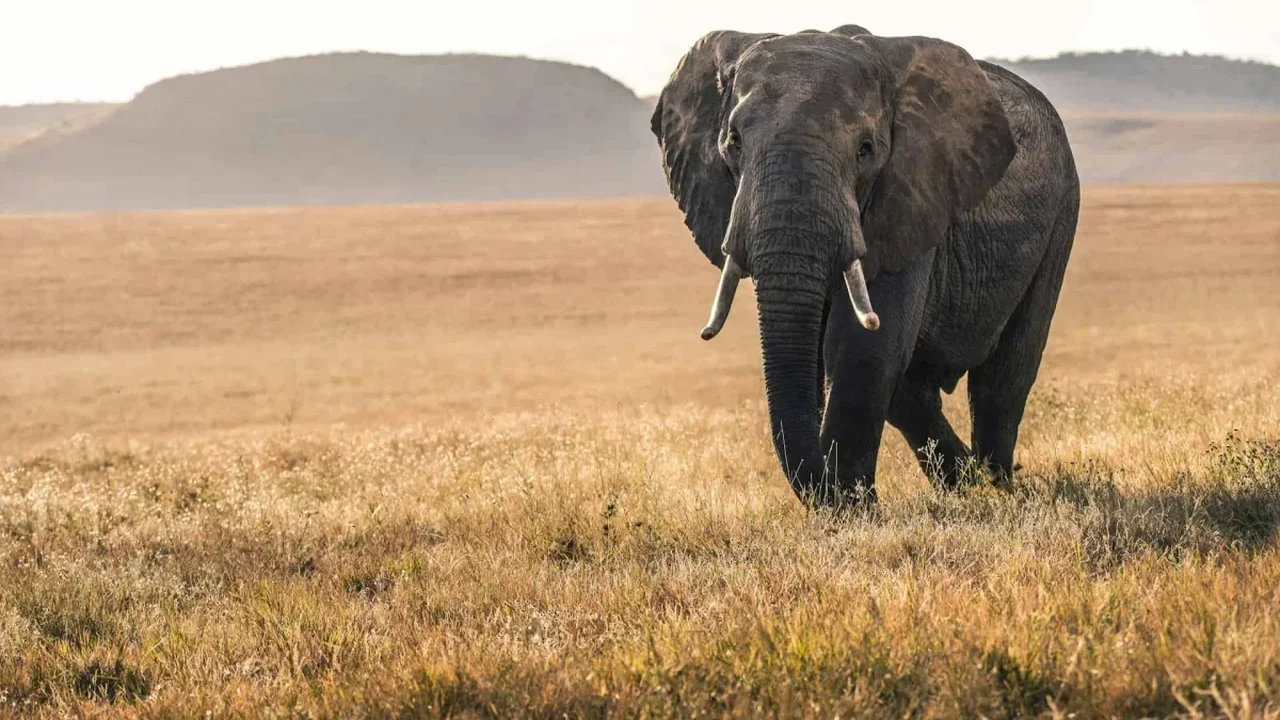
The insight also helps explain why real animals are built differently at different sizes. Elephants, for example, need thicker legs than smaller animals because their bodies must support far more weight. At the other end of the scale, insects can move in ways humans cannot, since surface tension and electrostatic effects matter much more when bodies are tiny.
Galileo's idea works in both directions. Shrinking a human to a much smaller scale would not simply create a miniature version of ordinary life. A tiny body would become relatively stronger, but it would also interact with water, surfaces, and other forces in very different ways.
That is why the giants of legend belong to storytelling, not biology. Galileo's scale law remains a powerful reminder that physics shapes what life can become, and future science may keep revealing new limits and possibilities hidden inside size itself.