A new study shows that the fossil record can preserve a convincing story while still missing key parts of evolution. By testing today's land mammals as if only a fraction of them survived into the future, researchers found that fossil evidence alone could lead to major misreadings of body size, diet and ancestry.
What the experiment revealed
The team began with 3,710 living land mammal species and then applied common fossil-record filters, including habitat, geographic range, body size, collection history and research attention. After running thousands of simulations, they asked standard evolutionary methods to rebuild mammal history from the reduced samples.
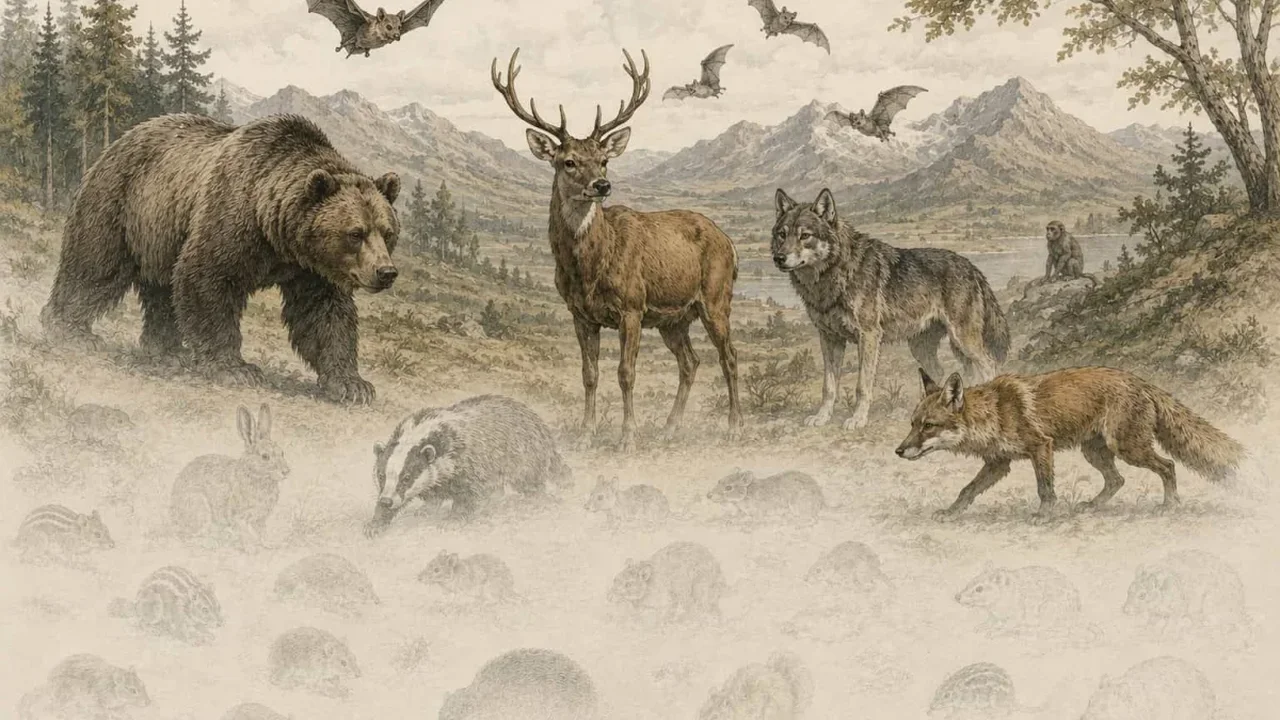
The result was striking: the reconstructed picture looked coherent, but it was often wrong. Small species were far less likely to survive the filters, while medium-sized mammals and herbivores became overrepresented. Groups such as bats, rodents and shrews, moles and hedgehogs were especially vulnerable to disappearing from the simulated record.
How the story changes
With the complete dataset, the estimated ancestor of modern mammals weighed about 790 grams, roughly the size of a small rabbit. In the filtered fossil-style samples, that same ancestor could appear to be more than 10 kilograms, closer to a corgi. Diet estimates shifted too: a likely meat-eating ancestor could be mistaken for an omnivore or herbivore.
The study highlights a powerful lesson for paleontology: incompleteness does not always create uncertainty. Sometimes it creates a polished but distorted narrative. That means fossil-based reconstructions of ancient ecosystems may need stronger tools to account for what never had a chance to survive.
Published in Nature Communications, the research offers a fresh reminder that science advances not only by finding evidence, but by understanding what evidence is missing. In the future, these methods could help paleontology build more accurate maps of life's deep history.