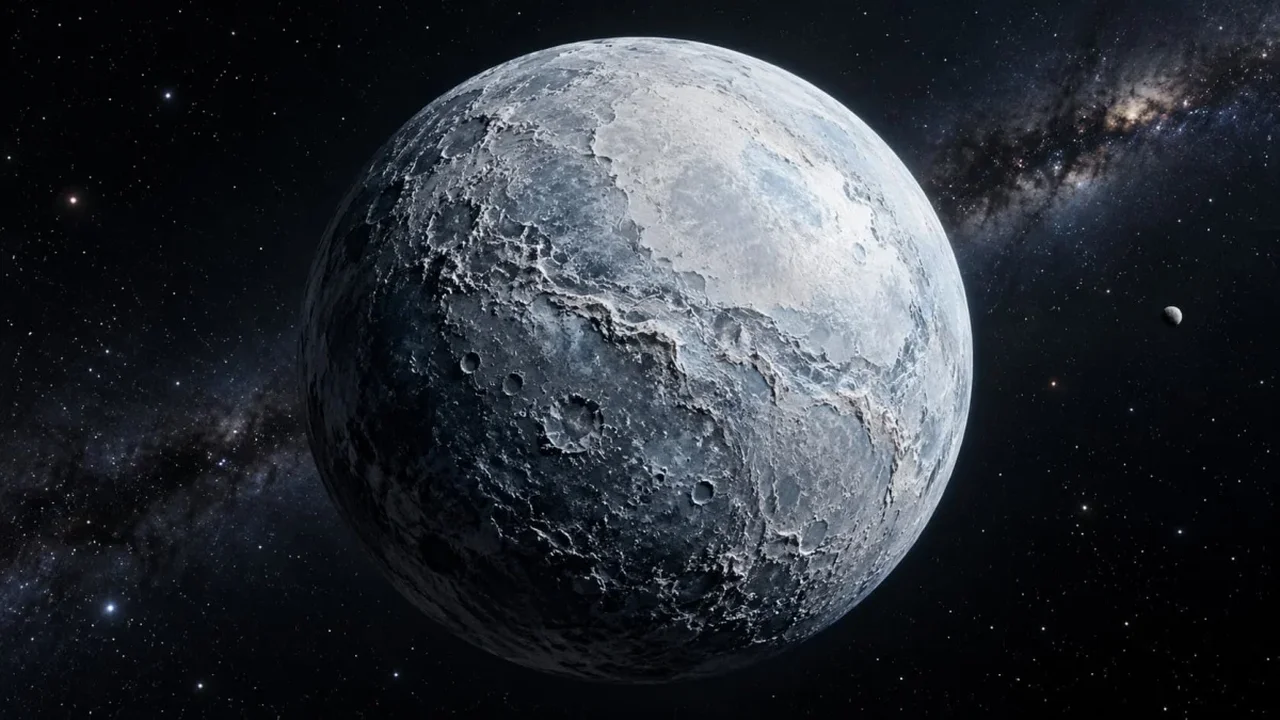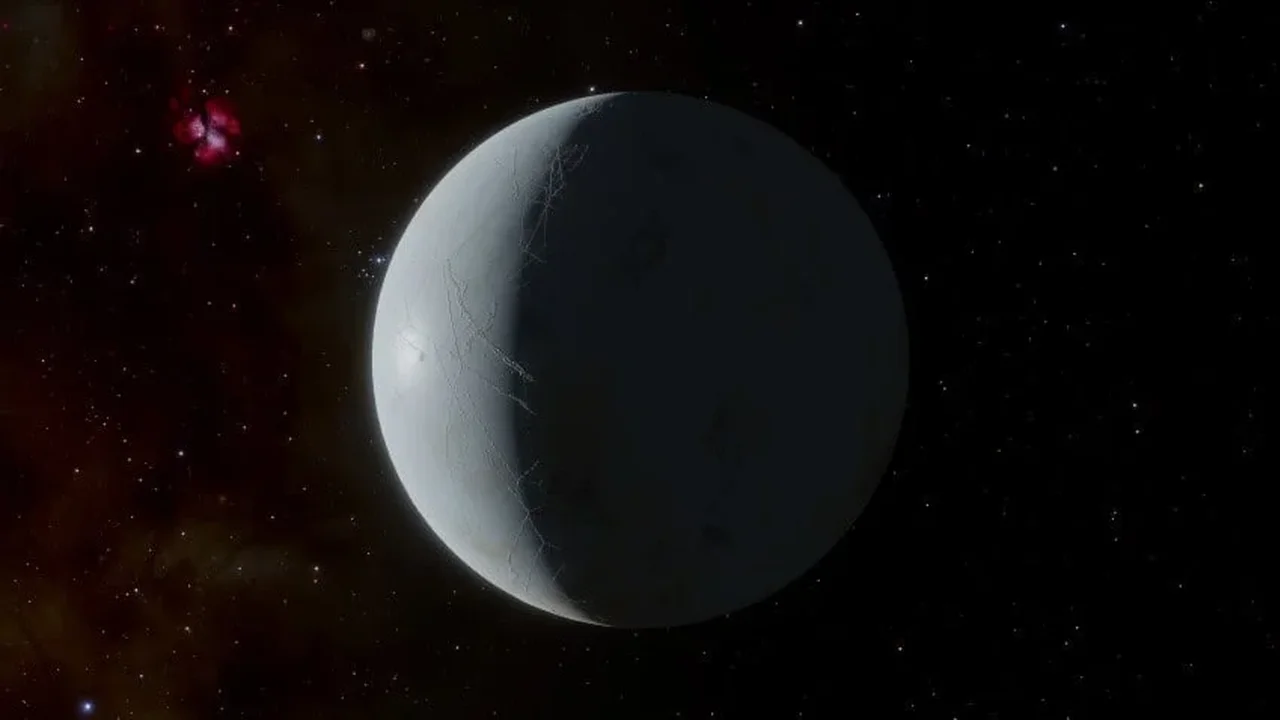
A hypothetical planet beyond Neptune may help explain the unusual paths of some distant icy objects. The proposed world, called Planet X2, is distinct from the larger planet sometimes known as Planet Nine--and has not been observed.
Researchers from Kindai University, the University of Washington and the University of Southern Queensland used computer simulations to model the Solar System's evolution over 4.5 billion years. Their results suggest that a planet with roughly twice Earth's mass, remaining in a distant orbit, could gradually send icy bodies onto steeply tilted or elongated paths.
A distant world, if it exists
The simulations suggest Planet X2 would orbit at an average distance of about 350 to 500 astronomical units from the Sun. Even at its closest, it would be around 200 times farther from the Sun than Earth. One orbit could take between 6,500 and 11,000 years, making the planet exceptionally difficult to detect.
The model offers a possible explanation for some orbital patterns that the known planets do not readily account for. However, it did not reproduce every feature of the observed objects' orbits, and other explanations remain possible. Planet X2 is a proposed explanation, not a confirmed discovery; it could also coexist with Planet Nine, or neither planet may exist.
New observations could test the idea
The Vera C. Rubin Observatory's ongoing sky survey is expected to find more faint, distant objects and help astronomers measure their orbits. Those observations can be compared with the simulations to assess whether Planet X2 fits the evidence.
The study, published in Monthly Notices of the Royal Astronomical Society, turns an intriguing possibility into a testable question. As surveys expand our view of the Solar System's frontier, they may reveal how much remains to be discovered there.