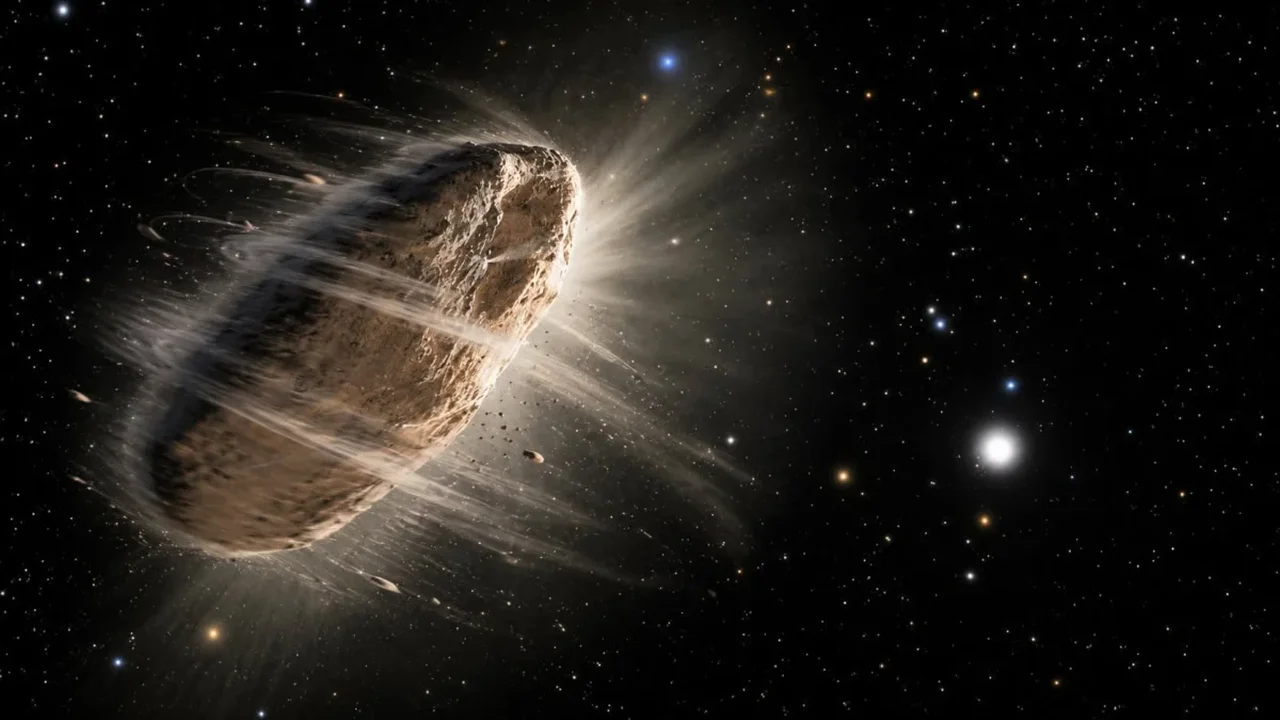
Asteroid 491384 is challenging a long-standing idea about how quickly large space rocks can spin without breaking apart. Estimated to be about 2.53 kilometers wide, it completes one rotation every 4.18 minutes, according to a study led by Dmitrii Vavilov at the University of Washington.
Many asteroids are thought to be loose collections of rock and dust held together mainly by gravity. For objects larger than about 150 meters, a rotation faster than roughly once every 2.2 hours is uncommon: beyond that point, the outward force from spinning could pull the material apart. Asteroid 491384 rotates more than 30 times faster than this so-called spin barrier.
What could hold it together?
The asteroid may have enough internal strength to withstand its rapid rotation. Small forces between its rocky grains could provide cohesion, making it more like lightly cemented rubble than a loose pile. Its structure, however, has not yet been confirmed, and further observations are needed to verify the measured spin rate.
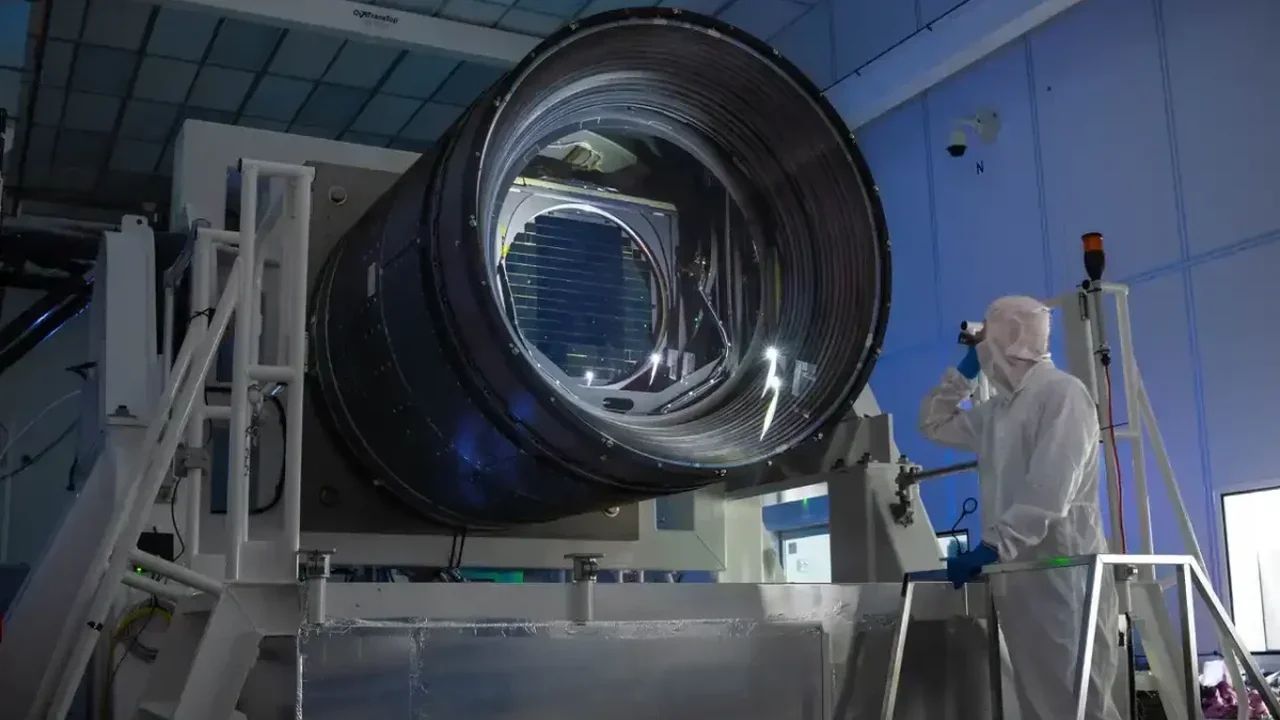
The research team analyzed asteroid brightness measurements, including data from the Vera C. Rubin Observatory. As an irregular asteroid turns, its brightness changes; these patterns can reveal its rotation period. Because observations are often scattered over time, the team developed software to help distinguish likely rotation rates from misleading signals.
After examining 9,417 asteroids, the researchers narrowed thousands of apparent fast rotators to 66 promising candidates. Five appeared to rotate in less than five minutes. A second notable object, asteroid 566130, is about two kilometers wide and rotates every 5.34 minutes.
More observations will help establish whether these objects truly spin as quickly as the early analysis suggests. If confirmed, asteroid 491384 could offer new clues about the strength and structure of large asteroids, while automated analysis may help researchers study millions of small Solar System bodies in the years ahead.