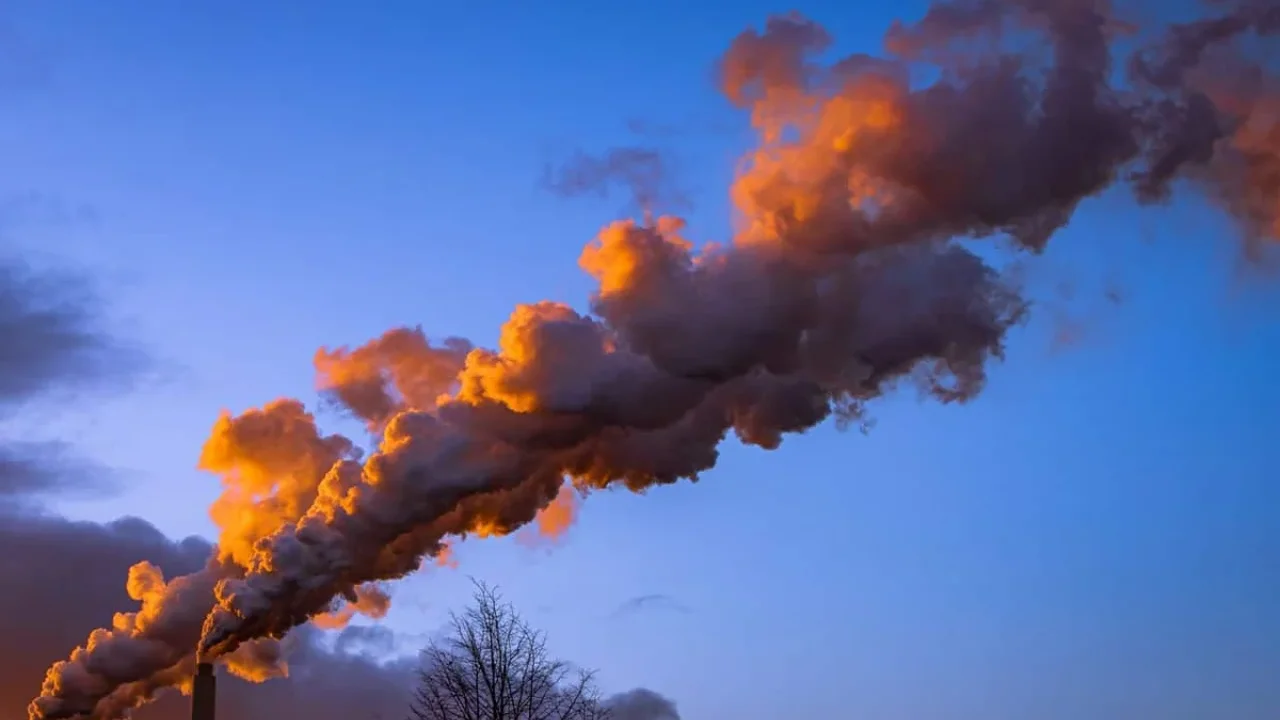
A new climate analysis shows that the warming linked to historical emissions from the world's largest fossil-fuel and cement producers could remain measurable for centuries, even under a future of steep global emission cuts.
A Long-Term Climate Signal
Researchers at the University of Washington used the FaIR climate model to examine emissions connected to 178 major producers, collectively known as the Carbon Majors. Their calculations cover carbon dioxide and methane emissions released between 1854 and 2024.
The study estimates these producers' historical activity had contributed around 0.66°C of global warming by 2025. In a low-emissions future, approximately 0.45°C of this warming could still be present in the year 2500.
The findings reflect the long atmospheric lifetime of carbon dioxide. Oceans, forests and other natural systems absorb a substantial share of released carbon, yet a remaining portion can continue influencing Earth's energy balance over extended timescales.
Why Lower Emissions Still Matter
The modelling also highlights an important climate principle: rapid emission reductions do not immediately erase past warming, but they can limit the total temperature rise that future societies experience. In lower-emissions pathways, the remaining effect of historical emissions becomes more visible because the atmosphere contains less additional carbon dioxide.
Researchers note that the model offers a streamlined representation of the climate system and carries greater uncertainty in extreme-emissions scenarios. It also excludes emissions produced after 2024, meaning future contributions from these producers are not included in the estimate.
Published in PLOS Climate, the research adds a long-range perspective to attribution science, which examines how specific emission sources shape global temperature trends. It underlines the value of combining emissions cuts with innovation in clean energy, carbon management and ecosystem restoration.
The study suggests that choices made today can define not only near-term climate progress, but also the environmental conditions inherited by generations far into the future.