The quest to explore planets beyond our solar system has made significant strides over the years, with scientists aiming to uncover signs of life on these distant worlds within the next few decades. From 1995 to 2022, initial efforts primarily focused on identifying new exoplanets, utilizing indirect methods to infer their mass, size, or both.
The launch of the James Webb Space Telescope (JWST) in 2022 ushered in a new era, enabling astronomers to examine the atmospheres of various exoplanets in unprecedented detail. This advancement, however, still represents a preliminary phase in the search for extraterrestrial life, which will necessitate even more sophisticated telescopes in the future.
Recent research has expanded these techniques, although it does not yet focus on planets akin to Earth. Elisabeth Matthews from the Max Planck Institute for Astronomy, the lead author of the study, remarks, "JWST is finally allowing us to study solar-system analogue planets in detail. If we were aliens several light-years away, JWST would be the first telescope to enable detailed observations of Jupiter." She adds that studying Earth will require even more advanced technology.
The Challenge of Analyzing Jupiter-like Exoplanets
Despite the remarkable capabilities of JWST, analyzing Jupiter-like exoplanets has proven to be a challenge. Most gas giants observed to date are significantly hotter than Jupiter, as the predominant method for studying exoplanet atmospheres involves observing them transiting in front of their host stars. Planets in closer orbits tend to be hotter and more likely to align in this way.
To overcome this obstacle, Matthews and her team employed an innovative approach, yielding one of the closest examinations of a true Jupiter analogue, revealing an intriguing characteristic.
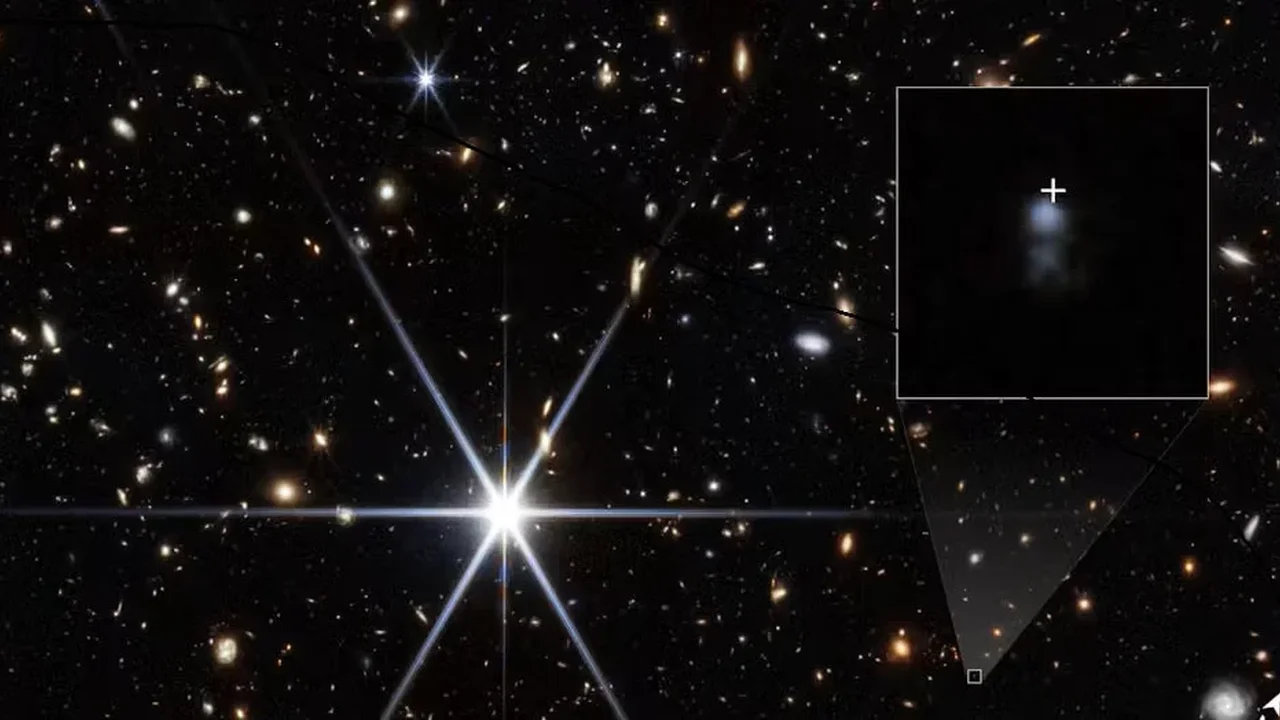
Using JWST's mid-infrared instrument MIRI, the researchers directly imaged Epsilon Indi Ab, a planet orbiting the star Epsilon Indi A in the constellation Indus. Bhavesh Rajpoot, a PhD student at MPIA involved in the study, notes that this planet is significantly more massive than Jupiter, estimated at 7.6 Jupiter masses, yet shares a similar diameter.
A Chilly Giant Retaining Heat
Epsilon Indi Ab orbits its star at a distance four times greater than Jupiter's distance from the Sun. With a slightly smaller and cooler host star, the planet's surface temperature is relatively low, ranging from 200 to 300 Kelvin (approximately -70 to +20 degrees Celsius).
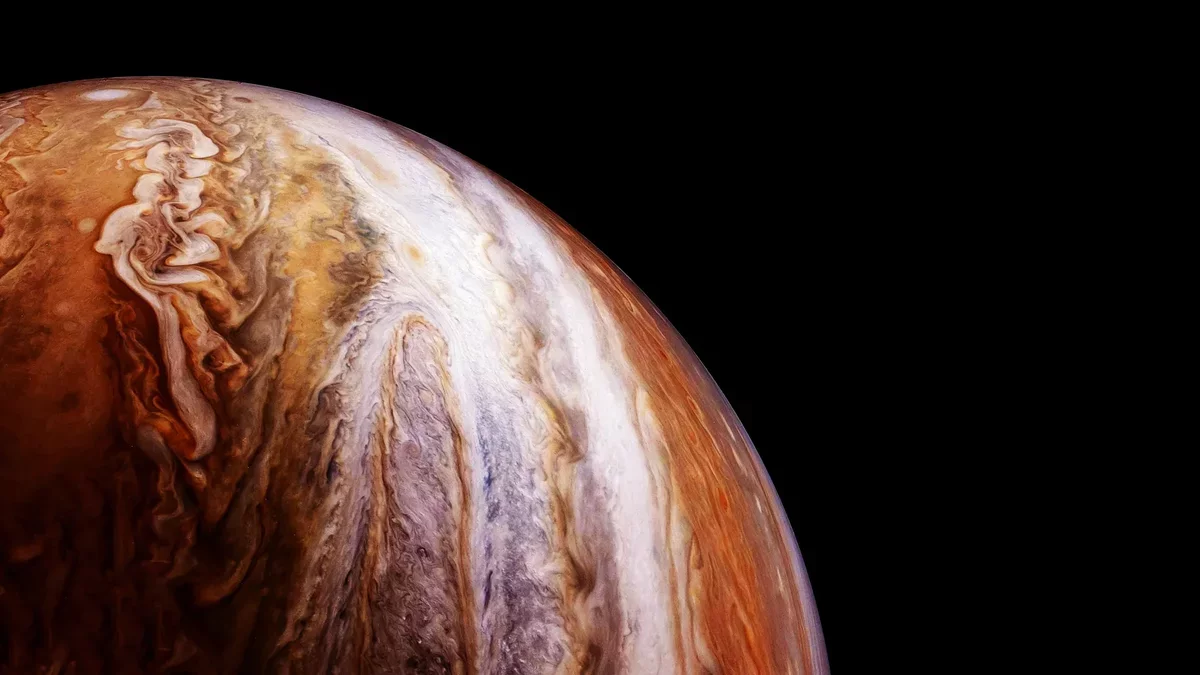
Interestingly, it is warmer than Jupiter, which has a temperature of around 140 K. Scientists attribute this additional warmth to residual heat from the planet's formation. Over billions of years, Epsilon Indi Ab is expected to cool further, eventually becoming colder than Jupiter.
To observe the planet, astronomers utilized a coronagraph on the MIRI instrument to block the bright light from the host star, allowing them to detect the planet's faint glow. They captured images using a filter at 11.3 μm, just outside a wavelength associated with ammonia molecules. By comparing these observations with earlier images taken at 10.6 μm, the team estimated the ammonia content.
Surprising Evidence of Water Ice Clouds
In Jupiter's atmosphere, ammonia gas and clouds predominate the visible layers. Based on its characteristics, Epsilon Indi Ab was expected to have significant ammonia gas, but not clouds. Instead, observations showed less ammonia than anticipated.
The leading explanation points to the presence of thick, uneven water ice clouds, reminiscent of cirrus clouds in Earth's atmosphere, adding an unexpected layer of complexity.
Current models for planetary atmospheres often overlook clouds due to their simulation challenges. James Mang from the University of Texas at Austin, a co-author of the study, emphasizes the progress made with JWST, stating, "What once seemed impossible to detect is now within reach, allowing us to explore the structure of these atmospheres." This discovery paves the way for further characterization of these distant worlds.
Future Prospects with Advanced Telescopes
Future observations may yield even clearer insights into these clouds. NASA's Nancy Grace Roman Space Telescope, set to launch in 2026-2027, is anticipated to be adept at directly detecting reflective water ice clouds.
In the interim, Matthews and her team are seeking additional observation time with JWST to further investigate cold Jupiter-like planets. As they refine their techniques, they are laying the groundwork for studying Earth-like worlds and ultimately searching for signs of life beyond our solar system.
Background Information
The findings from this research have been published as E. C. Matthews et al., "A second visit to Eps Ind Ab with JWST: new photometry confirms ammonia and suggests thick clouds in the exoplanet atmosphere of the closest super-Jupiter" in the Astrophysical Journal Letters. The MPIA team includes Elisabeth Matthews and Bhavesh Rajpoot, collaborating with James Mang and Caroline Morley from the University of Texas at Austin, among others.