Recent studies propose that primordial black holes, formed before the big bang, may still influence the structure of galaxies today. This intriguing hypothesis could provide answers to the enduring mystery of dark matter, one of the most significant enigmas in cosmology.
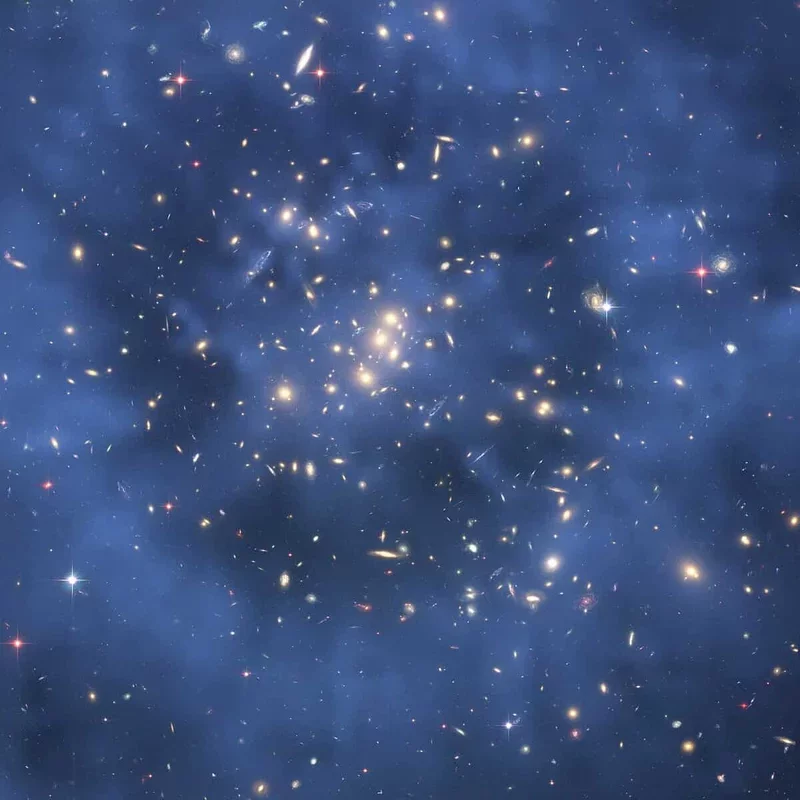
Black holes are essentially regions of spacetime where matter is densely packed, while dark matter is a form of matter that neither reflects nor absorbs light. Its existence is inferred from its gravitational effects on galaxies and other cosmic entities, acting as the "glue" that binds them together. However, the fundamental composition of dark matter remains elusive, with many physicists theorizing it consists of unknown subatomic particles.
Interestingly, ancient black holes from before the big bang also exhibit the necessary characteristics. They are not only dark but also possess mass, making them potential candidates for dark matter.
In a recent paper, researchers explore this concept, suggesting that the big bang might not have been the universe's absolute beginning. Instead, it could represent a transition from a previous universe that collapsed before expanding again.
This alternative perspective challenges the traditional view held by cosmologists for nearly a century, which traced the universe's history back to a singular moment. The idea of a "bounce" rather than a bang opens up new avenues for understanding cosmic evolution.
In this bouncing cosmology model, the universe undergoes a contraction phase before the big bang, reaching a high, yet finite, density. Instead of collapsing into a singularity, it rebounds, initiating a new phase of expansion.
Remarkably, this bouncing scenario could allow for the survival of structures larger than 90 meters, leaving behind "relics" that carry information from a previous cosmic epoch. These relics might include black holes and gravitational waves, offering insights into the universe's history.
Two primary mechanisms for the formation of relic black holes are proposed. The first involves the direct survival of compact objects during the universe's transition from contraction to expansion. The second suggests that matter clumps under gravity during contraction, forming structures that can efficiently collapse into black holes post-bounce.
Could these black holes be the elusive dark matter? While the leading candidate has been a fundamental particle, the existence of relic black holes might provide a compelling alternative. If enough of these black holes were produced during the bounce, they could constitute a significant portion of dark matter.
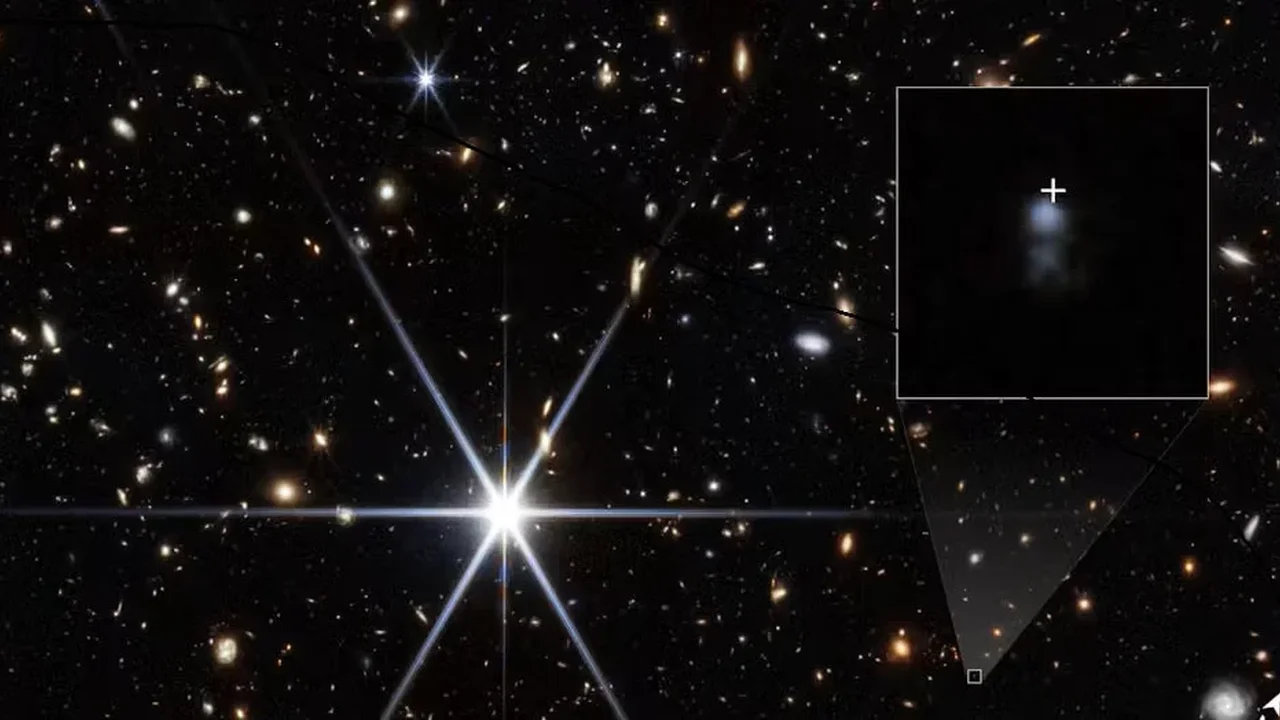
This hypothesis also aligns with recent observations from the James Webb Space Telescope, which has detected a population of compact, extremely luminous objects in the early universe. These findings suggest that rapidly growing black holes might have existed shortly after the big bang, potentially linking them to ancient black holes.
The bounce scenario presents a cohesive framework to address many longstanding cosmological challenges, including the nature of dark matter and the origins of supermassive black holes.
As research continues, the implications of these findings could reshape our understanding of the universe, suggesting that it may not have a singular beginning but rather a history marked by cycles of collapse and rebirth.