Fast radio bursts (FRBs) are remarkable flashes of radio energy that traverse vast expanses of the universe. While scientists theorize that these bursts stem from extreme astrophysical phenomena, their precise origins have remained elusive. Since 2018, the Canadian Hydrogen-Intensity Mapping Experiment (CHIME) has recorded thousands of these events, but pinpointing their exact locations in the sky has proven to be a significant challenge.
Locating the Brightest Burst Yet
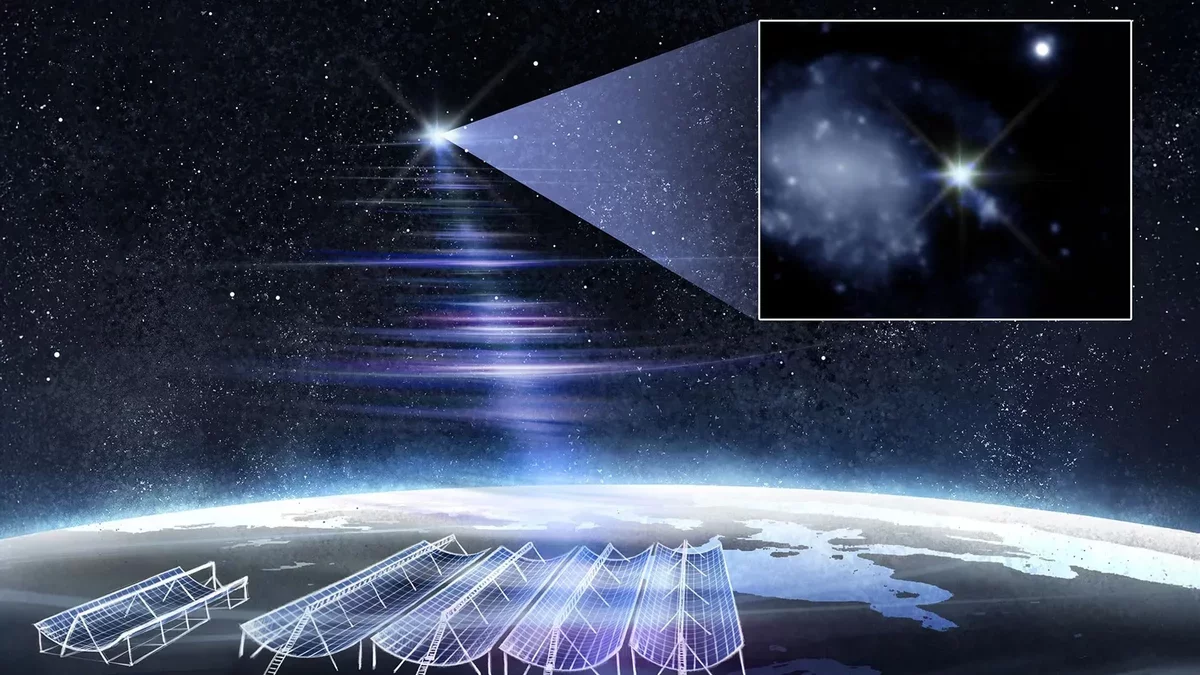
The latest discovery, designated FRB 20250316A and affectionately termed RBFLOAT ("Radio Brightest Flash Of All Time"), was accurately located using the CHIME/FRB Outrigger array. These smaller instruments, situated in British Columbia, Northern California, and West Virginia, collaborate to employ Very Long Baseline Interferometry (VLBI), a method that merges signals from distant telescopes to achieve remarkable positional accuracy.
"We were incredibly fortunate to identify the exact location of this rare event," remarked Mattias Lazda, a doctoral student at the University of Toronto and co-author of the related studies. "Shortly after our detection, a power outage at one of our telescope sites was crucial in helping us determine the burst's origin. If it had occurred later that day, we might have completely missed the opportunity."
A Burst from Our Cosmic Neighborhood
Fast radio bursts, known for their intensity, are fleeting phenomena, typically lasting from mere milliseconds to a few seconds. RBFLOAT, which was detected on March 16, 2025, lasted approximately one-fifth of a second. "In cosmic terms, this burst is practically in our backyard," explained Kiyoshi Masui, an associate professor of physics at MIT's Kavli Institute for Astrophysics and Space Research. "This proximity allows us to examine a relatively typical FRB in extraordinary detail."
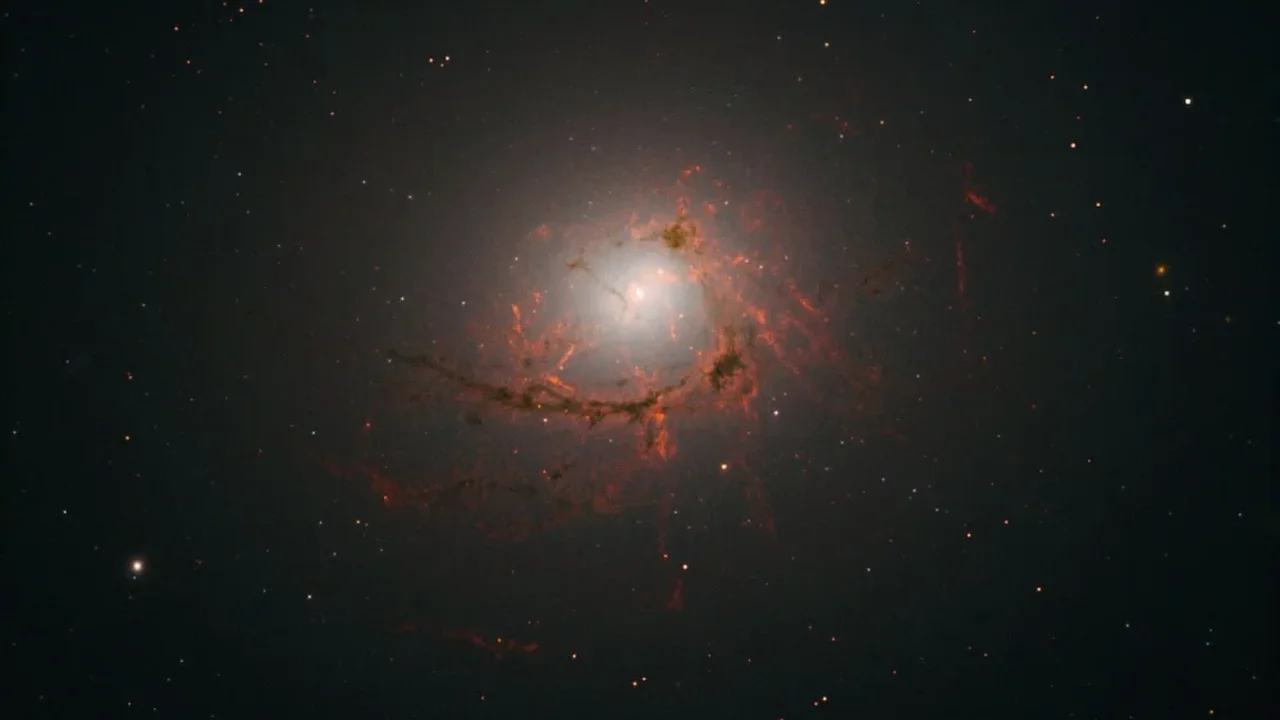
Its brightness is partly due to its source being relatively close to Earth, originating from the outskirts of the galaxy NGC 4141, located around 130 million light-years away in the constellation Ursa Major. Researchers successfully narrowed the burst's source to a region merely 45 light-years wide, a scale smaller than that of a typical star cluster. Achieving this precision is akin to spotting a guitar pick from a distance of 1,000 kilometers.
"The discovery was thrilling, especially as it occurred right after all three outriggers became operational," said Amanda Cook, a Banting Postdoctoral Researcher at McGill University and co-author of the relevant paper. "Even though it was a Sunday afternoon, we quickly gathered online to analyze the data, eager to secure follow-up observations."
Infrared Signals Unveiled by JWST
The precise localization by the CHIME/FRB Outrigger array enabled follow-up observations with the James Webb Space Telescope (JWST). During these observations, scientists detected a faint infrared signal coinciding with the location of RBFLOAT. This unexpected finding has led researchers to explore its implications, considering possibilities such as a red giant star or a fading light echo related to the burst.
"The JWST's high resolution allows us to identify individual stars surrounding an FRB for the first time," noted Peter Blanchard, a Harvard postdoctoral fellow and lead author of the accompanying paper. "This paves the way for understanding the stellar environments that could produce such powerful bursts."
A Challenge to Existing Theories
Despite being the brightest FRB ever detected by CHIME, no repeat signals have been observed from this source. Researchers analyzed extensive CHIME data over six years without detecting additional signals. "This burst's lack of repetition challenges a prevailing notion that all FRBs recur, prompting us to reconsider potential explosive origins for some of them," Cook added.
Two scientific papers detailing this discovery were published in the Astrophysical Journal Letters, providing fresh insights into fast radio bursts and suggesting their potential as valuable tools for cosmic exploration.