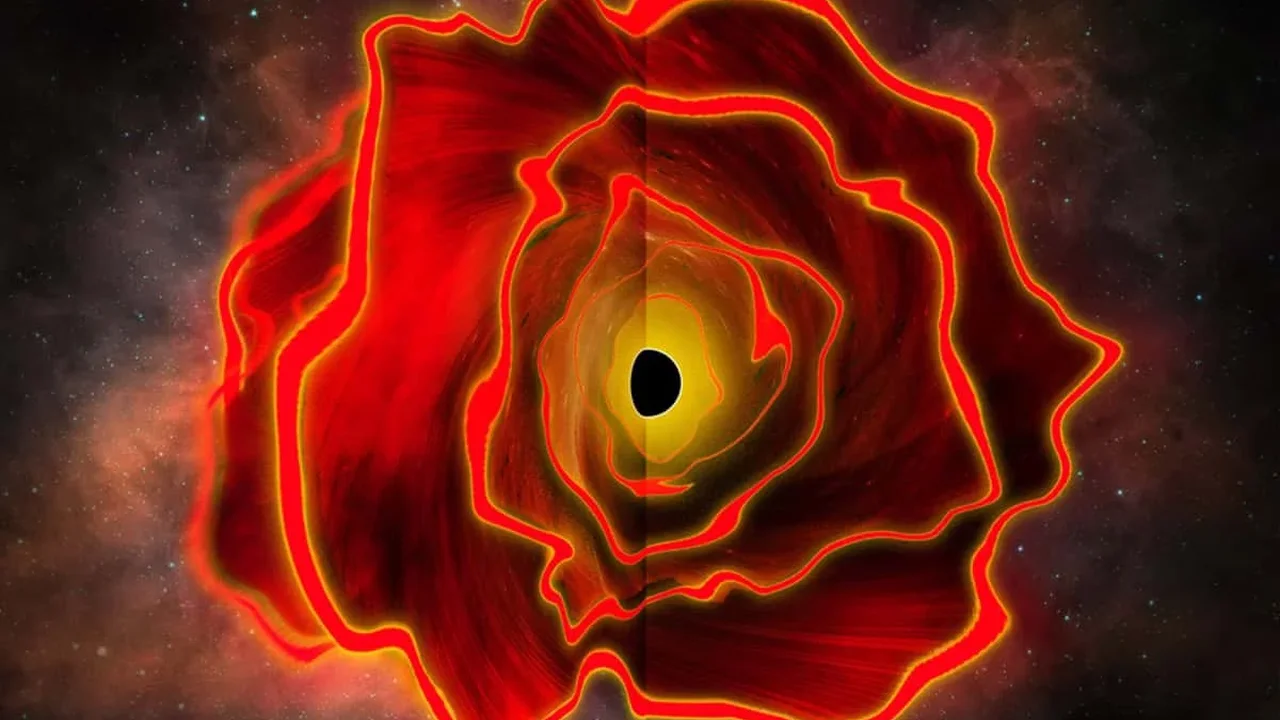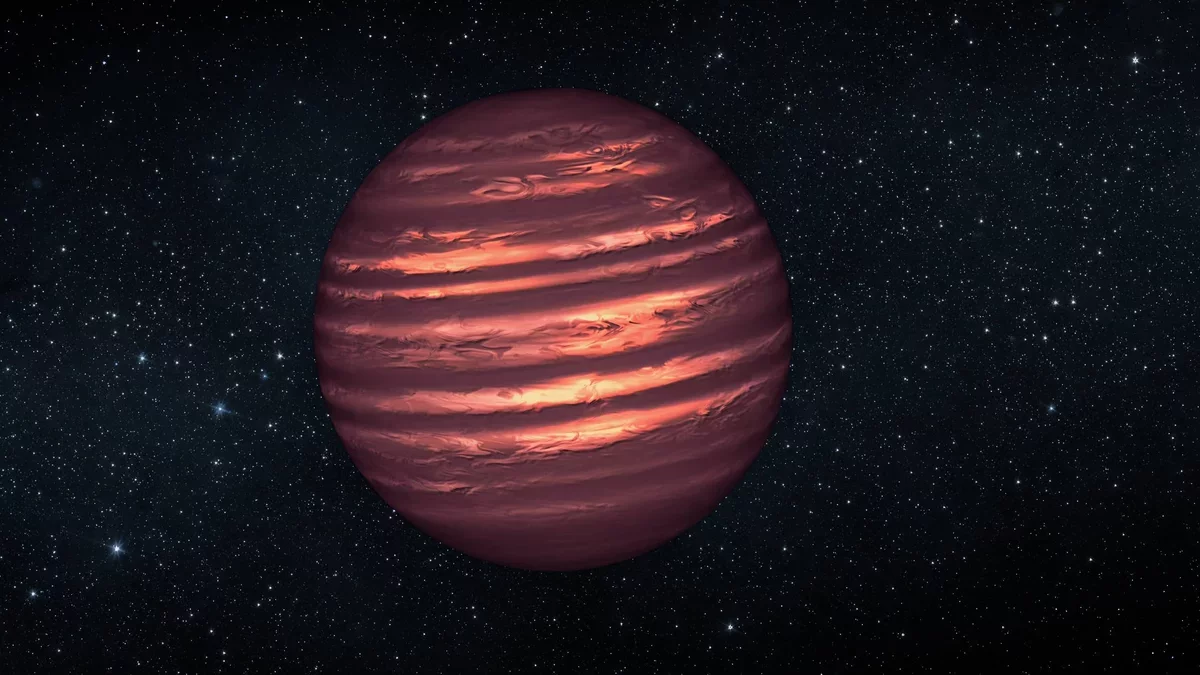
For years, scientists have grappled with the enigma of how massive gas giants form, particularly those that defy conventional wisdom. The young star HR 8799, located 130 light-years away, is home to four enormous planets, each boasting 5 to 10 times the mass of Jupiter and positioned at distances far greater than Pluto from our Sun. These planets have posed a significant challenge to established theories of planetary formation.
Traditionally, the process of core accretion has been the accepted model for the formation of giant planets. This theory suggests that solid cores grow by accumulating rocky and icy materials until they become massive enough to attract surrounding gas. However, the sheer size and distance of the HR 8799 planets from their star raised questions about this model's applicability.
Utilizing the advanced capabilities of the James Webb Space Telescope (JWST), an international team of astronomers has made groundbreaking discoveries regarding the chemical composition of these distant giants, providing insights into their formation.
A Cosmic Buffet at the Edge of Nowhere
The investigation revealed that the four planets share a remarkably similar chemical makeup, indicating they formed under comparable conditions without significant collisions or chaotic events. Notably, their metal-rich compositions mirror those of Jupiter and Saturn, with elevated levels of carbon, oxygen, and sulfur.
The presence of these metals serves as a compelling indicator of the accretion process, suggesting that these planets began forming early in the solar system's history. The researchers discovered that the high levels of hydrogen sulfide (H2S) point to an efficient solid accretion process, allowing these planets to accumulate substantial material from the surrounding disk.
What Does This Mean for Our Understanding of Planet Formation?
The findings indicate that the HR 8799 planets likely formed in a dense, chaotic environment, enabling them to grow significantly before the surrounding material diminished. This challenges the notion that distance from a star limits a planet's size and suggests that with sufficient solid material, massive planets can form even in the outer reaches of a solar system.
How Big Can a Planet Get?
In our solar system, Jupiter reigns supreme as the largest planet. However, adding mass to Jupiter would not increase its size significantly; instead, it would become denser due to gravitational compression. If a planet reaches about 13 times Jupiter's mass, it begins to fuse deuterium and enters the realm of brown dwarfs, which blur the lines between planets and stars.
The HR 8799 planets sit at the edge of this boundary, showcasing how large planets can grow while still being classified as such. This discovery opens new avenues for understanding planetary formation and the potential for similar gas giants in other systems.
As we continue to explore the cosmos, the insights gained from the HR 8799 system may reshape our understanding of planetary dynamics and formation, paving the way for future discoveries that challenge our current models.