A recent study published in Nature Astronomy has unveiled that asteroid Ryugu harbors all five essential chemical components of DNA and RNA, shedding light on the cosmic origins of life. This groundbreaking discovery suggests that the fundamental building blocks of life may have formed in the depths of space, potentially delivered to Earth via asteroids during its tumultuous early years.
A Unique Asteroid
Traditionally, our understanding of space chemistry has been informed by meteorites, which can easily become contaminated once they reach Earth. In contrast, Ryugu, a carbon-rich near-Earth asteroid, offers pristine samples collected directly in space, making it a treasure trove for researchers.
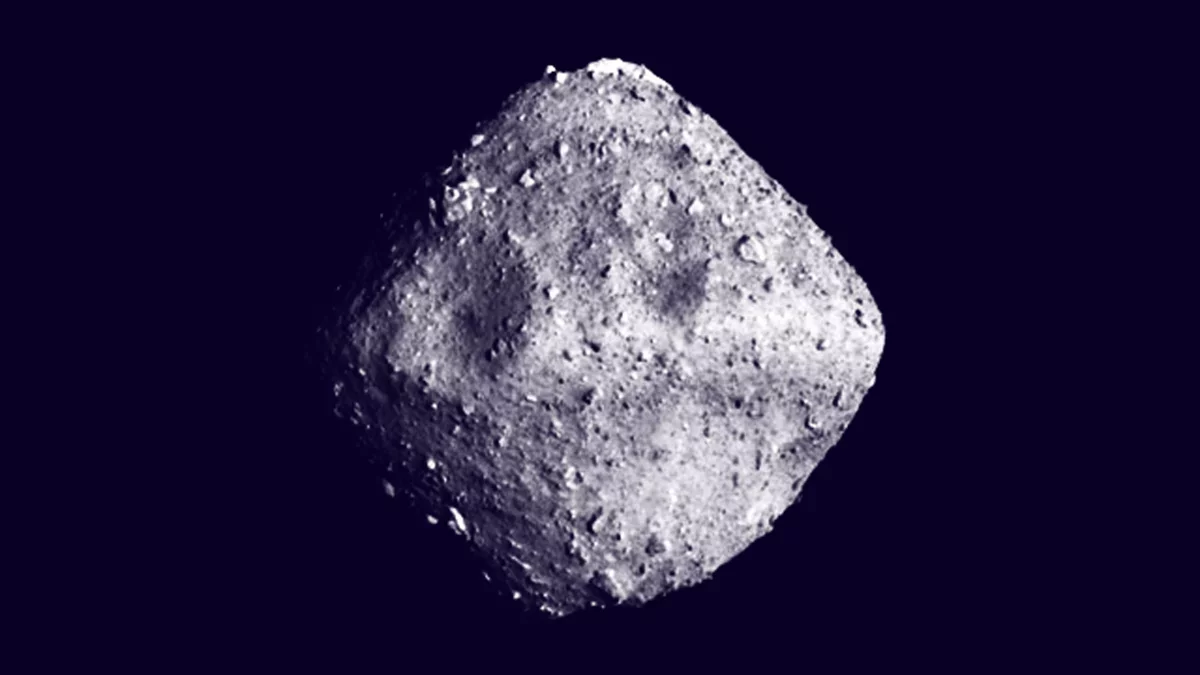
Measuring approximately 900 meters in diameter and shaped like a spinning top, Ryugu is composed of ancient materials dating back to the early Solar System. The samples, gathered by Japan's Hayabusa2 mission in 2018 and returned to Earth in 2020, provide a unique opportunity to study untainted cosmic material.
Researchers, led by Yasuhiro Oba from Hokkaido University, analyzed two distinct samples from Ryugu--one from the surface and another from deeper layers. Both samples contained the five primary nucleobases essential for life: adenine, guanine, cytosine, thymine, and uracil. Although the concentrations were minimal, isotopic analyses confirmed their indigenous origin, ruling out contamination.
Significance for Life's Origins
This finding does not imply that life exists on Ryugu; rather, it indicates that lifeless celestial bodies can synthesize crucial ingredients for life. Nucleobases are vital for biological processes, as they form the basis of genetic material. Understanding their origins is key to unraveling the mysteries surrounding the emergence of life on Earth.
The study posits that if asteroids like Ryugu contributed even a fraction of these nucleobases to the early Earth, they could have played a significant role in establishing a prebiotic chemical environment conducive to the development of life.
Implications Beyond Earth
The implications of this research extend beyond our planet. If nucleobases are prevalent in primitive asteroids and cosmic dust, the potential for the building blocks of life to be widespread throughout the galaxy increases. This suggests that the chemistry leading to life may not be exclusive to Earth but rather a natural outcome of cosmic evolution.
While the presence of nucleobases is promising, it is important to note that life requires more than just these components. It also necessitates sugars, phosphate chemistry, membranes, and energy sources. Nevertheless, the discovery of these nucleobases in Ryugu invites further exploration into the origins of life and our cosmic neighborhood.
Ultimately, Ryugu serves as a reminder that our understanding of life's beginnings may be rooted not solely in Earth's ancient environments but also in the cold expanse of space, offering a tantalizing glimpse into our cosmic heritage.