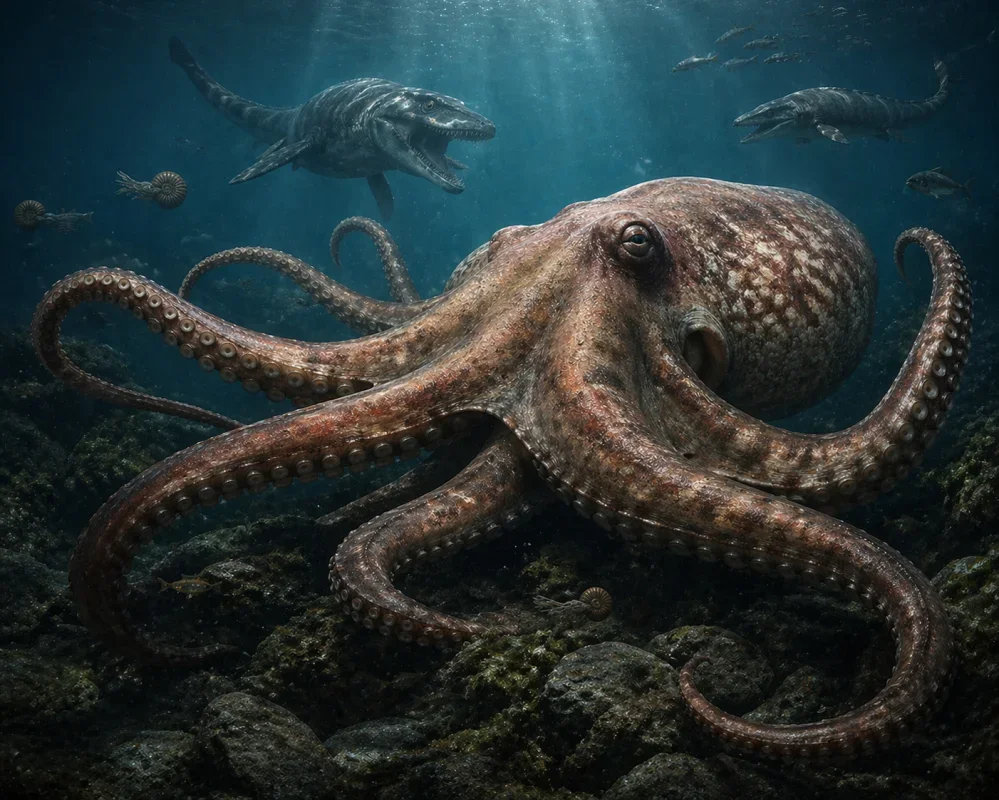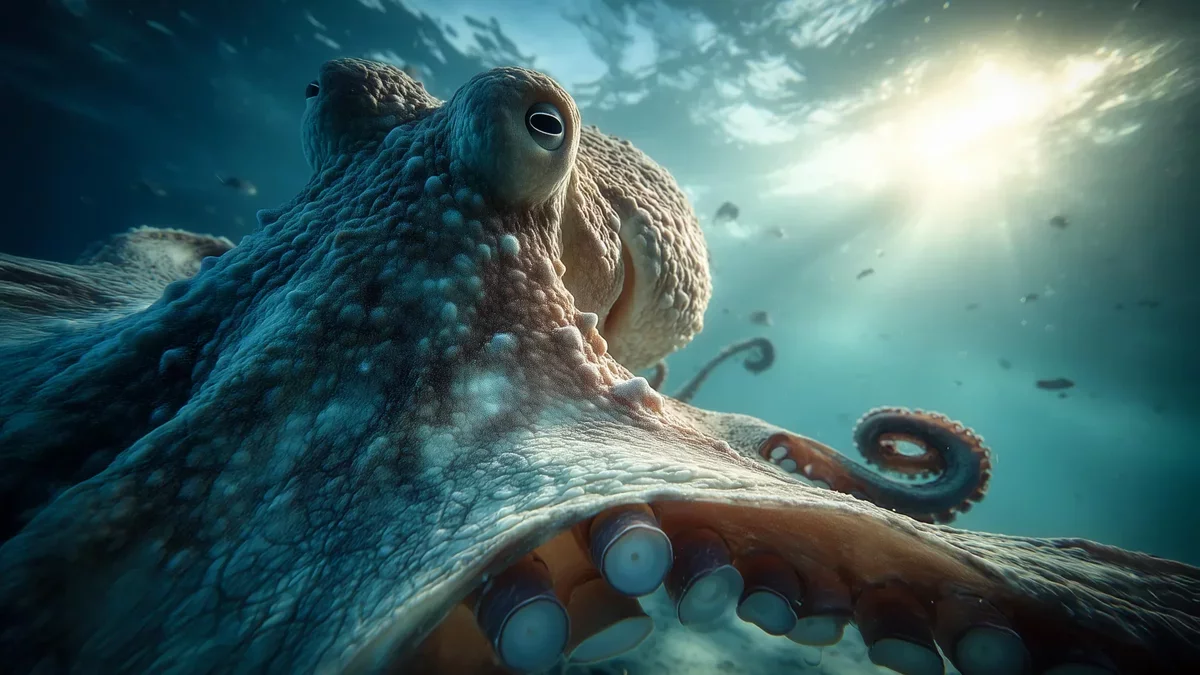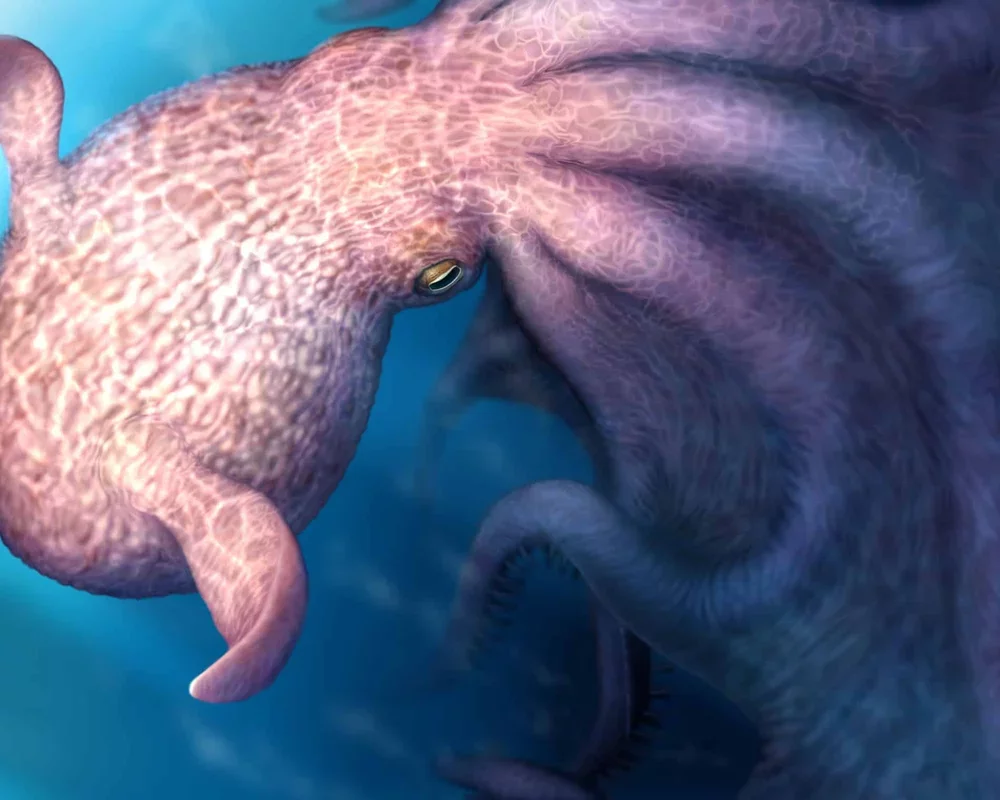
Recent discoveries have transformed our understanding of the Cretaceous seas, revealing that ancient octopuses may have been formidable predators. Researchers have identified two extinct species of finned octopus, including Nanaimoteuthis haggarti, which could grow up to an astonishing 19 meters (62 feet) long, rivaling some of the largest marine reptiles of that time.
The fossilized beaks of these octopuses indicate they had a significant role in their ecosystems, likely feeding on hard-shelled prey. This challenges the long-held belief that the oceans were primarily ruled by large vertebrate predators such as sharks and mosasaurs. According to Yasuhiro Iba, a paleontologist at Hokkaido University, these findings suggest that giant invertebrates like octopuses were also apex predators in the ancient marine food web.
Innovative Fossil Discovery Techniques
This groundbreaking study involved the analysis of 27 fossil octopus jaws unearthed from Japan and Vancouver Island. The researchers employed a novel method termed "digital fossil mining," which utilizes artificial intelligence to visualize and identify fossils hidden within rock formations. This innovative approach allowed for the discovery of previously unnoticed specimens, providing insights into the morphology and lifestyle of these ancient creatures.
Octopuses are notoriously difficult to fossilize due to their soft bodies, but their beaks, composed mainly of chitin, are more durable. The study revealed that the jaw fossils exhibited significant wear, indicating these octopuses engaged in aggressive feeding behaviors, possibly targeting crustaceans and other hard-shelled prey.
Revising the Cretaceous Ocean Narrative
Among the species identified, Nanaimoteuthis jeletzkyi lived between 100 million and 72 million years ago, extending the known timeline for octopuses by approximately 15 million years. The estimated sizes of these ancient creatures place them among the largest known invertebrates, with N. haggarti potentially reaching lengths comparable to modern giant squids.
Interestingly, the wear patterns on the jaws suggest a preference for using one side of their bodies, hinting at complex behavioral traits similar to those observed in modern octopuses. This discovery may indicate that cognitive abilities and sophisticated hunting strategies were already developing in these ancient cephalopods.
As research continues, the revelations about these ancient octopuses invite us to rethink the dynamics of the Cretaceous marine ecosystem. The emergence of giant intelligent invertebrates as apex predators illustrates the diverse evolutionary paths that life has taken in our oceans.
Ultimately, these findings not only enhance our understanding of ancient marine life but also inspire curiosity about the evolutionary history of intelligence and adaptability in cephalopods, suggesting that the ocean's depths may still hold many more secrets waiting to be uncovered.