Archaeologists studying a burial site in southern Russia have uncovered evidence of how the ancient Maeotians may have combined local customs with Greek-influenced beliefs. The grave, dated to the first third of the first century BC, held a young warrior alongside weapons, horse equipment and a horse.
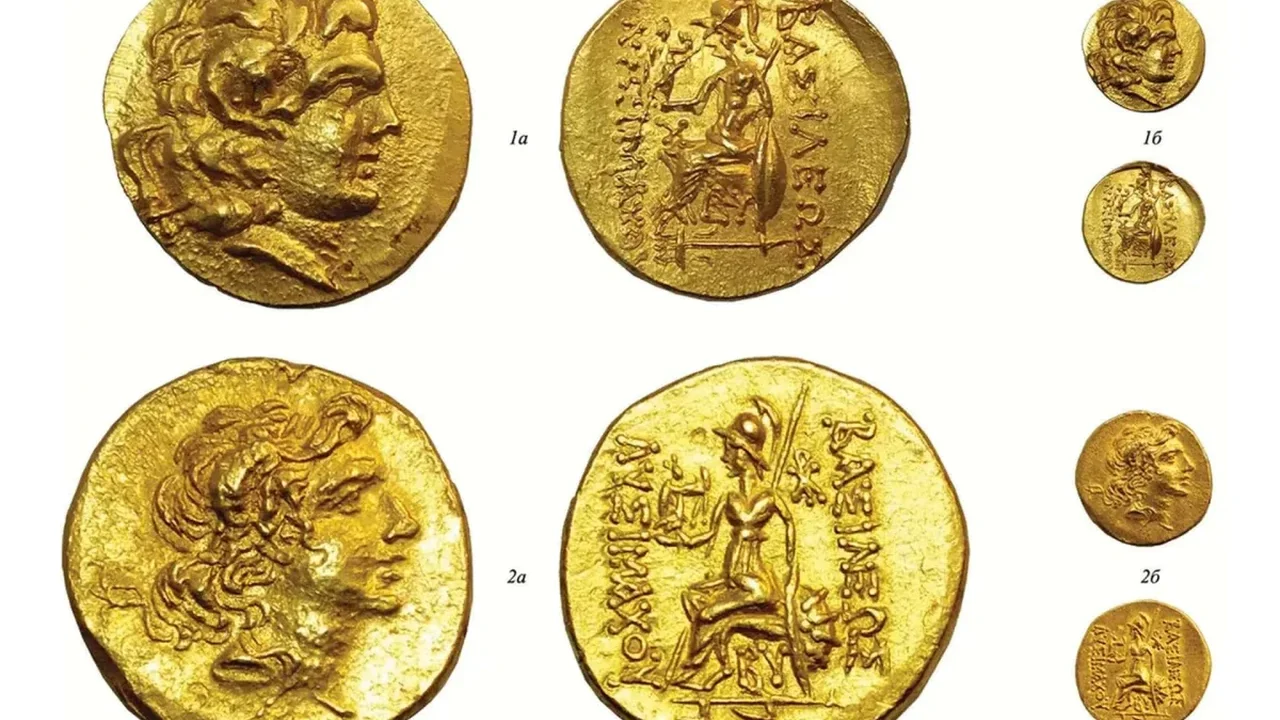
A gold coin beneath the warrior's jaw may have been placed in his mouth as an offering for the journey to the afterlife. The custom resembles the ancient Greek practice known as Charon's obol, in which a coin was given to the mythical ferryman of the dead. Researchers say the interpretation is suggested by the coin's position, rather than confirmed.
Two coins, two possible roles
A second gold coin was found at the bottom of a stepped shaft inside a sacred area at the Vinogradny 1 cemetery. Archaeologists interpret it as a possible ritual offering. Both coins were Lysimachus-type staters minted during the reign of Mithridates VI Eupator, centuries after the Greek king Lysimachus, whose name the coin type bears.
The warrior, estimated to have been 25 to 30 years old, was buried with spearheads, an arrowhead, a knife and riding gear. Other grave goods included an imported glass vessel and a clay drinking cup engraved with a pentagram. The researchers suggest the symbol may have served a protective purpose, though its meaning remains uncertain.
The coins, imported objects and Greek imagery point to connections between Maeotian communities and wider networks around the Black Sea and Mediterranean. Their placement in a grave and ritual shaft also indicates that the coins may have held significance beyond their value as currency.
The findings are discussed in the journal Russian Archaeology. Further study of Maeotian and Bosporan burials may clarify how these communities adapted shared beliefs and objects into distinct local traditions--a process that continues to shape how archaeologists understand cultural exchange.