In a remarkable archaeological discovery, researchers have unveiled the story of a young woman who lived approximately 2,500 years ago in the frozen expanse of the Ukok Plateau in southern Siberia. Initially found in a modest grave in 1994, her remains lacked the ornate artifacts typical of the Pazyryk culture, leaving her narrative largely unexplored for decades.
Recent advancements in high-resolution CT imaging have shed light on her mysterious past, revealing what appears to be one of the earliest documented cases of complex jaw surgery. The woman, believed to have been between 25 and 30 years old at the time of her demise, was discovered lying on her side on a wooden bed within a larch log burial chamber, adorned only with a traditional Pazyryk wig.
A Life-Altering Injury
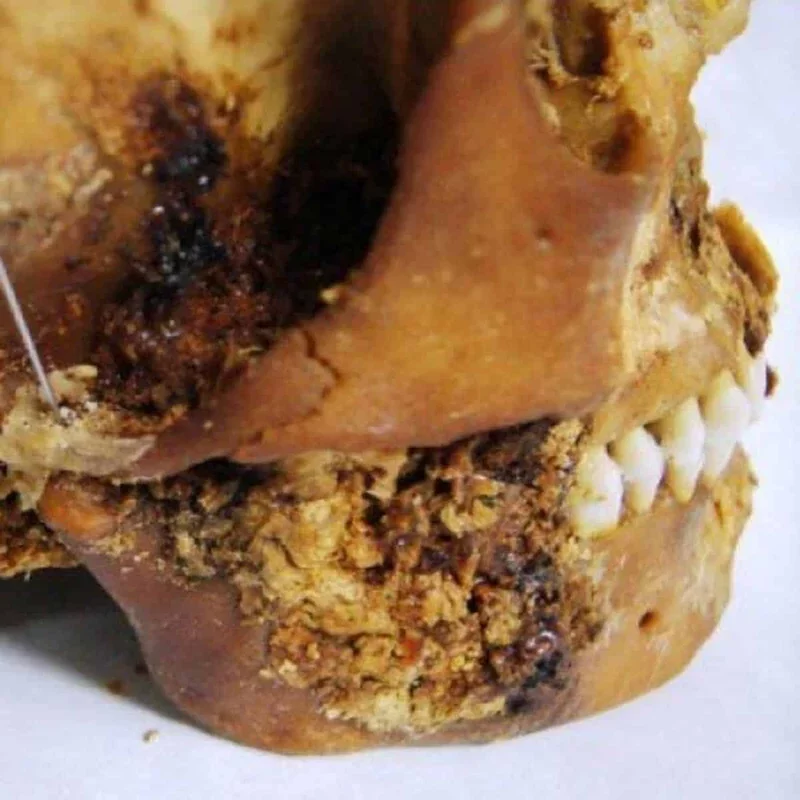
Her skull was partially covered by mummified skin, which initially hindered detailed analysis. Natalia Polosmak from the Russian Academy of Sciences emphasized that the opportunity to examine the remains via tomography was crucial. The scans unveiled a severe injury: a significant impact on the right side of her head had crushed her temporal bone and dislocated her temporomandibular joint, the crucial hinge for jaw movement. This injury would have caused immense pain and difficulty in speaking.
Remarkably, she did not succumb to her injuries immediately. The scans indicated that she underwent a surgical procedure, as two tiny canals, each measuring 1.5 millimeters, had been drilled into the bone at right angles. Evidence of horsehair or animal tendon within these canals suggested that this was a primitive form of prosthetic intervention, aimed at stabilizing her jaw.
Innovative Medical Practices
Dr. Andrey Letyagin, a radiologist involved in the study, noted that this may be the first recorded instance of such a surgical technique, as similar cases are absent from existing literature. The presence of new bone growth around the drilled canals confirmed that the surgery was performed while she was alive, indicating she likely survived for months or even years post-operation.
Further analysis of her teeth revealed a pattern: the molars on her uninjured left side were heavily worn, suggesting she relied on that side for chewing, while the right side remained relatively intact.
The Pazyryk people, nomadic pastoralists from the Altai region, are known for their sophisticated burial practices, which have preserved various artifacts, including textiles and even tattooed skin. This discovery adds a significant chapter to our understanding of ancient medical practices and the value placed on individuals within Pazyryk society. Polosmak noted that the effort to restore her ability to eat and speak reflects the community's commitment to its members.
The exact cause of her injury remains unknown, but possibilities include a fall from horseback, given the Pazyryk's equestrian lifestyle. This extraordinary case not only highlights the surgical skills of ancient cultures but also their compassion and ingenuity in the face of adversity.